Scientists at Tokyo Metropolitan University create complex patterns on silicon wafers that can
Scientists used MEMS technology to createclear complex designs on silicon wafers. The design is a concentric array of slits, similar to tree rings, that can direct X-rays entering at a narrow range of angles and concentrate them into a point.
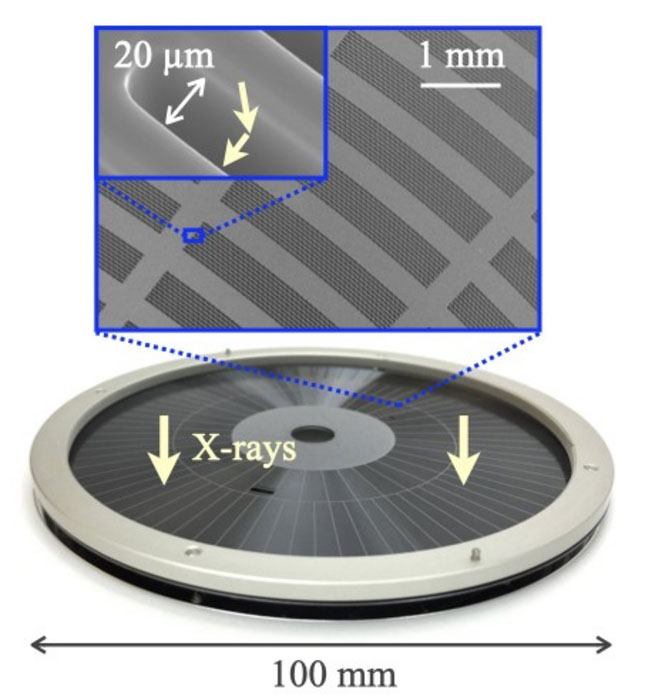 Concentric slot arrays allowX-rays to penetrate and bounce off the interior walls, pushing them so that they are directed to the same point. Image: Tokyo Metropolitan University
To create these gaps, researchersdeep reactive ion etching was used. However, after initial processing, they discovered surface roughness in the patterns that distorted the X-rays, reducing the resolution of the telescope.
To correct these shortcomings, scientists "annealed"pattern by acting on the silicon wafer for a long time. As the duration of the annealing increased, the silicon atoms on the surface of the patterns became more mobile, smoothing out any roughness and improving the angular resolution of the telescope.
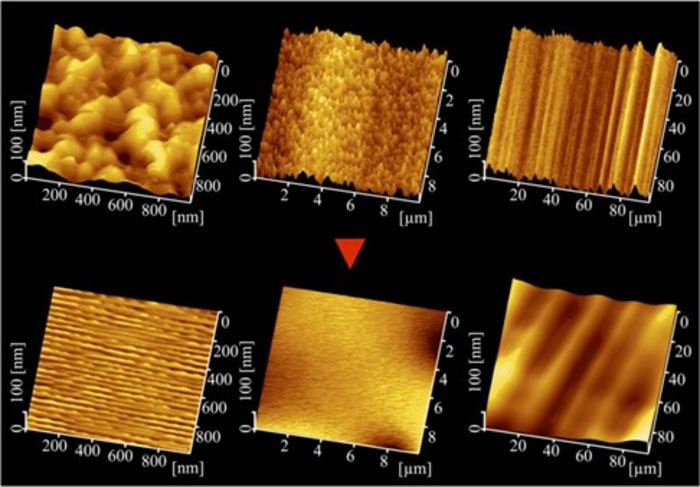 Surface before (top) and after (bottom) 150 hours of annealing. Prolonged thermal exposure smooths out all surface roughness. Image: Tokyo Metropolitan University
The study of X-ray radiation allowslearn more about our Universe. But most of these waves are absorbed by the Earth's atmosphere, so X-ray telescopes operating outside our planet are most effective, the authors of the work explain.
Problem with conventional X-ray opticsis that as higher resolutions are achieved, devices become heavier and heavier. This increases the cost of delivering telescopes into orbit. For example, the Hitomi telescope, launched in 2016 and considered incredibly light, had an effective weight of 600 kg per square meter of usable area. In their work, published in the journal Optics Express, the scientists developed a high-performance unit weighing just 10 kg per square meter.
The researchers note that with the newtechnology can create super lightweight devices. Now they are developing a satellite to visualize the Earth's magnetosphere. The researchers plan to achieve a reduction in the total mass of the installation to 50 kg.
Read more:
The James Webb telescope took the first picture of Jupiter: it shows 9 moving targets at once
Physicists have found a universal "clock" in space: they are more accurate than atomic
A huge comet flew past the Earth, but became larger and headed towards the Sun