An international team of engineers led by the International Institute for Applied Systems Analysis
The principle of operation of the technology involvesusing the Earth's gravity for long-term energy storage. In the event that there is an excess of energy in the network, special mechanisms can use it to raise sand from the bottom of the mine to storage at its top. With a lack of energy, the "battery" will be discharged, releasing energy during the descent of the sand back.

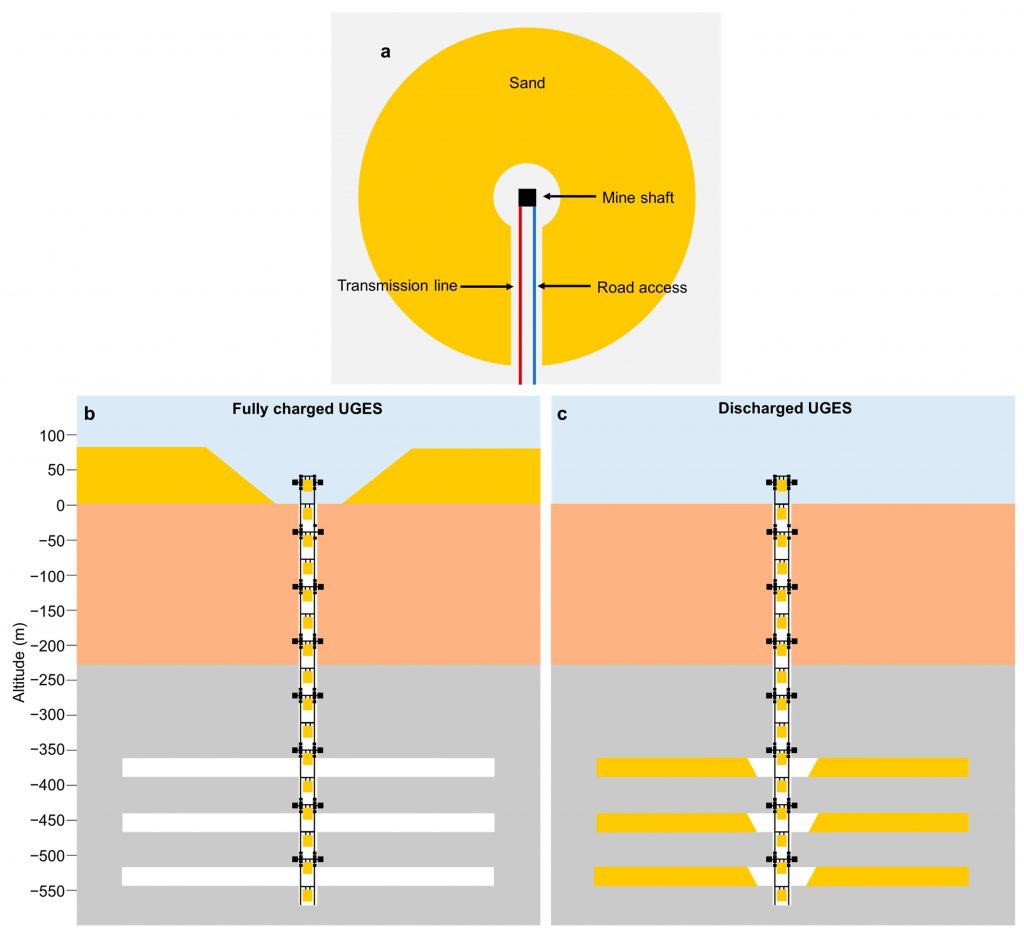
Scheme of a gravitational battery (left), fully charged and discharged batteries (right). Image: Julian David Hunt et al., Energies
Researchers note that traditionalBatteries can store energy but run out relatively quickly. Since the "Underground Gravity Energy Storage" uses sand as the energy storage medium, the self-discharge rate of the system is zero. This provides an indefinitely long energy storage time. At the same time, the deeper and wider the shaft, the more energy can be extracted from the installation, and the larger the shaft, the higher its energy intensity.
The authors of the work say that around the worldthere are more than a million mining enterprises that have completely worked out the ore and whose mines are no longer used for their intended purpose. According to researchers, China, India, Russia and the United States, which have the most mines, can benefit the most from the introduction of new technology.
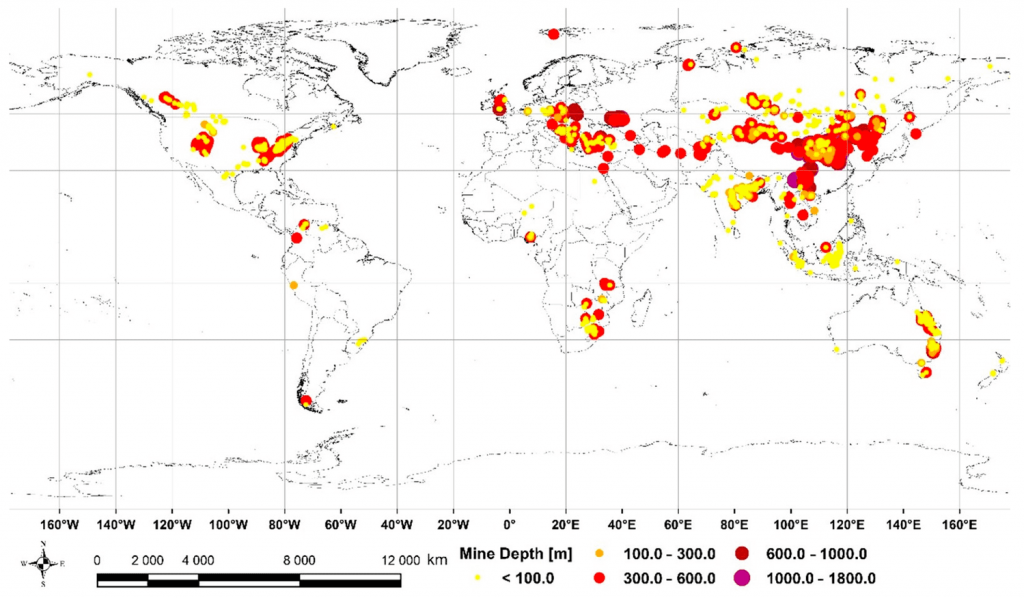
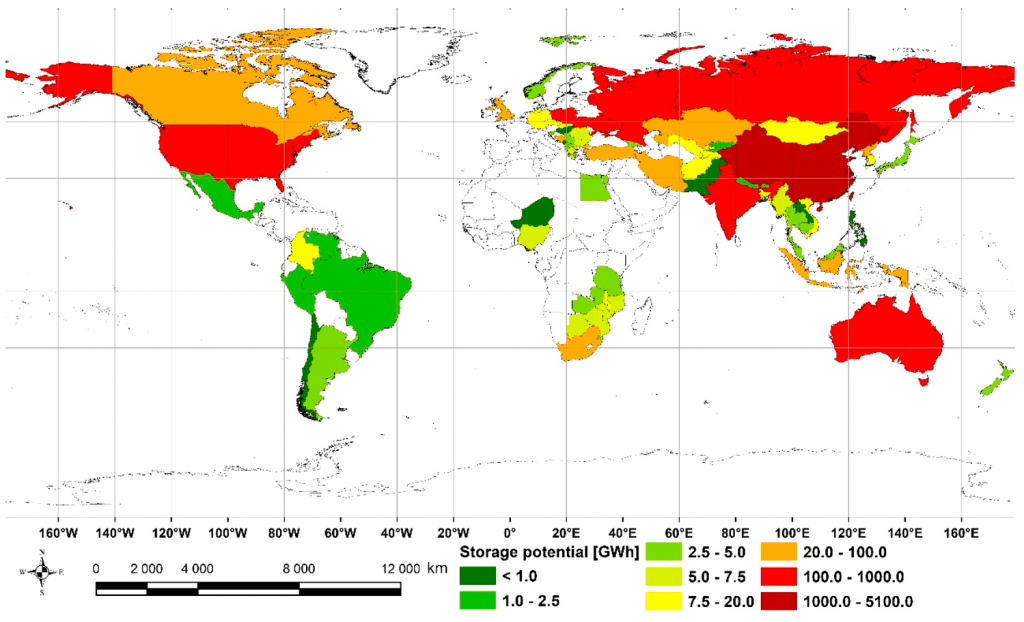
Spatial distribution of underground mines and their depths (left) and underground storage potential by country (right). Image: Julian David Hunt et al., Energies
Researchers estimate the total potential of all abandoned mines from 7 to 70 TWh. At the same time, investment costs are estimated to be $1-10 per kWh, and for power - about $2 per kWh.
Read more:
The strongest class X flare occurred on the Sun
Nuclear fusion planet found
Humans still have fur genes, but they are temporarily turned off