The SmartScan 3D printing system, developed by scientists at the University of Michigan, analyzes the distribution
Powder bed laser welding is a form of3D printing used in the aerospace, automotive and biomedical industries to make complex parts. The laser fuses multiple layers of powdered metal or plastic together. However, the accumulated heat can lead to deformation of the product.
“This problem is becoming very serious forparts with thin features,” says Chinedum Okvudir, associate professor of mechanical engineering and co-author of the study. “Heat doesn’t have many directions to spread. So you have to move the laser wisely, otherwise your part will deform in a very strange way.”
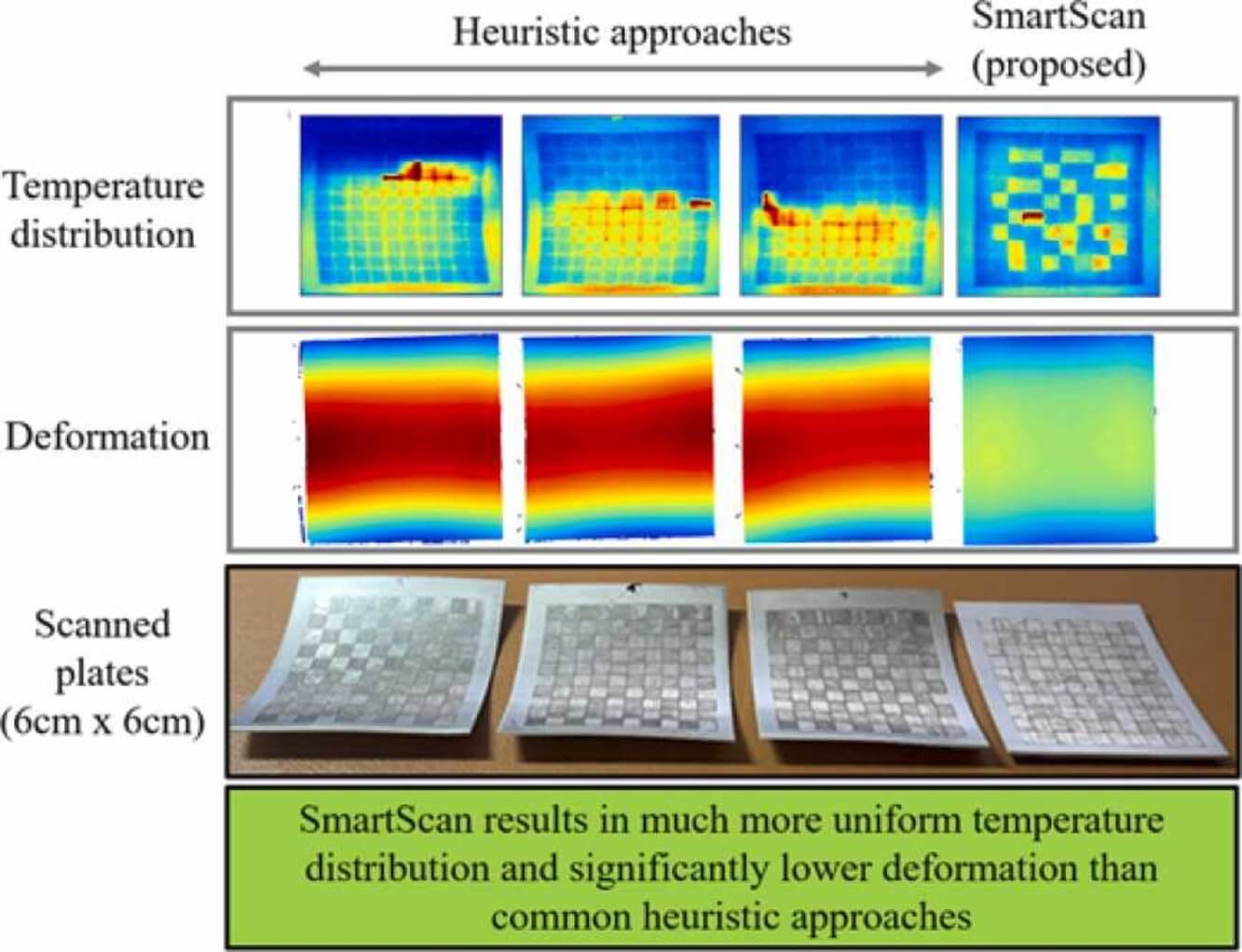 Source: Okwudir, University of Michigan
The traditional approach is to createvarious print patterns, such as moving from one area to another, or alternating between vertical and landscape printing. However, as the researchers note, for the first time they proposed a smart technology based on the analysis of heat distribution, and not on trial and error.
To determine the effectiveness of SmartScan,the researchers used a laser to imprint an identical pattern on two stainless steel plates. The first plate was printed according to the scheme proposed by the smart system, and the second plate was printed using traditional approaches. Analysis showed a 41% improvement in heat distribution with SmartScan and a 47% reduction in deformation.
The researchers plan to further develop this technology. They want to change the print sequence in real time by measuring the temperature with an infrared camera.
Read more:
There is another “planet” inside the Earth: how it saved nascent life
New study refutes light energy transfer theory
Everything you knew about the tyrannosaurus is not true: how science is changing its Hollywood image