Tropoelastin protein molecules are produced naturally in the human body, and they are
Now German scientists in collaboration withbiotech firm Skinomics is investigating the use of protein in a dressing for chronic, difficult-to-treat wounds. In their work, they used the electrospinning process to obtain ultra-thin tropoelastin nanofibers. They are then stitched together to form a sheet of elastin-like material. According to scientists, the resulting wound dressing "combines biocompatibility, durability, biodegradability and favorable mechanical properties, similar to those of the skin."
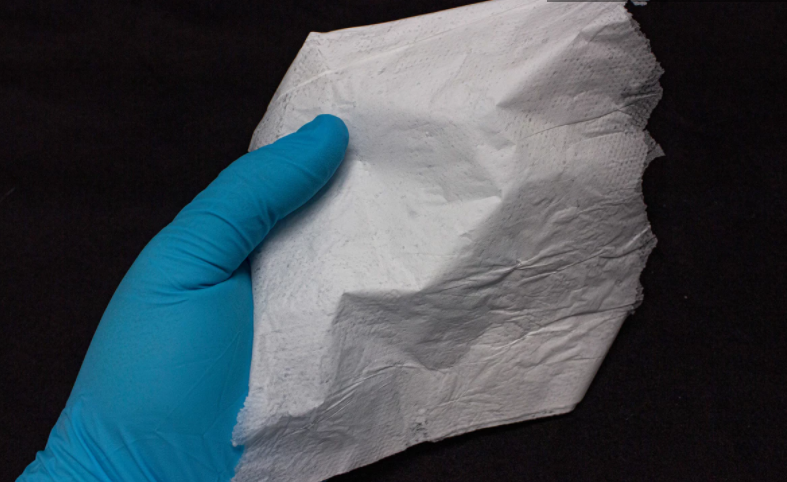 The bandage can be applied to complex wounds such as venous ulcers, leg ulcers, or foot ulcers.Photo: Fraunhofer IMWS
Depending on the nature of the wound the dressing is intended to treat, characteristics such as size can be adjustedMechanical properties. Skinomics has already begun preclinical trials to test the biocompatibility of the dressing and is still reporting Elastin is chemically and enzymatically extremely stable, biocompatible, and does not causeimmune rejection when used as a biomaterial in humans.
Read more
Two new dinosaur species discovered in China
The age-old mystery of the source of cosmic rays in the Milky Way revealed
Scientists have found traces of the deadly fight Megalodon with a sperm whale
Electrospinning (electrospinning,electrospinning) - a method of producing polymer fibers as a result of the action of electrostatic forces on an electrically charged jet of polymer solution or melt. The method of electrospinning makes it possible to obtain polymer fibers with a diameter of the order of several hundred nanometers.
A wound is considered chronic if, despiteappropriate therapy and sufficient time, no or practically no signs of healing. Usually, such damage is not caused by external factors such as abrasions or burns. The reasons for their occurrence lie within the body.