Some scientific studies might seem confusing, funny, or even stupid at first. Other -
For example, the creation of tamoxifen -antitumor drug - began with experiments in which scientists “fun” by showing how this substance turns on and off certain parts of the body of female laboratory mice. This work received one of the Golden Goose awards in 2021.
In the same year, scientists awarded the happyholding. It turned out that the development of mRNA drugs and vaccines began because of a meeting between two professors at a university copier. While the slow machine was doing its job, the scientists had plenty of time to discuss their problems and figure out that together they could solve them.
Surely, many scientific, and not only,discoveries would be impossible without accidents and incidents. For 11 years, the Golden Goose award has already collected 33 success stories. Here are three papers that the American Association for the Advancement of Sciences has highlighted this year.
How trauma in the lab improved eye microsurgery
Nearly 30 years ago Detao Du, PhD student at the CenterUltrafast Optical Research University of Michigan (CUOS), accidentally received a laser eye injury in the laboratory. Fortunately, his injury did not affect his vision much. But after studying the effect of a femtosecond laser on the cornea, researchers at the Center concluded that low-energy laser pulses could be used to make ultra-thin incisions without damaging overlying or adjacent tissues.
The idea of laser microsurgery was developeda few years earlier. But this technology used a picosecond laser, which used high pulse energy. This led to poor quality of tissue cuts.
Scientists from the Center for Ultrafast Opticalresearch began testing their technology in 1996 and 1997 on animals. The results were stunning: testing showed a low level of damage after surgery. Today, the procedure, which is also known as all-laser LASIK, is considered the standard in the field and is used by millions of people every year for vision correction.
Ron Kurz, Tibor Juhas, Detao Du, Gerard Mouroux and Donna Strickland received the Golden Goose for the discovery of a new method of correction due to an accidental injury.
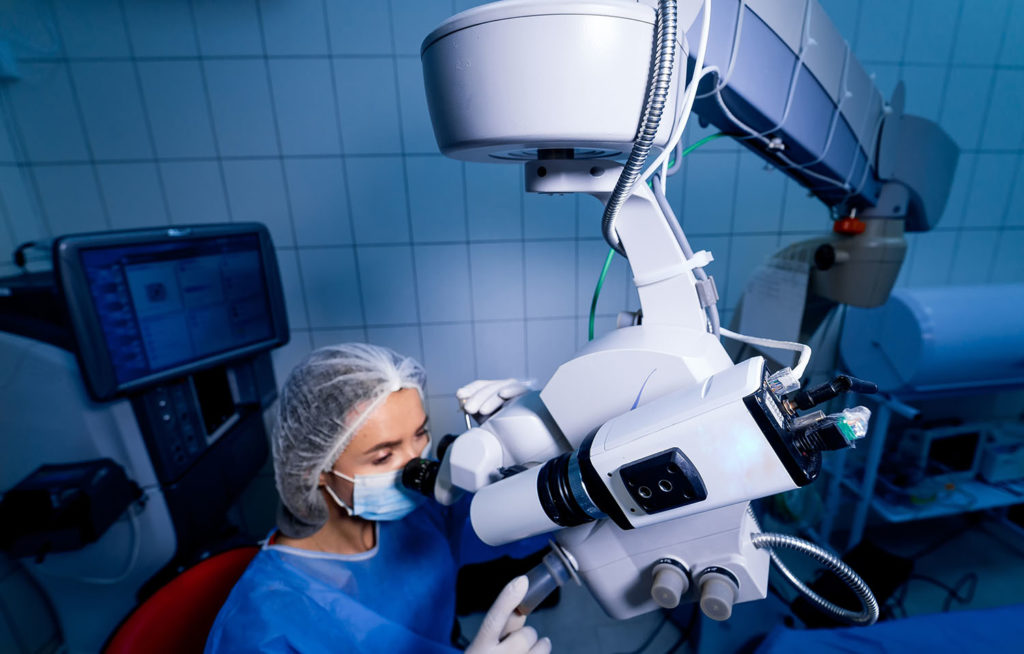 Surgeon performs laser eye surgery
How to assemble a paper microscope
While working in remote areas of India andThailand scientist from Stanford University Manu Prakash faced a problem. Modern microscopes were not available in this region, and transport and technical barriers made their supply too expensive. As a result, at the station where the scientist worked there was only one very expensive microscope. At the same time, researchers were afraid to use it because it is fragile and costs more than the salary of most employees.
The scientist decided to try to cope with his ownforces and create a cheap microscope from available materials that can be used in field trials. The most popular of them was paper. Together with graduate student Jim Cybulski, the scientist began to design paper microscopes. To do this, he applied origami principles to printer paper, matchboxes, and file folders.
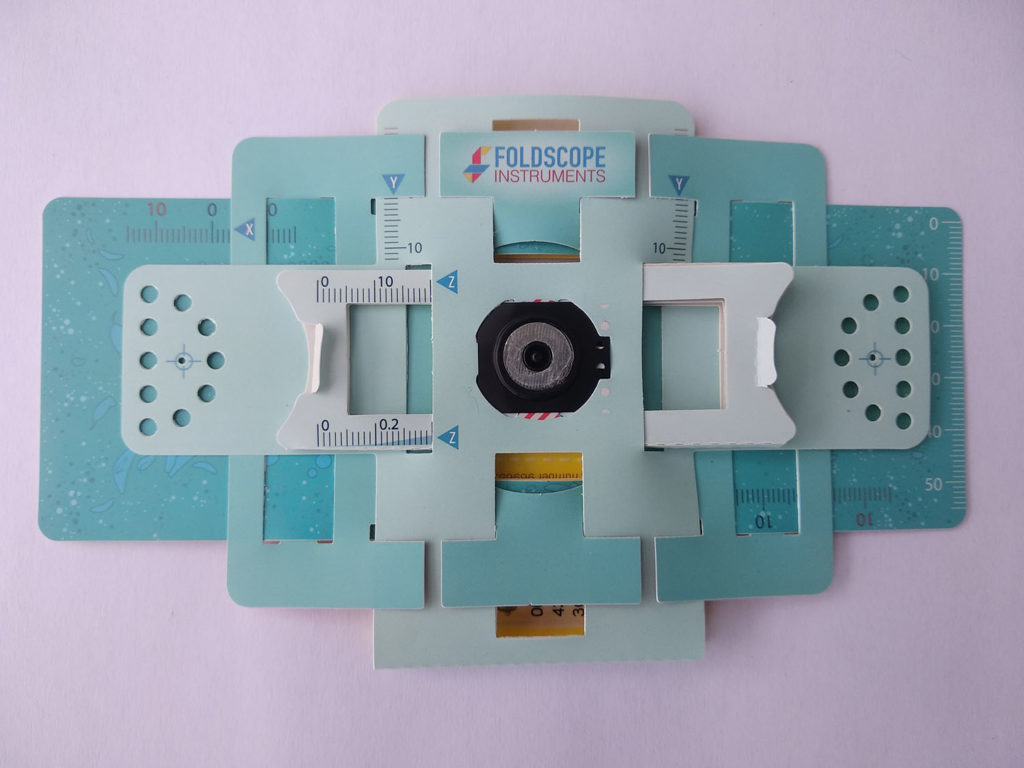 Foldoscope. Image: Sockenpaket, CC BY-SA 4.0, via Wikimedia Commons
As a result, the scientist invented Foldscope.It is an optical microscope that can be assembled from a perforated sheet of cardboard, a spherical glass lens, a light-emitting diode (LED) and diffuser panel, and a watch battery that powers the LED. When assembled, the device is no larger in size than a bookmark, and weighs only 8 g.
Using an ordinary lens with a magnification of 140 times,you can assemble a device that will allow you to consider most of the popular bacteria. Scientists claim that anyone can print the Foldscope on an A4 sheet and assemble it in 7 minutes. In 10 years worldwide, 2 million paper microscopes have been distributed to more than 160 countries and have been used to diagnose infectious diseases, detect counterfeit drugs, and many other areas.
Foldoscope assembly. Video: James S. Cybulski et al., PLoS One
Manu Prakash and Jim Cybulsky received the GoldenGoose" for "a way to create a low-cost, high-performance paper microscope that scientists can use to diagnose diseases and expand science education in remote areas, making science accessible worldwide."
What to explore when there is nothing to do?
A group of scientists led by Lourdes Cruz andBaldomero Olivera did DNA research in the late 1960s. Due to problems with the supply chain, the materials needed for the work did not arrive, and the scientists decided to concentrate on studying local species.
Their attention was attracted by predatory gastric mollusksfrom the family of cones (Conidae). The coastal waters of the country contained a large number of Conus Magus snails. Inspired by local stories about the deadly effects of the toxins of these animals on people, the researchers set to experiment.
It turned out that the venom of these animals containsmore than a thousand chemicals with different effects. Years later in the early 1980s, Michael McIntosh, who had just finished school and was working on Olivera's team, discovered ziconotide among them.
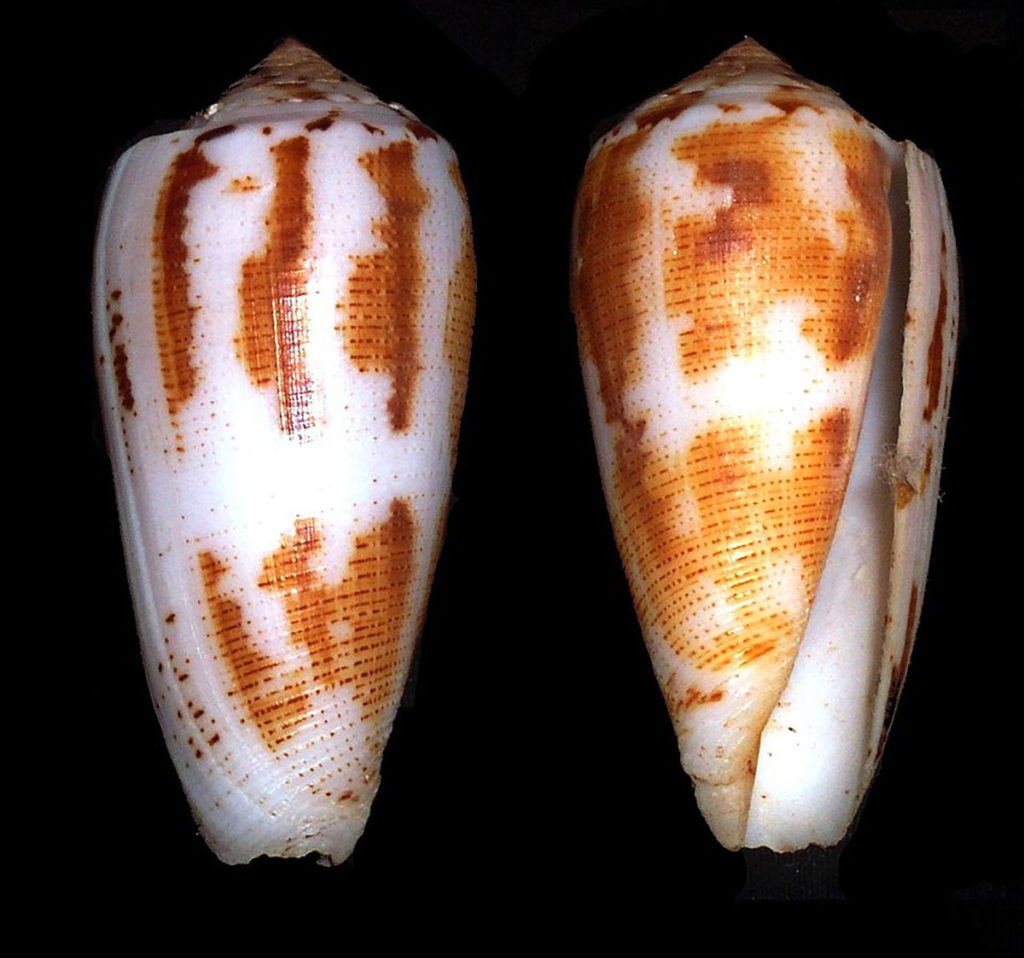 Сonus Magus. Image: Richard Parker, CC BY 2.0, via Wikimedia Commons
This substance, also known under the trade namecalled Prialt, proved to be one of the most powerful non-opioid painkillers. It is a thousand times stronger than morphine. After years of research, ziconotide was approved in the US in 2004, in Europe in 2005, and later in many other countries around the world.
In addition to its medicinal value, ziconotide and other substances isolated from the poison of Conus Magus are actively used to study the functioning of the central nervous system.
Craig Clark (posthumously), Lourdes Cruz, MichaelMcIntosh and Baldomero Oliver received the Golden Goose for "A non-opioid pain reliever found in the venom of tiny cone snails that significantly reduces pain in chronically ill patients and helps researchers develop new ways to map the body's nervous system."
Stories of amazing discoveries show that notthere are hopeless situations, and a real scientist will always find a place for experiments and discoveries. Perhaps having problems with suppliers or lack of equipment is not an obstacle, but a chance to create something new.
Read more:
Physicists explain Hawking's 'cosmic mismatch': how it will change science
See photos of the Sun in record resolution
The space plane will deliver cargo to the ISS and land at a regular "airport"