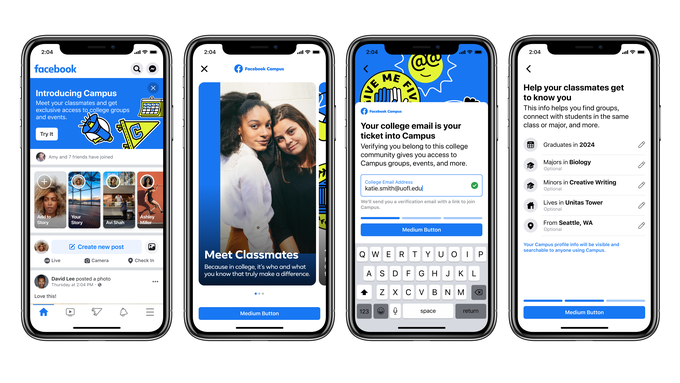
The new platform requires a school email address (@.edu) and will be located in a dedicated
"We wanted to create a product whereIt would be easy for classmates to meet each other, form new relationships, and start conversations easily,” explains Facebook Campus Product Manager Charmaine Hung. “And we think Campus is more relevant now than ever. Due to COVID-19, we are seeing many students not returning to campus in the fall. With classes now taking place online, students are trying to respond to this new normal of connecting with clubs and organizations you care about when you're not together, she added.
More broadly, Facebook probably wanted to solve its "teen problem," and Facebook Campus is the solution.
 Credit: Facebook


Facebook is reportedly losing influence onyouth as the company has shifted its focus to other social apps such as YouTube, Snapchat and Instagram. According to a 2018 Pew Research Center study, only 51% of US users ages 13 to 17 said they used Facebook, down from 71% who said the same in 2015. Meanwhile, a 2019 Edison Research survey found that Facebook has lost 15 million users since 2017, with the largest decline in the 12 to 34 year old group.
Facebook Campus was created to bring back theseusers, offering a more exclusive private networking site on Facebook. In a way, this is similar to Facebook's work in meeting the needs of corporate users with the Facebook Workplace. Rather than being new ideas for social media, these platforms use existing Facebook technologies like news feed and groups to provide solutions for specific demographic groups.
At launch, Facebook Campus is only available at approximately 30 US colleges and universities but the company plans to expand over time.
Students may be asked to joincampus via a News Feed prompt if Facebook has enough data to indicate they are likely to attend a supported college. For example, if a Facebook user regularly visited a supported university's Facebook page, the platform might show a Facebook campus registration prompt.
Aside from the .edu email address, the Facebook campus requires a graduation year - and it must be no more than five years after the present.
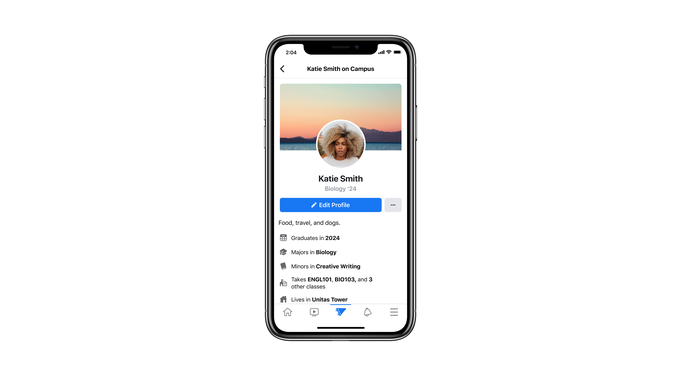
After registration, students create their profile inthe Facebook campus. While this is linked on the back with the student's main Facebook profile, it allows them to add college-specific details that won't automatically appear anywhere else on Facebook. This is where campus users can add their graduation year, dormitory, major and minor classes they attend, hometown, Instagram profile, and more.
This information can only be viewed by other Facebook Campus users who attend the same school.
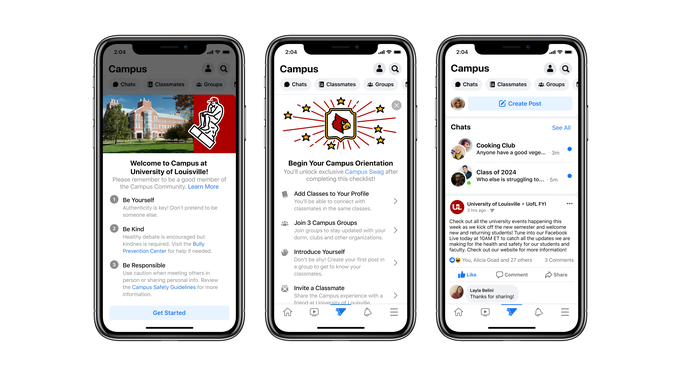
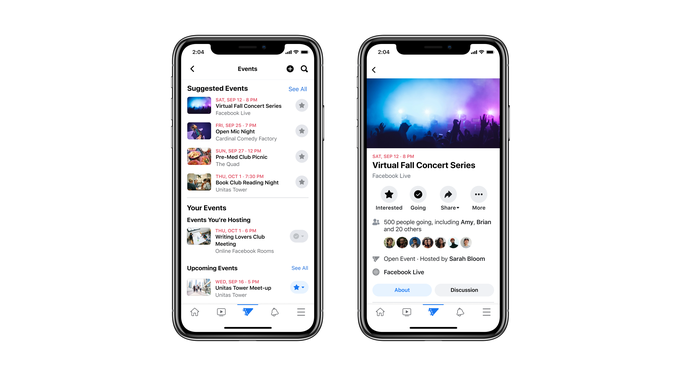
On campus Facebook, students can also openfor yourself and join your school's groups and events. These groups and events essentially function the same as on Facebook itself, except that they can only be accessed by students.
Facebook Campus also has its owna private chat section that is separate from Facebook and Messenger. These group chats work a little differently, as users don't really need to search for and invite members. Instead, students in a specific group can join the associated chat if they want.
Facebook claims the solution helps reduce spam and allows users to focus their energies on interacting with the small communities in which they participate.
At the launch of the campus, Facebook willsupport the following universities and colleges: Benedict College; Brown University; California Institute of Technology; College of William and Mary; Duke University; Florida International University; Georgia Southern University; Georgia State University; Johns Hopkins University; Lane College; Lincoln University (Pennsylvania); Middlebury College; New Jersey Institute of Technology; Northwestern University; Rice University; Sarah Lawrence College; Scripps College; Smith College; Spelman College; Stephen F. Austin State University; Tufts University; Albany University - State University of New York; University of Hartford; University of Louisville; University of Pennsylvania; University of Wisconsin-Eau Claire; Vassar College; Virginia Institute of Technology; Wellesley College; and Wesleyan University.
Read also
Russian vaccine against COVID-19 entered civilian circulation, but there are many complaints about it
On day 3 of illness, most COVID-19 patients lose their sense of smell and often suffer from a runny nose
Scientists have found out why children are the most dangerous carriers of COVID-19