On September 9, 2015, doctors from the Scientific Research Institute of Dog and Traumatology named after. R. M. Gorbacheva was the first to use the method of fecal transplantation
Part of a healthy donor
What problem does the fecal microbiota transplant method solve?
- The method appeared in 1958, when the AmericanSurgeon Ben Eisman cured four patients with pseudomembranous colitis with a fecal transplant. The method has been revived due to new diagnostic methods, such as 16S sequencing. Until the mid-1990s, it was believed that dozens of bacteria lived in the intestines. And with the advent of this method, it turned out that there are thousands of species in different proportions. And each person has an individual composition of the microbiota. Knowing this, we decided to try the method of transplantation of fecal microbiota in graft-versus-host disease (GVHD).
16S rRNA gene sequencing uses data onnucleotide sequences of isolated pure cultures. The 16S rRNA gene was chosen as a universal marker for species identification: it is present in the genomes of all prokaryotes and has relatively low variability. The 16S rRNA gene sequencing method is the “gold standard” for the accuracy of bacterial species identification.
Fecal microbiota transplantation aims toimprove the results of therapy for GVHD with intestinal involvement. We first investigated what happens to the microbiota in GI GVHD patients. Compared to the period before HSCT (hematopoietic stem cell transplantation), the qualitative and quantitative composition of the microbiota changes significantly. The number of active-metabolizing, anaerobic bacteria sharply decreases, and the number of bacteria that cause inflammation increases, a pronounced imbalance of the biological ecosystem appears. There was a suggestion: can we change this imbalance by transplanting the microbiota from a healthy donor?
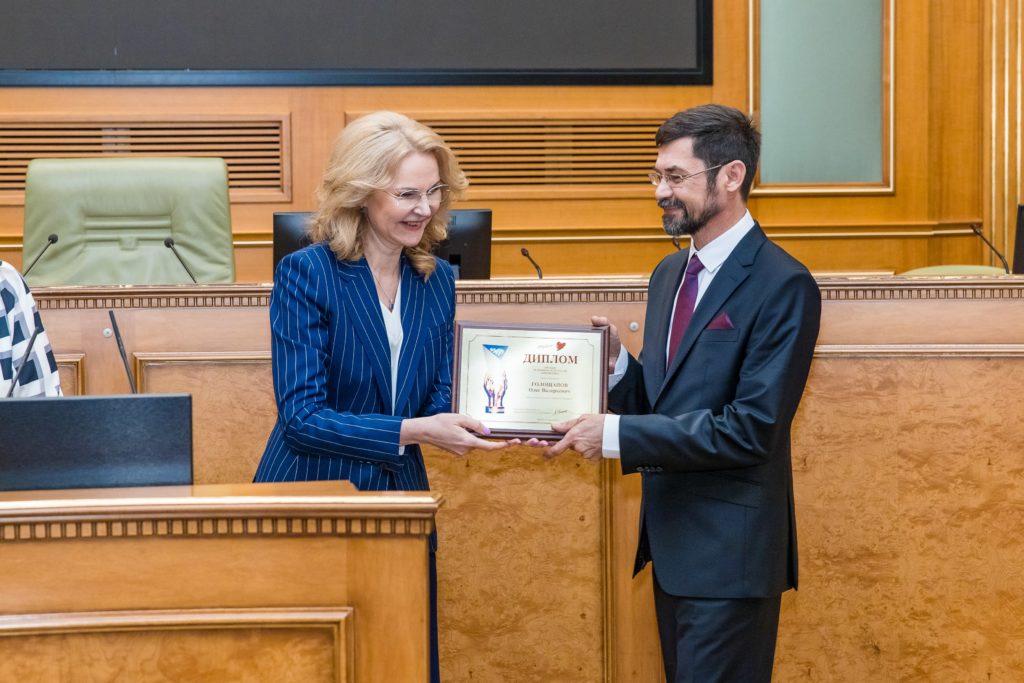 Oleg Goloshchapov
— What is the difference between intestinal GVHD and other inflammatory bowel diseases that are treated with the same method?
- In the reasons for the appearance.Inflammatory bowel disease (IBD) is a genetically determined change in the immune system. These are innate changes that show up over time. And GVHD is a consequence of bone marrow transplantation, in which someone else's immune system is transplanted into a person. After transplantation, new immune cells appear in the patient's body that "fight" with tissues in an unfamiliar organism - this is the graft-versus-host disease, GVHD.
At the same time, the reactiongraft versus tumor: new immune cells find and destroy remaining cancer cells. In many cases, this is a necessary process for the patient's body, subject to reliable drug control. At the same time, the clinical picture of GVHD with intestinal involvement is indeed very similar to IBD. And the histological picture is similar, and therapy.
Oleg Goloshchapov graduated from medical school inArmavir in 1989 and St. Petersburg Pediatric Medical Academy in 1995. Trained and worked in Germany and Austria. In 2021, he defended his Ph.D. thesis on the topic "The role of fecal calprotectin and microbiota correction in the diagnosis and treatment of acute graft-versus-host disease of the gastrointestinal tract after allogeneic transplantation of hematopoietic blood stem cells."
In 2017–2020, hematologists andresuscitators SRI DOGIT them. R. M. Gorbacheva and the Children's Scientific and Clinical Center for Infectious Diseases conducted a study that evaluated the clinical efficacy of the fecal microbiota transplantation (FMT) method in severe intestinal lesions in patients after bone marrow transplantation.
In 2022, a group of doctors who worked to improve and implement the FMT method into the regular practice of the clinic received the Vocation Award for inventing a new treatment method.
Last chance for salvation
How did you come up with the new method?
— We were based on the principles of off-label.If the patient's condition is severe, traditional remedies that are used in therapy do not help, the dynamics are negative, then a method is used that helps another category of patients in a similar situation. For example, we know that for Clostridial infection (an infection caused by the bacterium Clostridium difficile), the traditional treatment is fecal microbiota transplantation. Why not try if other methods - immunosuppression, probiotics, antibiotic therapy - do not work? We were the first in Russia to transplant a 10-year-old girl. Prior to this, the girl had been unsuccessfully treated for six months and the prognosis was doubtful.
— How was this procedure technically performed the first time?
We were extremely technically unsavvy. The graft was introduced by FGDS through the working channel of the endoscope behind the duodenum and by colonoscopy to the caecum.
- What has changed since then?
- Absolutely everything - for example, methods of administrationtransplant. There are traditional ways of delivery - through the upper gastrointestinal tract (using a gastroscope) and through the lower (colonoscope, ascending enema). The clinical effect is approximately the same, but with instrumental methods of administration, complications occur more often - perforations, vomiting, regurgitation, pneumonia. Therefore, we decided to take a different path, so that there would be no anesthesia and instrumental invasive delivery methods. Thus was born the idea of oral delivery of frozen capsules that contain microbiota.
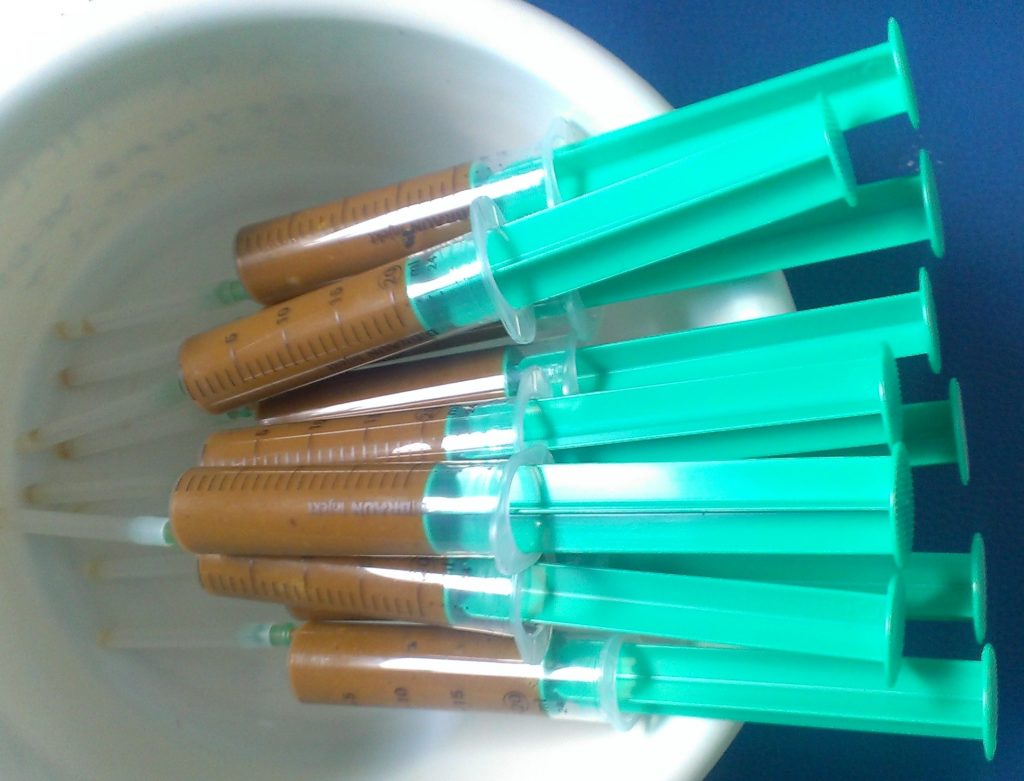 graft
graft
At first the question arose of where to prepare the graft,We do not do this in our clinic. We contacted the laboratory with which we conducted joint studies of fecal calprotectin and agreed to do a transplant from them. At first it was a trial and error path, then the technologies were tested and perfected. The graft was first brought in syringes and had to be inserted through a tube or FGDS within six hours after fabrication. And only then the idea with capsules and freezing was born. We carried out many experiments and developed a whole scheme for adding cryoprotectants to bacteria so that they would not be destroyed during cryopreservation. So we got very good results with defrosting and got to the capsules.
To create a transplant in capsules, usedonor cal. Donors are volunteers who are tested for compatibility with the patient based on the results of blood tests and the composition of the microbiota. Donor feces are mixed with glycerol and sterile sugar syrup, then placed in double hard gelatin capsules. The capsules are packed in sterile containers and placed in a freezer.
- And now you use only capsules?
Yes, both for adults and children.The only thing that could be a problem is children's age, under four years old. The youngest child who took the capsule was four years old. We needed to make sure that he would not chew it, not inhale it, but swallow it.
Had to ask the lab to do ittraining capsules. They froze saline and trained for a week so that the little patient would swallow three to four capsules a week. Everything went without complications. But what about younger children? In this case, ascending enema may be a promising and safe method of administration.
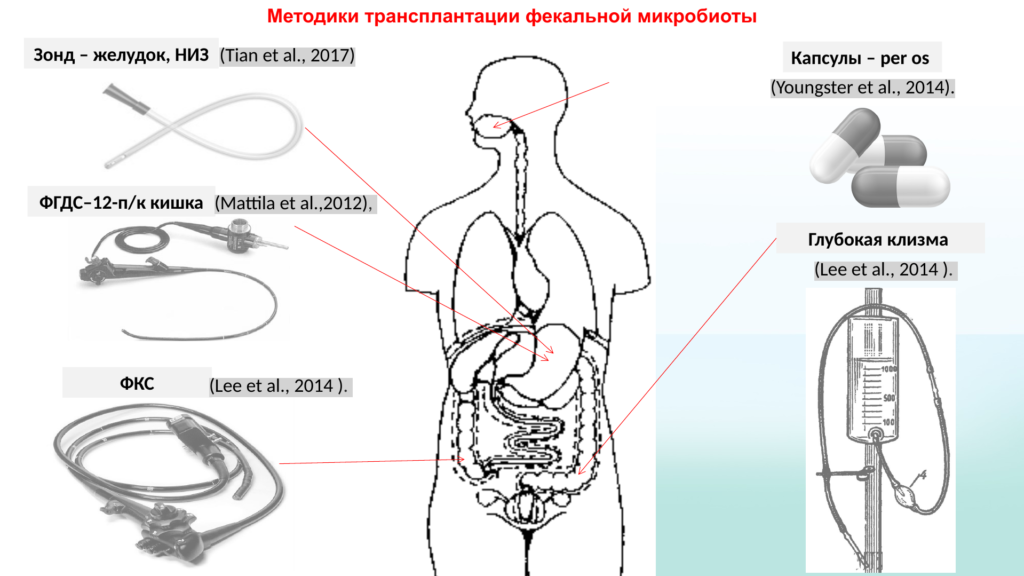 Transplant techniques
Expensive research and philanthropist contributions
— How does AdVita fund support you?
— AdVita helped at almost all stages.What does it take to perform a microbiota transplant? The patient needs to pass paid tests, then get capsules. They are also paid, but basically all the money goes to the examination of the donor - he needs to be examined very thoroughly, and this takes a huge amount of money. Therefore, after we tell the patient that a study needs to be done, we ask if the patient is registered with the fund. If so, things get a lot easier. Post-transplant study of patient's feces - also AdVita. And, again, sequencing is a very expensive study. AdVita also helped here, thanks to such support, we have advanced in science in terms of studying the composition of the microbiota during FMT.
— Judging by the number of publications, there is a feeling that you are massively applying this method.
— This is not a mass application, there are manycontraindications. The procedure cannot be performed after HSCT, in which leukocytes (granulocytes and lymphocytes) have not yet been restored in the peripheral blood. There must be immunity, because the introduction of a large number of microbes can cause infectious complications.
Patients with multiple organ failure are excluded.insufficiency - hepatic, renal, respiratory. This is not a pill that cures everything. Well, the patient's compliance (the patient's adherence to treatment, the degree of readiness to follow the doctor's prescriptions and recommendations) plays a big role. If the patient doubts the effectiveness, we do not perform the procedure.
— In terms of the scale of preparation and order of administration, it is similar to bone marrow transplantation. Is this comparable?
- Absolutely comparable.There is a package of documents, informed consent. On the first visit, the patient comes and gets acquainted with the new method of therapy, preferably with relatives. The patient is told about the principles of the method of therapy, the side and undesirable effects that may occur are explained in detail. What you need to pay attention to, what is acceptable, what is unacceptable. The patient agrees to this, studies at home, looks at open sources and makes a decision.
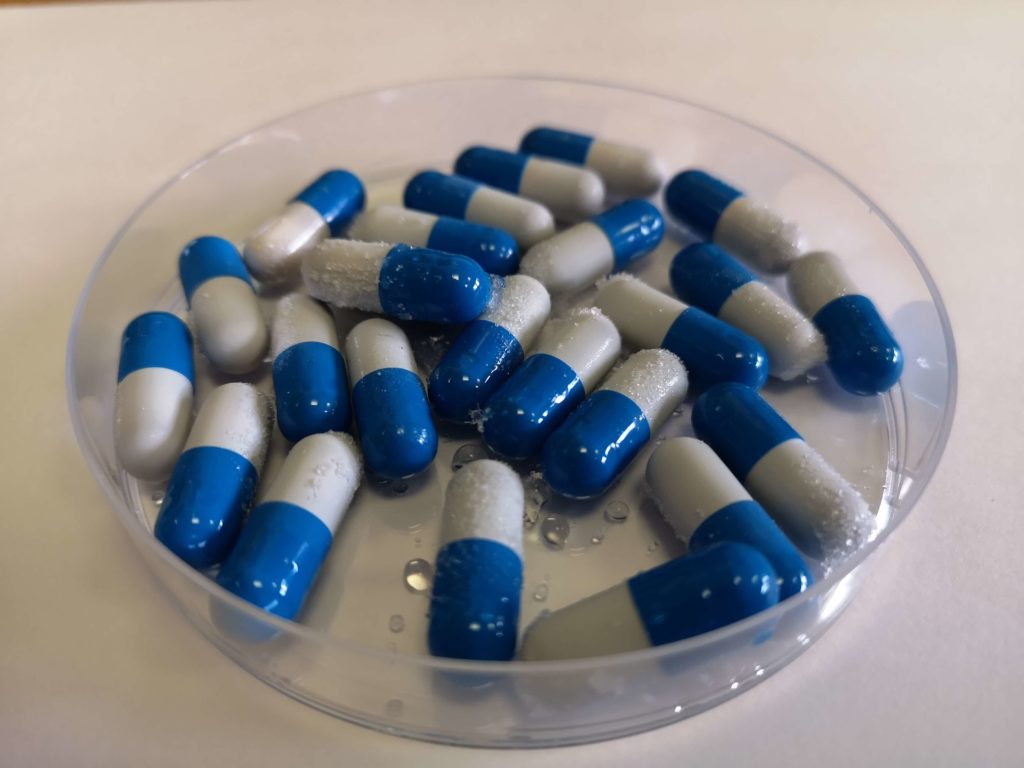 Graft capsules
— What is the current status of work on the method in your practice? Does the scientific community expect anything from you?
I don't like routine.Of course, we take our patients, now we have three or four of them, who received therapy a month ago. But if you apply the method only for therapeutic purposes and do not explore further, then everything will be quite boring. New points are needed that have not yet been explored, such as the decolonization of antibiotic-resistant bacteria, when patients have both GVHD with intestinal damage and Klebsiella pneumoniae (a bacterium that causes acute damage to the intestines and respiratory tract) in the intestines.
We send reports about our patients to a group,which deals with microbiota transplantation at the European Association for Bone Marrow Transplantation (EBMT). This group collects data that includes all microbiota transplants performed on GVHD patients across all clinics. And he publishes system reviews - large articles that talk about the method, side effects, effectiveness, and more. And we are not in last place here, because, unlike isolated cases of use in other countries, we have succeeded in a directly randomized clinical trial.
— Which specialists developed this method together with you?
“Many specialists are involved in it at once.Laboratory workers select and examine a donor, make capsules. Hematology doctors monitor patients and take them to a council where they discuss potential microbiota transplantation. Bacteriologists determine whether the patient is colonized by pathogenic flora. Molecular biologists study the composition of the microbiota at various stages of transplantation. Bioinformaticians, who then make a conclusion based on the results. This is a whole team, thanks to which the method from the ordinary has become promising.
Read more:
Living organisms have made Mars uninhabitable
The most powerful black hole collision in the universe proved Einstein's theory
The bones in the Midnight Terror Cave were carefully examined and found inexplicable footprints.