Researchers from the University of Gothenburg have discovered water channels (aquaporins) in fish cells with
Aquaporins are special proteins that formwater-conducting pores in cell membranes. Such proteins are found in the cells of all animals and plants. Fish live in aquatic environments of varying salinity, and some species can live on land for up to a week. This places special demands on their aquaporins so that they can constantly adjust the amount of water in their cells under a wide variety of conditions.
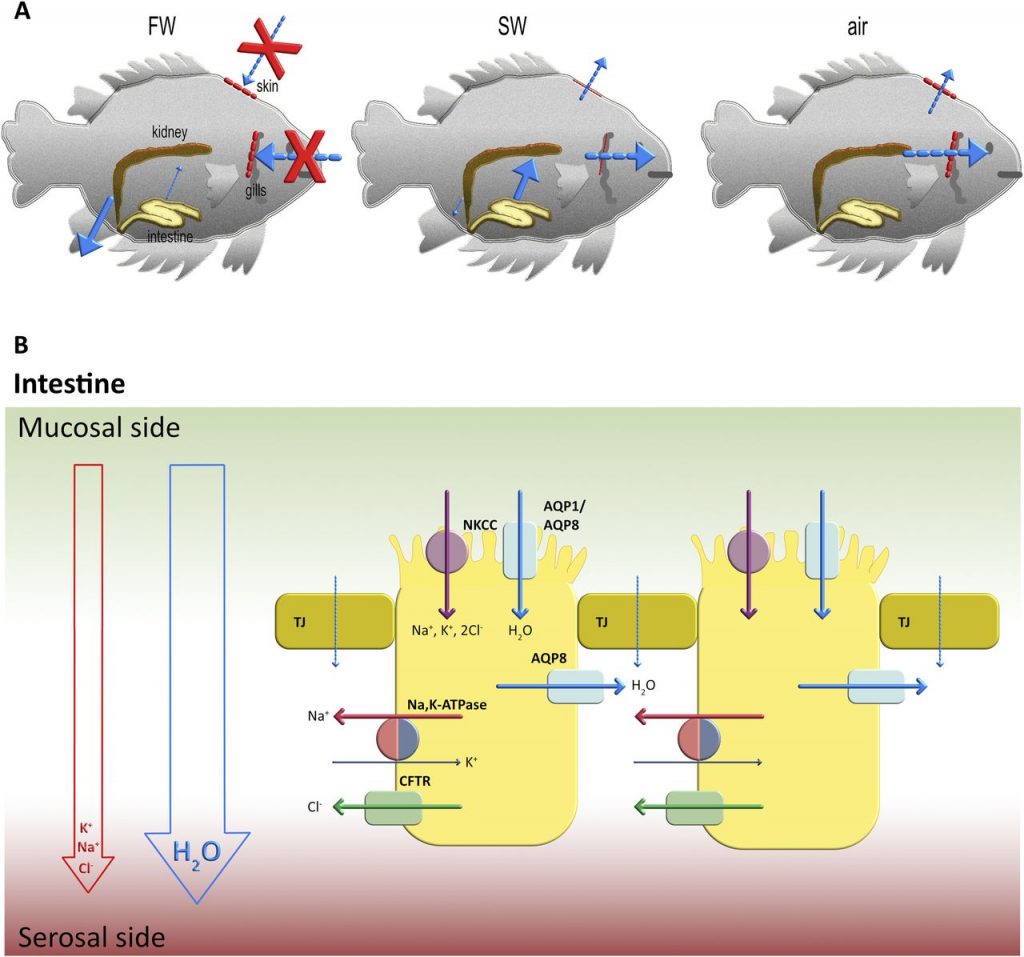 The function of aquaporins in fish in fresh and sea water and in the air. Image: Jiao Zeng et al., Life Science Alliance
The researchers analyzed the function of these proteins inone of the species of creeping fish: climbing perch (Anabas testudineus). They sometimes get out of the water and "spend time" on land. Scientists have discovered a water channel on the skin and in the gills of these fish, which has a previously unknown quick-closing valve. It allows the water channel to quickly open or close depending on the changing habitat of the fish.
Understanding how aquaporins work hasimportant for research into new drugs to treat, for example, cerebral edema, the scientists explain. When cerebral edema occurs, it is vital to be able to relieve the pressure before damage occurs.
By culturing protein in the laboratory,forming a valve in the water channel of fish, the researchers identified features that can regulate the balance of cell fluid during rapid changes. Previous research has shown that brain aquaporin function declines with the onset of Alzheimer's disease, so this study could also be an important step towards drug development in this area, the scientists add.
Read more:
Created a navigation system that is more accurate than GPS
An ancient amulet rewrote the history of Europe's most mysterious language
Tiny satellite sends last photo before crashing into Earth's atmosphere