400 km east of Nova Scotia, two local residents discovered an unusual object among the sea catch
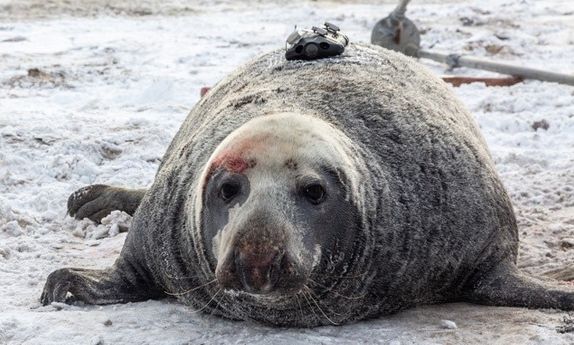 A gray seal with a camera rests on the beach of Sable Island.
Credit: Damian Lydgard.
Scientists attached a camera to a seal in framesan ongoing population study from Sable Island. Since 2009, the Dalhousie-based Ocean Tracking Network (OTN) has been tagging and tracking gray seals on the island to document their movements and interactions with other marine species. Also, individuals are equipped with instruments to measure water temperature and other conditions in the ocean.
It wasn't until October 2015 that cameras starteduse for collecting video materials about feeding seals. In total, scientists attached cameras to eight seals—seven females and one male. To extend battery life, the cameras are programmed to begin recording when feeding conditions are optimal: at night and at a depth of at least 25 meters from the surface.
After returning to OTN the camera was sentto the manufacturer to repair it and receive the footage. Files stored in the camera may reveal new information about gray seal behavior, as well as confirm previous findings based on non-visual data.
Damian Lydgard, an OTN researcher, stated thatthis study of the life of seals is of great importance for the preservation of their species. He also added that after the incident with the male, scientists decided to install cameras only on pregnant females.
To read Further
Look at the updated F-15 fighters: they carry 24 air-to-surface missiles
A spaceship several kilometers away: everything that is known about China's new project
By 2100, 95% of the oceans will be uninhabitable