Fruit flies cannot move their eyes relative to the rest of their head. However, this is not a problem
Discuss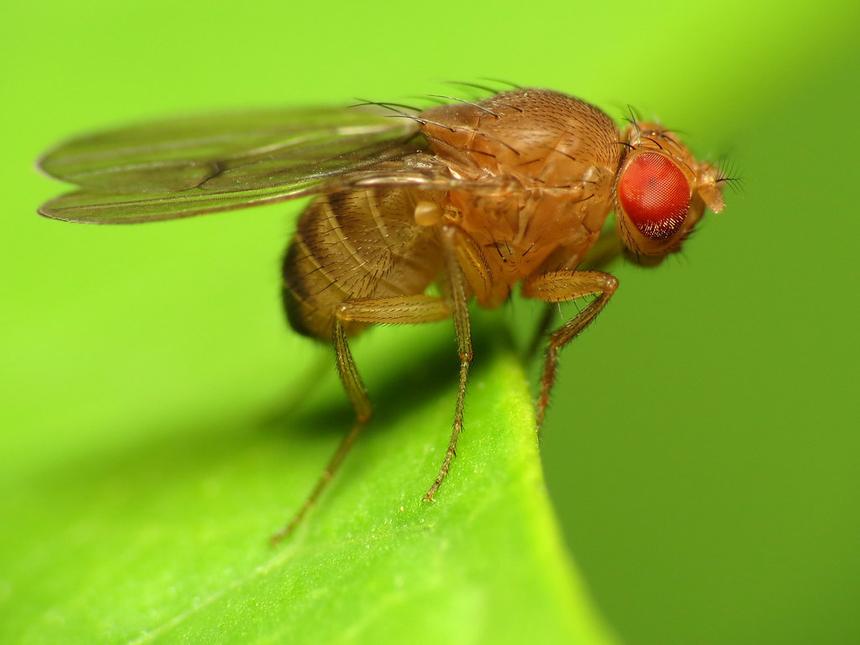
Using a fluorescent molecule thatbinds to muscle fibers, scientists first discovered that fruit flies actually have two muscles attached to each of their retinas – These muscles allow the retina to move both back and forth and up and down. When flies were placed in front of a panoramic LED screen with their head still, they were found to move their retinas to follow the moving patterns that were displayed on the screen.
However, eye movements are used not only forto follow the action. When we look at stationary objects, our eyes still make tiny, involuntary movements known as microsaccades. They prevent our visual neurons from adapting to visual stimuli, so our eyes continue to see what we are looking at. Otherwise, the image of the object we perceive would begin to disappear until we made a conscious effort to shift our gaze.
When flies were presented with still scenes, theythe retina also made tiny microsaccade-like movements. It is hypothesized that along with the purpose that microsaccades serve in humans and other animals, retinal movements in flies may also help improve the resolution of their vision – while we have about 150 million photoreceptor neurons in each eye, fruit flies have only about 6,000.
When flies were kept on a treadmill with smallgaps on the surface, their retinas moved towards each other at the moment the gaps crossed – which they did easily. When the same test was performed on flies whose retinas were designed to move more slowly, the insects had a harder time crossing the gaps. This suggests that by crossing their retinas, fruit flies are able to estimate the distance to slits approaching them.