- Flying car
The team of the Japanese company SkyDrive Inc. demonstrated its "flying car" - it
- Diamond batteries on nuclear waste
Representatives of the manufacturing companybatteries NDB said their new diamond pacemaker batteries, fueled by nuclear waste, could last thousands of years. Also, these unique batteries can power a cell phone for nine years, and when used in cars, they will last for a year of service. The company also said it has found a safe way to use nuclear waste from power plants to make its batteries.

- AI makes photos 60 times sharper
Duke University scientists presentedan artificial intelligence app that makes blurred face photos more than 60 times sharper. However, the authors admitted that the resulting photographs were not realistic depictions of people in the original photographs, but were predictions of what they might look like.

- Store energy using gravity
And the British startup Gravitricity has begun construction of a renewable energy storage system, which will beThe patented technology is based on a simple principle: lift and lower a heavy load to store and release energy.Gravitricity will manipulate massive loads in the high shaft to store and distribute energy as needed.
- New carbon neutral fuel
A team of scientists from the University of Cambridgehas developed a self-contained device that converts sunlight, carbon dioxide and water into carbon-neutral fuels without any additional components or electricity. The team has taken a significant step towards achieving artificial photosynthesis.
- New programming language
Researchers at Carnegie Mellon Universitypresented a new coding language and tool for high-performance parallel programs that guarantee provable correctness of programs, that is, mathematically proven correctness of code calculations. A language and tool called Armada was unveiled at this year's Programming Language Development and Implementation Conference, and the document won the Distinguished Paper award.
- Superhuman AI performance
A group of researchers from the University of Zurich,working with SONY AI Zurich, developed a deep learning model that allowed for superhuman performance in Gran Turismo Sport, the acclaimed video game about car racing. In their paper describing their system uploaded to the arXiv preprint server, the researchers described the system as highlighting the potential of deep learning techniques for driving cars in simulated environments.
- Underwater Wi-Fi
A team of researchers from the University of Science andKing Abdullah Technology has developed an underwater Wi-Fi system using LEDs and lasers called Aqua-Fi. The system can support internet services, using LEDs to provide low-power options for short-distance communications and lasers to transmit data further, but with more power. Their prototype was capable of uploading and downloading multimedia content between two computers located under water at a distance of two meters from each other.

- New Tesla Battery
Back in May, Tesla announced that the company had developed a new battery that couldchange the economy of cars. Tesla has promised that the new battery will last longer and will becost less than those currently in use.to the fact that the price of electric cars will be more in line with the price of diesel.
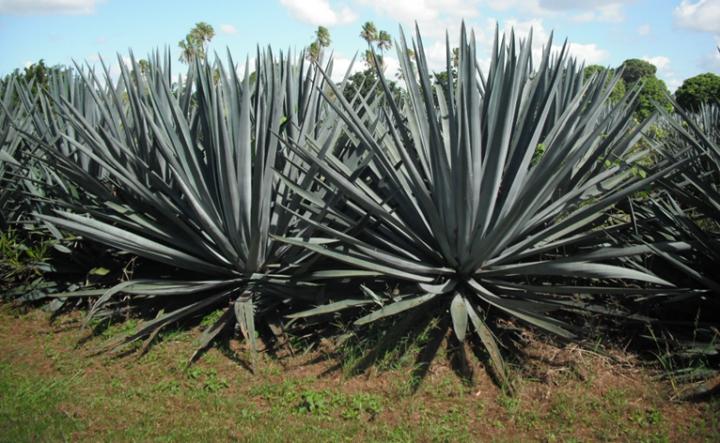
- Biofuel from tequila
Joint research team from SydneyThe University, the University of Exeter and the University of Adelaide have found that biofuels based on tequila are more efficient than those based on corn or sugar. Specifically, they found that the agave used to make tequila could be used in arid places like Australia and Mexico to make bioethanol for use as fuel and ethanol as an ingredient in hand sanitizer during a pandemic - all of which without competition with food crops.
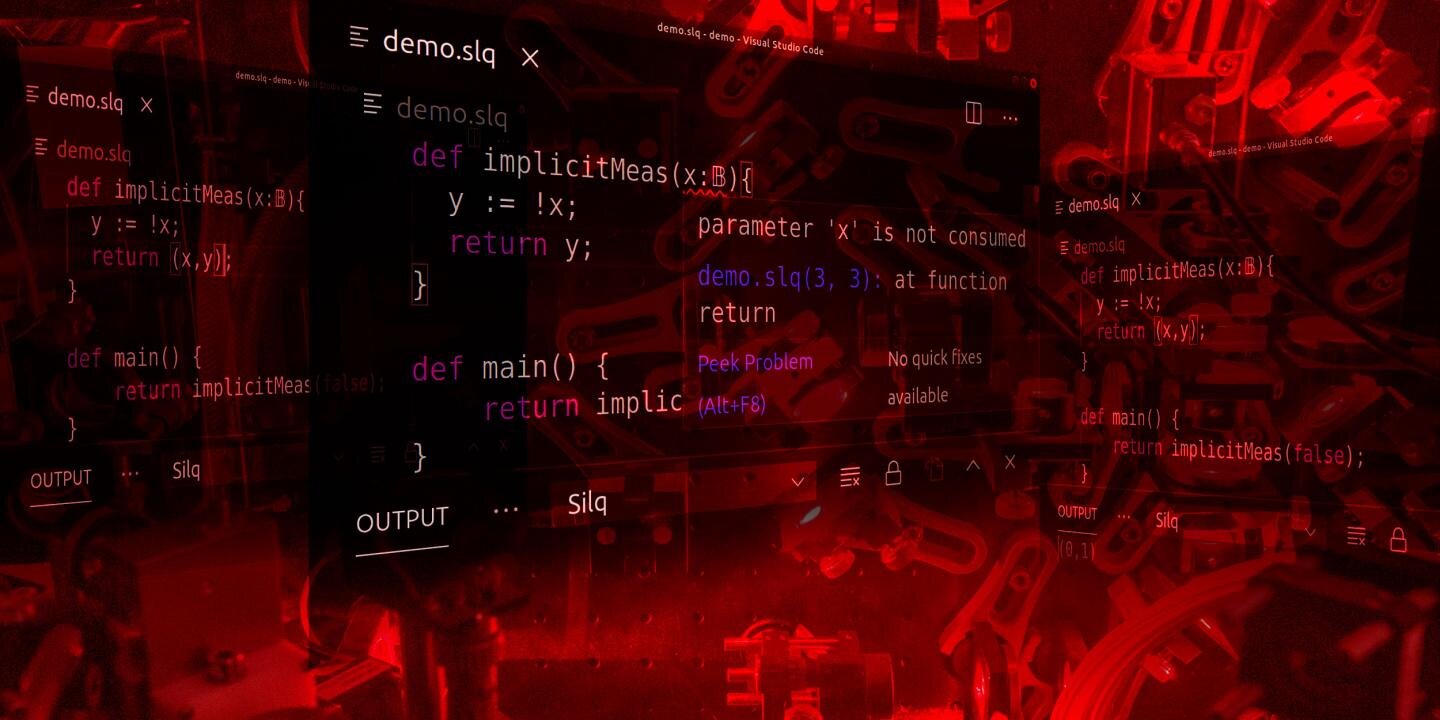
- A comprehensible programming language for quantum computers
The ETH Zurich team developed the first intuitivelyunderstandable programming language for quantum computers. A new language called Silq can be used to program quantum computers just as easily, reliably, and securely as classical computers. This will allow programmers to realize the potential of quantum computers - the new code is more compact, faster, more intuitive and easier to understand.
- Wireless electricity
New energy company from New Zealandbelieves it can power the world with a wireless power transmission system that can transfer power to hard-to-reach areas at a lower cost than traditional power lines.
Startup Emrod teamed up with leadingutility company to test power transmission using a number of antennas. The only limiting factor is that the antennas must be in line of sight with each other.
Read also
Abortion and science: what will happen to the children who will give birth
Check out the most beautiful pictures of Hubble. What has the telescope seen in 30 years?
"Study failed": Sputnik V testers will no longer receive placebo