The age of the discovered fossil is from35 to 39 million years old.
Gharials have a long snout and specialize infishing. Members of this family living today are endangered: the false gharial (Tomistoma schlegelii) in the Malay Peninsula, Borneo, Sumatra and Java, as well as the gharial (Gavialis gangeticus) in Nepal and India. The exact relationship between these modern crocodilian species has not yet been definitively elucidated, despite genetic research.
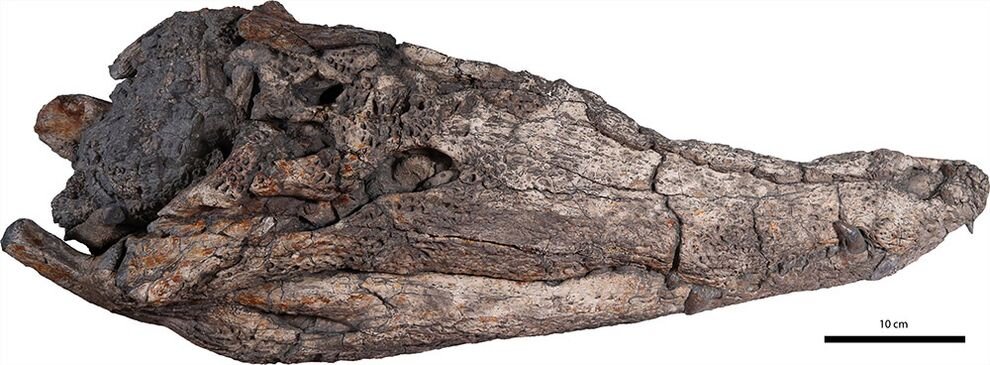 Ancient gharial skull
Based on numerous fossil findsfalse gharials from North Africa and Europe, paleontologists believe that this species of crocodiles originated more than 50 million years ago in the western part of Tethys, the predecessor of the modern Mediterranean Sea. However, little is known about how, why, and when exactly this species came to South Asia.
The newly described species has been named Maomingosuchusacutirostris (acutirostris means "sharp-nosed" in Latin) and, along with known species of crocodiles from southern China and Thailand, is the oldest representative of false gharials in Asia. “The results showed that the spread of these species to Asia was not a one-time event, but rather a complex scenario,” said Tobias Massonne of the Senckenberg Center for Human Evolution and the Paleoenvironment at the University of Tübingen. “The data suggest that relatives of the false gharial independently colonized Southeast Asia three times. The first colonization of the stem line Maomingosuchus from North Africa and Western Europe into East Asia occurred during the Eocene, more than 39 million years ago.”
Read more:
Compare how the lunar eclipse was filmed by NASA and Roscosmos
How dark matter "communicates" with the one we are made of. Key points about the new study
Fecal transplant can reverse aging