Researchers have found fossils that help them resolve decades of debate about how early
The authors reconstructed the lumbar vertebrae from the lowerparts of the back. They belonged to one Australopithecus sediba and a woman from Malapa, South Africa. Sediba is an extinct species of australopithecine discovered in Malapa Cave in South Africa.
Together with previously discovered fragmentsarchaeologists have recovered one of the most complete specimens of the lower back. This helped researchers understand how an ancient human relative walked and climbed.
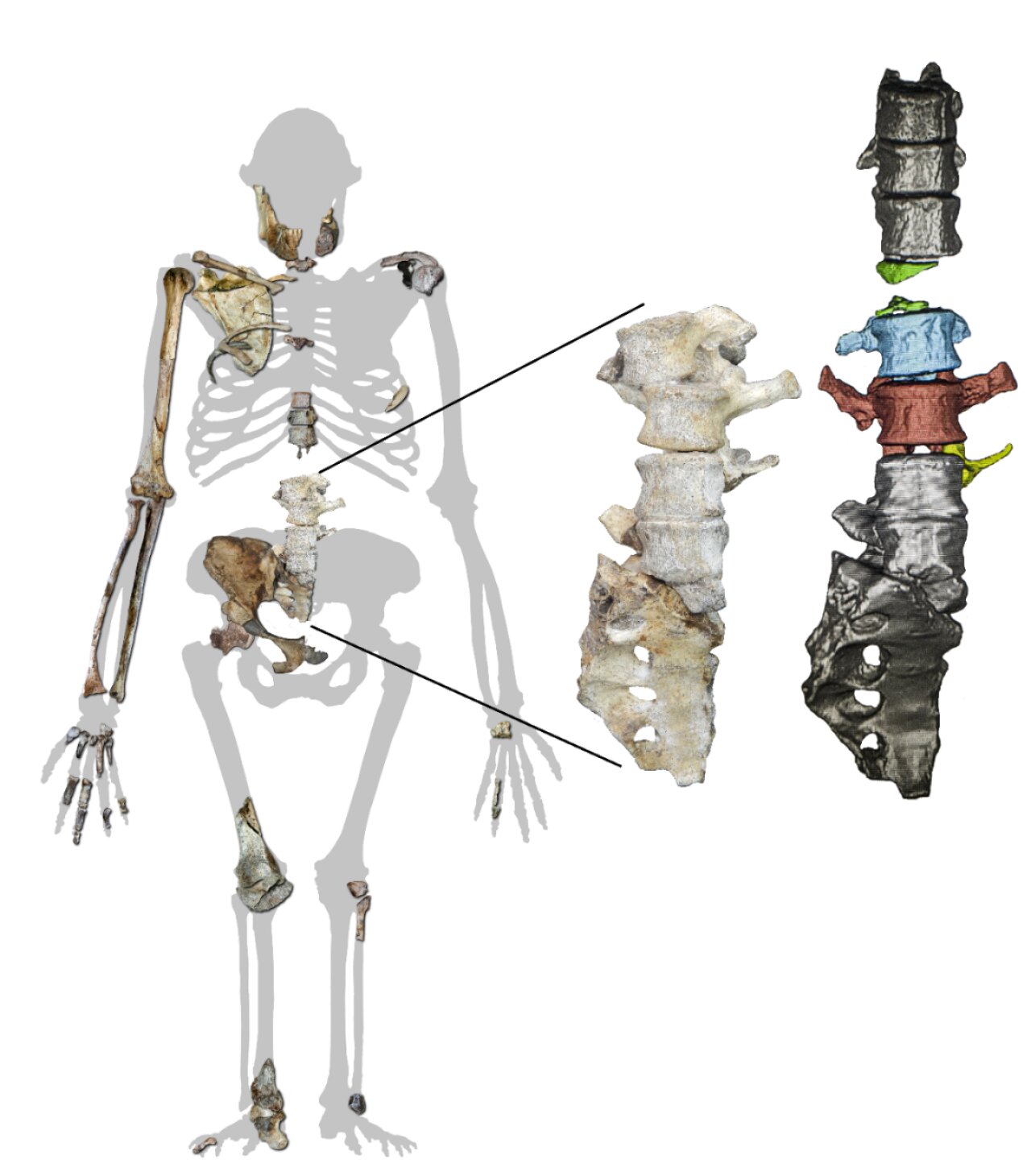
The fossils have been dated to about 2 million years BC. The vertebrae were removed from the cement rock. It turned out that the sediba, like humans, had only five lumbar vertebrae.
The lumbar region is critical to understanding how our ancestors began to walk on two legs, and how well they were adapted to it.
Scott Williams is a professor at New York University and Wits University and lead author of the paper.
In early studies, scientists suggested thatsediba had a relatively straight spine, without curvature, which is usually observed in modern people. They also believed it looked more like the backbone of extinct Neanderthals and other more primitive ancient hominins older than 2 million years old.
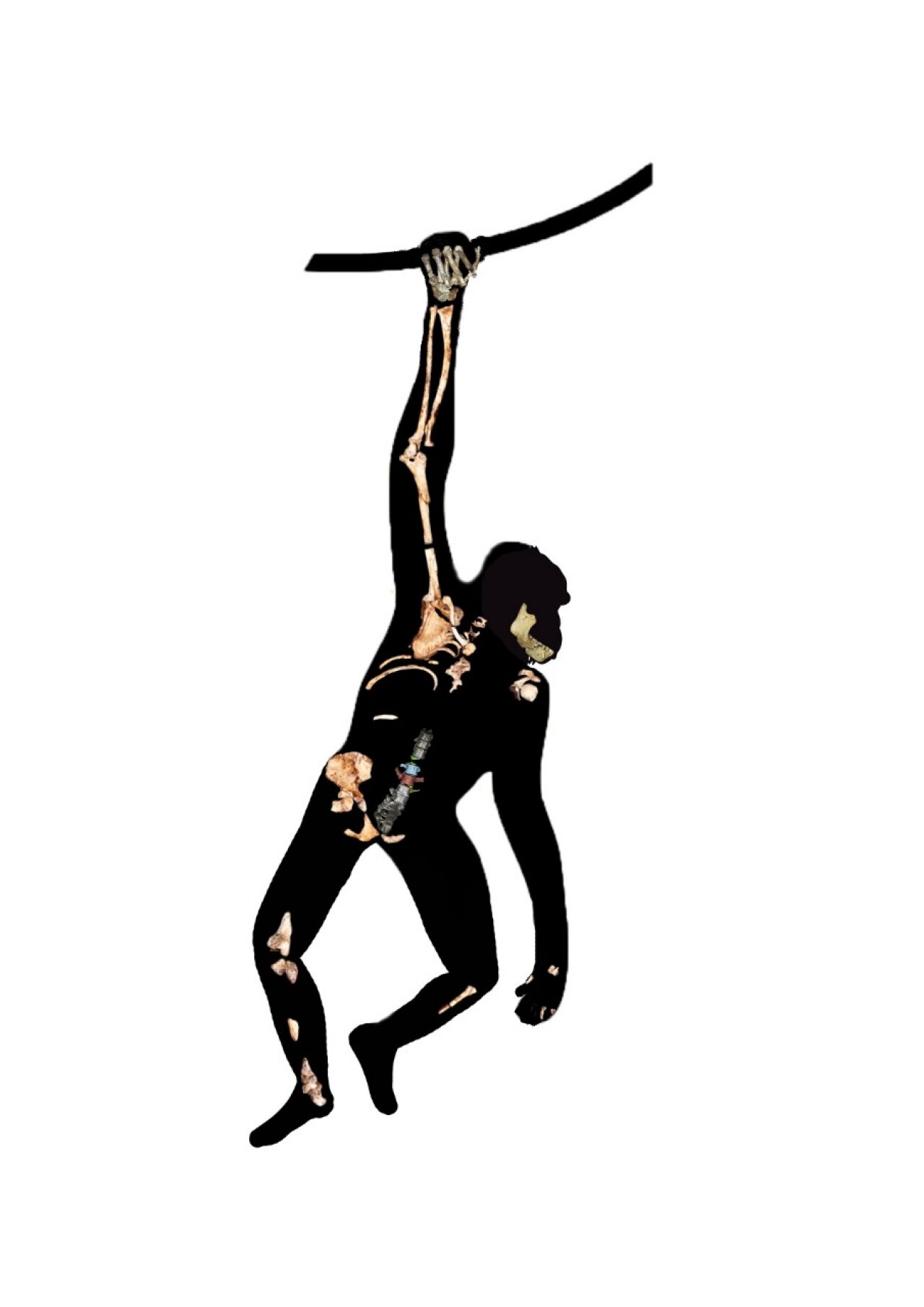
But the authors of the new work conclude that sedibais a transitional form of an ancient relative of man, and his spine clearly occupies an intermediate position between the spine of modern humans (and Neanderthals) and apes.
Read more:
The Chinese launched a missile from a hypersonic glider. Previously, no one succeeded
A flying robot beetle has appeared. This design increases its lifting force.
Scientists have proposed to create an artificial magnetosphere for Mars