Re-analysis of dental fossils preserved at the Bulgarian National Museum of Natural History,
Fossils have been discovered as far back as1970s in coal deposits near the village of Ognyanovo in Bulgaria. The researchers dated the find to the Miocene epoch. They believe that about 6 million years ago, representatives of this species moved through the wooded and swampy regions of Eastern Europe.
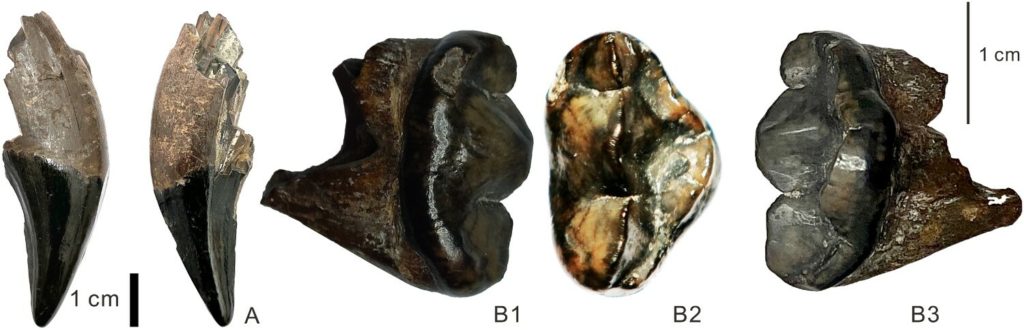 Teeth of Agriarctos nikolovi. Image: Jiangzuo, Spassov, Journal of Vertebrate Paleontology
Fossils of the grass that the modernpanda, are rare in the European fossil record, especially in the Bulgarian Late Miocene. And the points of the teeth do not seem strong enough to crush the lignified stems, the authors say. They believe that the ancient panda fed on softer plant materials.
Researchers believe that competition with otherviews for food pushed the panda to vegetarianism. At the same time, the teeth of Agriarctos nikolovi provided these animals with sufficient protection from predators. In addition, the fangs are comparable in size to those of a modern panda, suggesting that they belonged to an animal of the same or slightly smaller size.
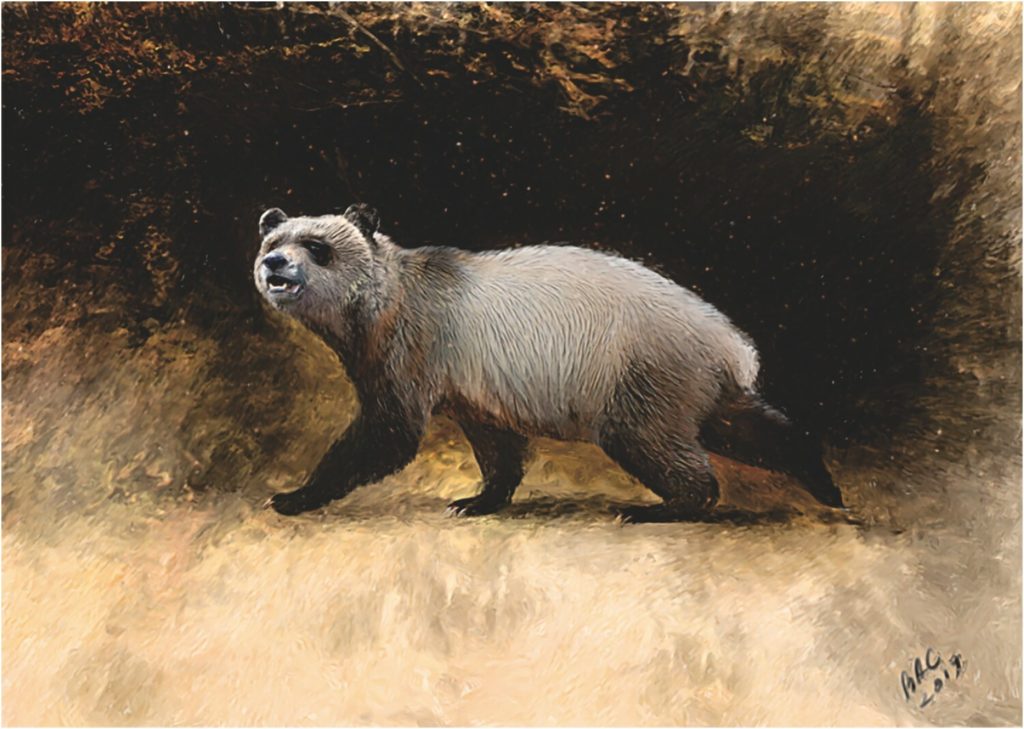 Reconstructed appearance of Agriarctos nikolovi. Image: Jiangzuo, Spassov, Journal of Vertebrate Paleontology
The giant panda is a species of omnivorous mammalcommon in the mountainous regions of China. Although this group of animals is now represented by a single living representative with a narrow habitat, it is believed that in the past related species inhabited Europe and Asia.
Researchers believe that the EuropeanAgriarctos nikolovi has disappeared as a result of climate change. The most likely cause is the "Messinian salinity crisis" - a geological event when the Mediterranean basin dried up, which significantly changed the surrounding terrestrial environment.
Read more:
An out-of-control Chinese rocket will soon fall back to Earth. What's happening
Scientists filmed a strange creature with tentacles, which they mistook for a flower
Marine archaeologists find wreckage from medieval shipwreck