The authors of the work explored the Atacama Desert. The place where the most remains of flying reptiles were found,
The researchers suggested that about 100 million years ago, in the lower Cretaceous period, there was a zone of the mouth of the river flooded at high tide, which is now called Quebrada Monardes.
The remains belong to pterosaursprehistoric flying reptiles. Contrary to popular misconception, pterosaurs are not dinosaurs. But they lived nearby. They are believed to have been the most common winged vertebrates of the era, but their remains are relatively infrequent.
Many bones were broken and broken, butthe researchers were able to find intact specimens and study them. As a result, they attributed them to Ctenochasmatidae, a family of pterosaurs that, unlike other related families, had the most teeth.
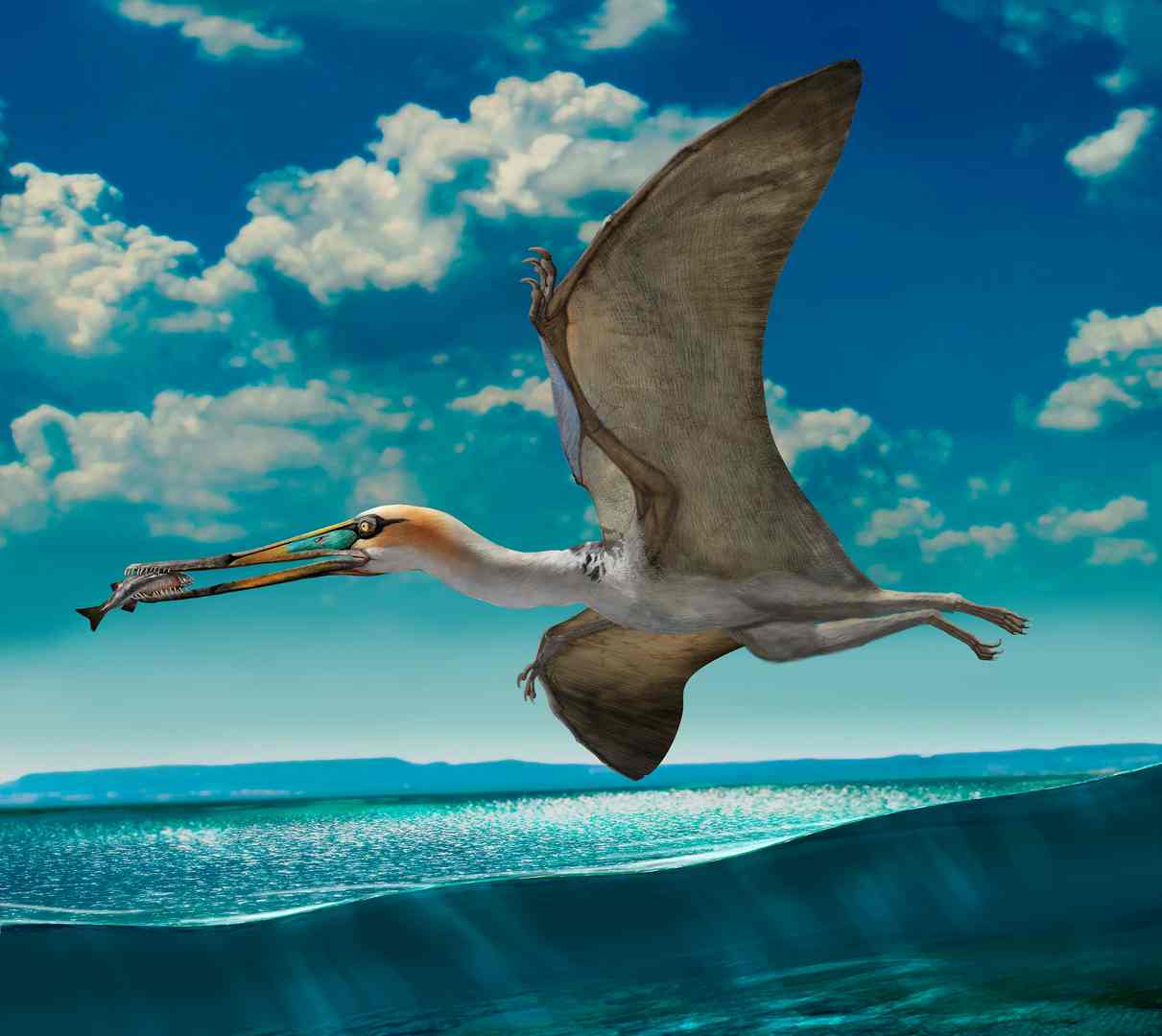 What a pterosaur, a representative of the family Ctenochasmatidae, might look like
According to the authors, pterosaurs lived en masse onnorth of modern Chile in the Jurassic (145-201 million years ago), as well as in the Lower Cretaceous (100-145 million years ago). They also concluded that if so many pterosaurs were concentrated in one place, then they probably created colonies.
Read more:
There is another “planet” inside the Earth: how it saved nascent life
New study refutes light energy transfer theory
Scientists added silicon to a quantum computer: calculations became record-breakingly accurate