Researchers at Tokyo Metropolitan University have shown that a protein called
Myokines are small proteins secreted by cellsskeletal muscles. They have a unique ability to act on cells both near and far from the place of their formation. Although biologists knew that these proteins play an important role in exercise-related bodily functions, it was still unknown how they are formed and work.
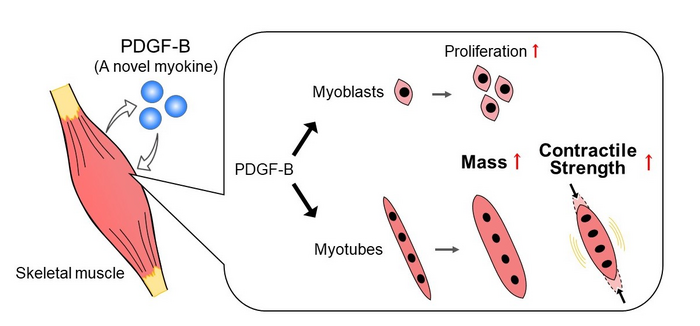 Effects of PDGF-B on stem and differentiated muscle cells. Image: Tokyo Metropolitan University
The researchers found that these proteins constantlyare formed in muscle cells without any external influences. In a series of experiments, the biologists exposed PDGF-B to muscle progenitor cells, stem cells that differentiate into muscle fibers. The study showed that this protein induces myoblast proliferation, an active multiplication that leads to tissue growth.
In addition, PDGF-B affects cells that are alreadydifferentiated. Myotubules - elements of muscle fibers that were affected by protein, noticeably increased in diameter. Experiments showed that the muscle's ability to contract increased, and strength increased. PDGF-B not only helps build muscle, it also makes them stronger, the study authors conclude.
The researchers believe that the new properties of the proteincan be used for muscle regeneration. This will help develop new methods for treating muscle injuries and atrophy, as well as optimizing physical training.
Read more:
Scientists have come up with a new treatment for hypertension. It has proven to be effective
Humans still have fur genes, but they are temporarily turned off
Look at the unusual "family portrait" of the Moon and the ISS. This photo was taken by an amateur