Researchers at the University of Bath, led by Dr Maysem Laabey and Dr Ian Blagbrough, discovered
Methicillin-resistant Staphylococcus aureus(English: Methicillin-resistant Staphylococcus aureus) is Staphylococcus aureus, which causes difficult-to-treat diseases in humans, such as sepsis and pneumonia. It is also called multidrug-resistant Staphylococcus aureus.
New compound —polyamine —appears to kill Staphylococcus aureus, the bacterium that causes (among other things) the deadly methicillin-resistant Staphylococcus aureus infection, by destroying the pathogen's cell membrane.
The compound was tested in vitro against10 different antibiotic-resistant strains of S. aureus. Including those known to be resistant to vancomycin, a drug called a “last resort” for patients with MRSA infection. The new compound turned out to be effective against all strains, which led to the cessation of further bacterial growth.
The study showed that, in addition todirect destruction S. aureus, polyamine is capable of restoring the sensitivity of multidrug-resistant bacterial strains to three important antibiotics - daptomycin, oxacillin and vancomycin. As a result, antibiotics that have become ineffective over decades of overuse may eventually regain the ability to control serious infections.
“We are not quite sure why this occursThere is such a synergy between the compound and antibiotics, but we are keen to explore this,” explained Dr Laabey, a researcher in the Department of Life Sciences at the University of Bath.
Polyamines are natural compounds thatfound in most living organisms. Just ten years ago they were thought to be essential to all life, but scientists now know they are missing from... aureus and are toxic to it. Researchers have already tried to exploit the pathogen's unusual vulnerability to polyamines to inhibit bacterial growth.
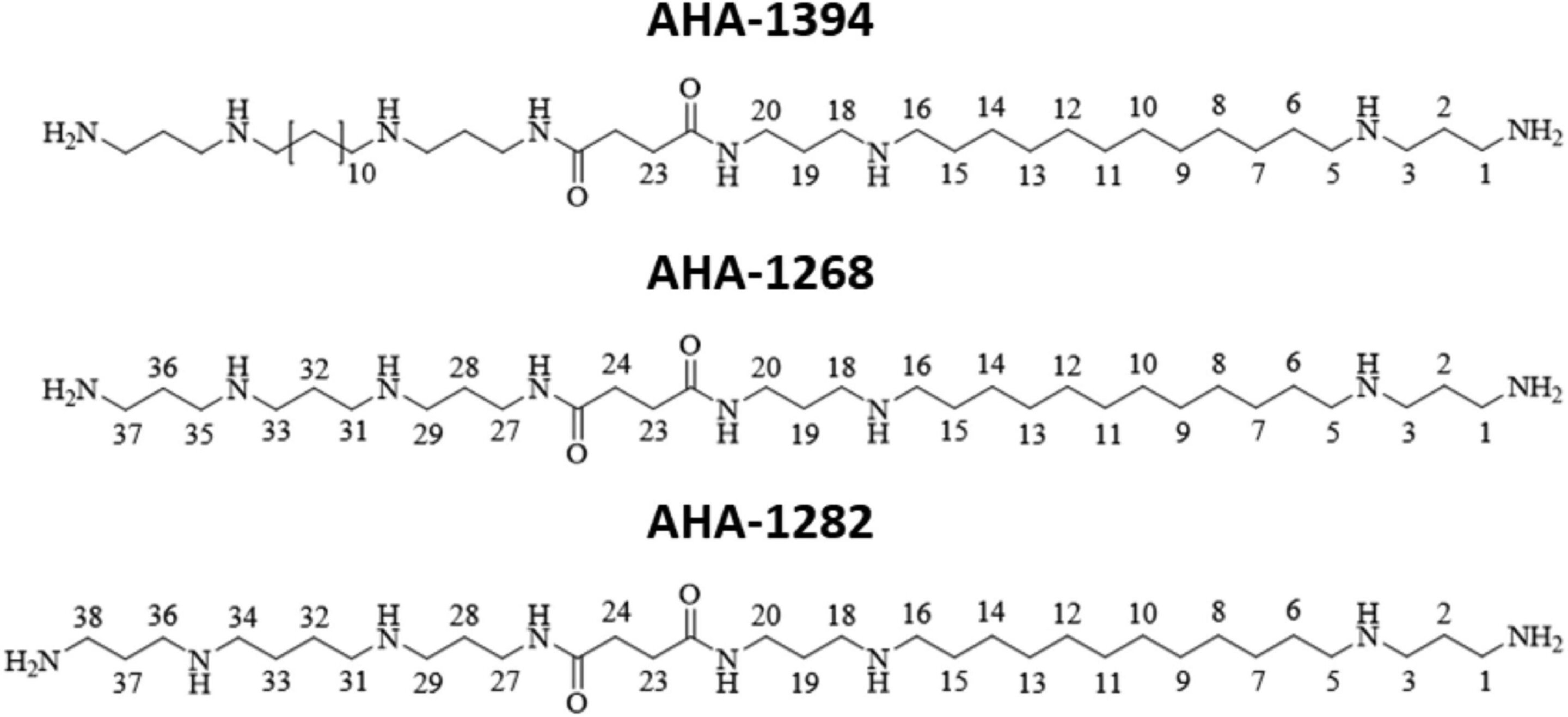 Structures of novel linear polyamines with improved antistaphylococcal activity used in this study.
Credit: Frontiers in Microbiology(2022).DOI: 10.3389/fmicb.2022.948343
Now scientists have discovered that the modifiedpolyamine (AHA-1394) is much more effective at destroying antibiotic-resistant strains of Staphylococcus aureus than even the most active natural polyamine.
Antibiotic resistance (orAntimicrobial resistance (AMR) poses a serious threat to human health worldwide, and S. aureus has become one of the deadliest multidrug-resistant pathogens known.
Recent study looking at the impact of AMRon health in 2019 found that this pathogen is associated with a million deaths worldwide as a result of infections not treated with antibiotics.
S.aureus occurs in 30% of the population and is one of the most dangerous bacteria in the world. Until recently, MRSA infection was viewed as a hospital problem, and those affected were mostly people with already weakened immune systems. However, over the past 20 years, there has been a community-wide surge in incidence, even among healthy people.
Read more:
An unknown species of winged insect "hidden" in amber for more than 35 million years
Gas leak from Nord Stream was shown from space
See how Jupiter and the Moon approached in the night sky
On the cover: an electron micrograph of a human neutrophil that absorbs MRSA
Source: National Institute of Allergy and Infectious Diseases (NIAID)