A group of researchers from the University of Turku in Finland has discovered a new property of a natural mineral.
In their work, scientists studied the impactalpha, beta and gamma radiation on hackmanite. To do this, the plates of the material were placed at different distances and for different periods of time from the radiation source. As a result, all samples received different doses of radiation.
After that, the samples were photographed, andscientists studied their reflectance spectra to get information about the depth of their color and whether the coloration was similar to samples exposed to, for example, ultraviolet light and X-rays. It turned out that under the influence of various types of radiation, this material changes its color, but in different ways.
At the same time, the researchers noticed that hackmanite,dyed with nuclear radiation can return to its original color when heated or exposed to white light, but the structure of the material retains a "memory" of high-energy alpha or gamma radiation.
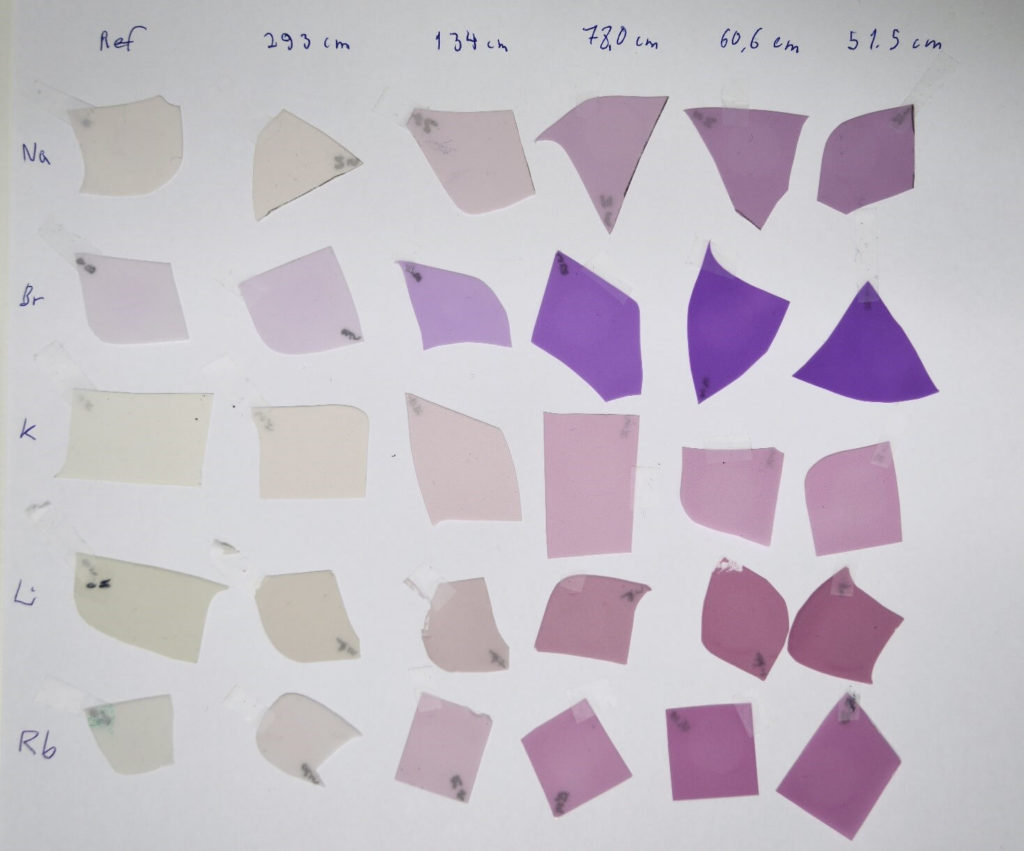 Plates from different types of hackmanite subjected to different irradiation. Photo: University of Turku
Defects left in the material becomevisible when the sample is restained with a UV lamp, the scientists explain. This cannot be seen with the naked eye, but spectrometry reveals a slight but distinct change in the waveform.
Radioactive radiation surrounds us everywhere,scientists note. For example, it can be encountered in many medical applications, nuclear, space and military industries. Malfunctions of such devices can lead to dangerous consequences. Using a non-toxic material as a detector will help prevent them.
Read more:
It turned out what happens to the human brain after one hour in the forest
It became known which tea destroys protein in the brain
Strange sea creatures in the depths of the ocean turned out to be similar to humans