A group of researchers introduced a unique gene, ARHGAP11B, into the chimpanzee brain organoid, which is found only in chimpanzees.
The chimpanzee is one of the closest related species.modern man. Since experiments on live monkeys are prohibited, the researchers used pluripotent stem cells to create tiny test-tube models of the brain. Such organelles have been grown from the brains of humans and chimpanzees.
Scientists have long known that the ARHGAP11B gene playsan important role in the development of the new cortex (neocortex) of the brain, a key area responsible for thinking. However, until now it remained unclear how significant its impact was.
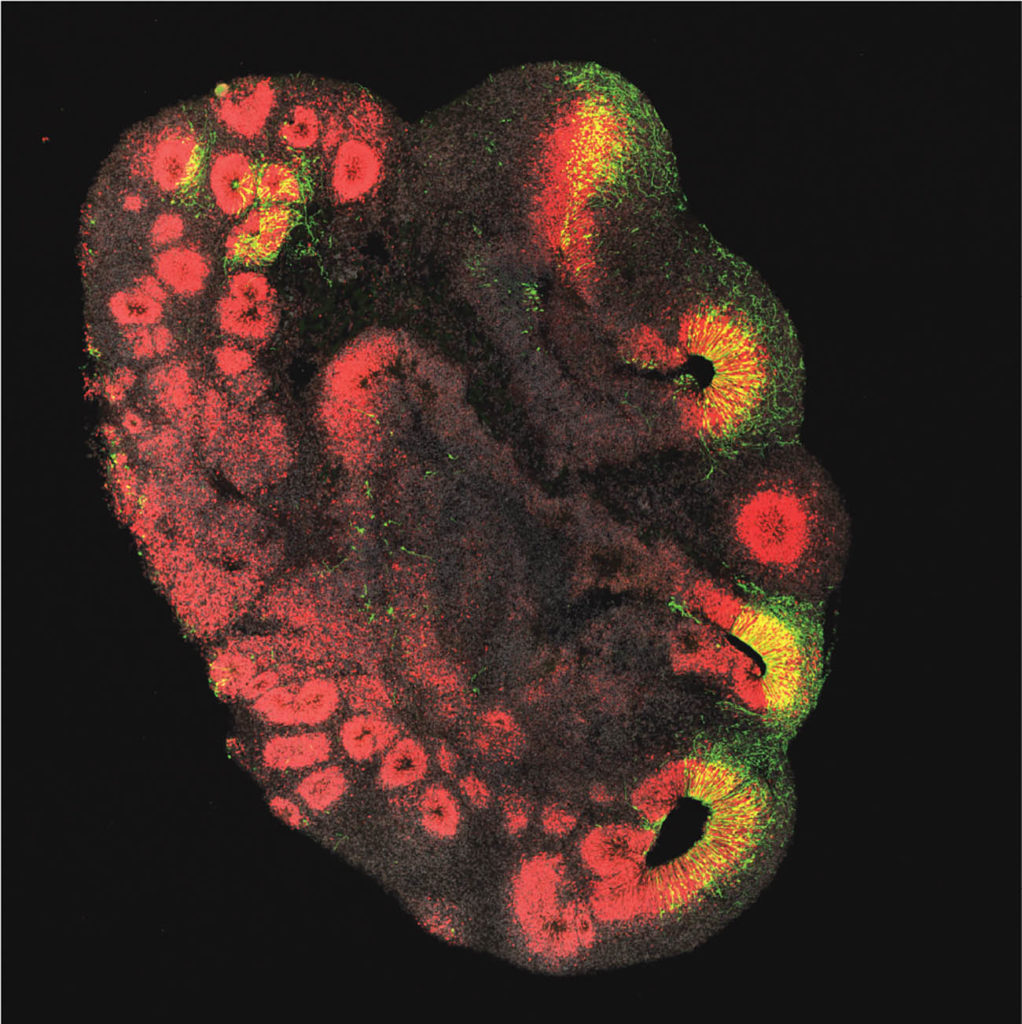 3 mm section of a marmoset brain organoid. Monkey brain stem cells are red;
and cells that have received the ARHGAP11B gene are in green. Image: Jan Fischer, DPZ
Experiments have shown that the introduction of this gene intomonkey organoid causes active growth of neurons and the formation of a large neocortex. Conversely, if ARHGAP11B was turned off in human brain organelles, the number of such neurons dropped to the level of a chimpanzee.
We were able to show that ARHGAP11B plays a critical role in the development of the neocortex during human evolution.
Michael Heide, researcher at the German Primate Center
Researchers believe that given the high rolegene mutations in it can explain various malformations of the neocortex. Perhaps further research will help not only explain human evolution, but also find a way to combat such diseases.
Read more:
The space plane will deliver cargo to the ISS and land at a regular "airport"
The star approached the black hole and it was torn apart: scientists observed this from three telescopes
Physicists explain Hawking's 'cosmic mismatch': how it will change science
On the cover: human brain organoid. Image: Jan Fischer, DPZ