Numerous previous studies show that Mars had a large number of
Researchers led by the InstitutePlanetary Science in Arizona analyzed maps of the surface of Mars created by combining images from previous missions to the planet and identified an impact crater that could have formed from the asteroid impact that caused the megatsunami.
The crater they named Pol has a diameterabout 110 km and is located in the northern lowlands, which, as suggested by previous studies, was 120 m below the estimated sea level. Based on rock analysis, the authors suggest that Pol was formed about 3.4 billion years ago.
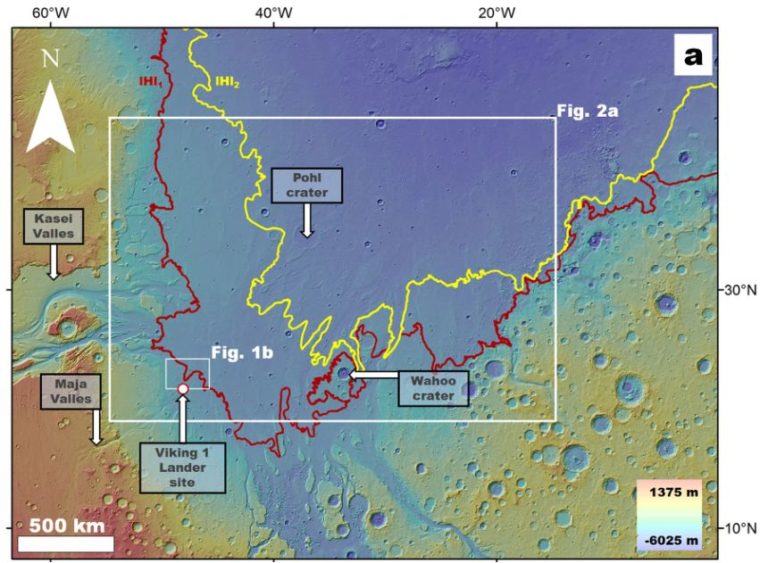 Site of an ancient encounter. Image: J. Alexis P. Rodriguez et al., Scientific Reports
The authors simulated asteroid collisions andcomets with this region to test what type of impact could form a crater and whether it could lead to a megatsunami. They found that it could have been caused either by a nine-kilometer asteroid colliding with strong Earth resistance, releasing 13 million megatons of TNT energy, or by a three-kilometer asteroid colliding with weak Earth resistance, releasing 0.5 million megatons.
Both simulated impacts produced craters110 km in diameter and caused a megatsunami that reached 1.5 thousand km from the center of the collision. An analysis of the megatsunami caused by a three-kilometer tsunami showed that the height of this tsunami on land could reach about 250 m.
The researchers compare the found site to the Chicxulub impact on Earth 66 million years ago, which is believed to have accelerated the death of the dinosaurs.
Read more:
The ancient mystery of the genome is revealed: what our DNA has been hiding for so many years
See what a woman Thora looks like. She lived 800 years ago
Rules for communicating with digital natives: omnichannel, usability and a single window