Problem History
The idea of taking video games "to the nail" is not new and goes back to the last century.Back in
Everything changed in the early 90s, when the burdenThe Mortal Kombat series has been accused of cruelty. The pressure was intense, and this time it led to consequences that affected the entire gaming industry. A compromise between publishers and the public was found in the form of the ESRB, a rating system that appeared in 1994, proposing to divide games into categories of their appropriateness for children. All these Everyone, Teen, Mature and other inscriptions in the black rectangle on the game box are just the brainchild of that era. Later, others followed the Americans: the European PEGI rating, the Australian ACB and others appeared.
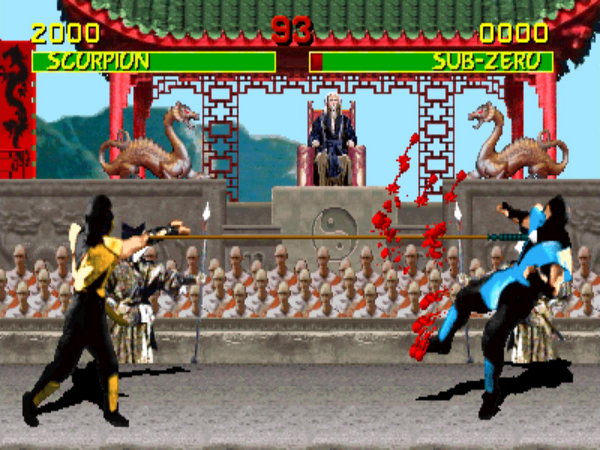 Mortal Kombat was the most controversial game of the 90s
But the accusations did not stop, and already in 1999The media circulated speculation about the influence of games on the psyche of teenagers, who staged one of the loudest and most iconic mass jokes in US history. The topic of games still comes up in such cases, not only in the United States, but throughout the world. Russia is no exception, as is the case with Doka-2, when a radio expert accused a then non-existent video game of provoking violence. Why “then non-existent”? It's simple: the hype from the sweeping accusation grew so much that Doku-2 was actually released.
Today, after Postal 2, Manhunt, GTA and othersSuch products will no longer be surprised by bans on the grounds of cruelty. Even though, according to research, games do not lead to violence and do not affect the minds of gamers. But there are other motives that force states to take emergency measures in relation to gaming products.
For example, the RPG Fallout 3 is banned in India:rumored to be due to the presence of Brahmins - two-headed cows - in the game. Legislators also have complaints against the gaming industry regarding gambling: a system of loot boxes that randomly generates rewards. Loot boxes are not opened for free, which gives legislators a reason to see a “gambling” element in this mechanic. Of course, voices about the need to regulate this area are becoming louder, and in Belgium and the Netherlands, for example, loot boxes have already been “banned.”
There is something similar in Russia:in 2013, due to complaints in the country, the sale of the Company of Heroes 2 strategy was stopped; the mission with the shooting at the airport in Call of Duty: Modern Warfare 2 was cut out. And recently, deputies proposed banning games from the Assassin's Creed, The Last of Us series and other projects that, according to legislators, do not meet certain standards, accepted in the country. The bans apply to virtually any state and have already become a practice all over the world: from South Korea and Brazil to Venezuela and the UAE and China, where the time spent in the game has recently been regulated.
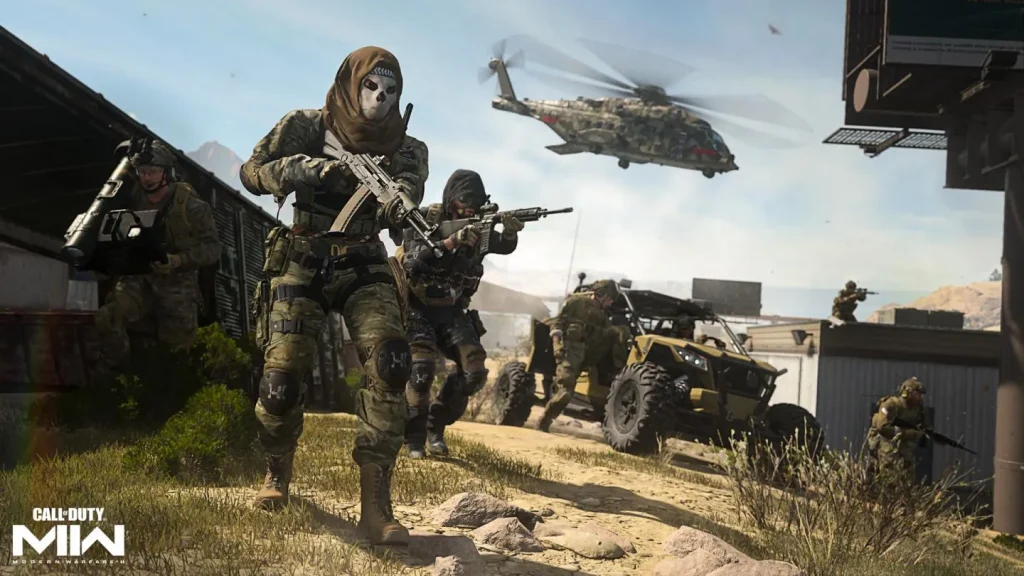 In Russia, a whole scene was cut from Call of Duty: Modern Warfare 2
But “persecution” is only part of the overall picture, because the interest of states in the development of the gaming industry is only growing.
Is coexistence possible?
Gaming today is far from just toys, buta full-scale industry in which many players are interested. There are already about 3 billion gamers in the world, by 2024 this number will increase by more than 200 million, and there is no end in sight to this growth. The same is true in monetary terms: the market is now valued at $195 billion, and is projected to continue to grow at a compound annual growth rate of almost 13%.
Purposefully supported by the gaming industrynot only countries like Germany or Great Britain are involved, but also powers that are very exotic for game development, including those from the Islamic world. It is no coincidence that even Saudi Arabia is included in the "gaming fever": according to the national strategy for the development of the country's gaming industry, games will contribute to the country's GDP and create about 40 thousand new jobs.
In the USA, where game development is most developed, the figurescompletely different: the industry employs 720 thousand people, it brings the budget more than $40 billion in tax contributions. From the point of view of the state, the business is profitable, therefore there was never any talk of a complete ban on games - even at the time of the most vehement attacks.
Games can also play an important role ineducation: both in terms of increasing schoolchildren’s interest in technology, unleashing their creative potential, and in the issue of education. The Pentagon, for example, is making full use of the potential of games (and not only) to increase the attractiveness of military service.
 In the US, the gamedev industry employs 720 thousand people
In Russia, the attitude towards video games was not simplenever, but now things are beginning to change: the state declares its readiness to support the industry. For example, Deputy Prime Minister Dmitry Chernyshenko ordered the development of additional support for the video game industry and e-sports in the country. In addition, the media reported plans to create a state-controlled developer and publisher, the development of which would require up to $50 billion.
Attitudes towards the gaming industry changing directlybefore our eyes, even in countries atypical for games, it opens new windows of opportunity for game designers and publishers around the world. The growing audience and its openness to various projects is a chance even for “non-gaming” countries to make themselves known to the whole world.
Yes, along with the trend towards active regulationThere is no need to talk about a completely free market, but it is impossible to “bury” the industry and write it off - and this is understood at the highest government level around the world. But whether this will lead to the emergence of thousands of local studios, whose products the whole world will know about, or to a uniform and gray gaming market is an open question. So far, two processes are developing in parallel, forming a new look for game development and, what can we say, for the whole world.
Read more:
The most beautiful photos of "Webb" for 2022: see what the $ 10 billion telescope did
The sun opened the year with a flash of the most powerful class
The secret of the durability of Roman concrete is revealed: it can be restored