Tonis-Heraklion
Unlike Babylon, Pompeii or the mystical Atlantis, few people today have heard of
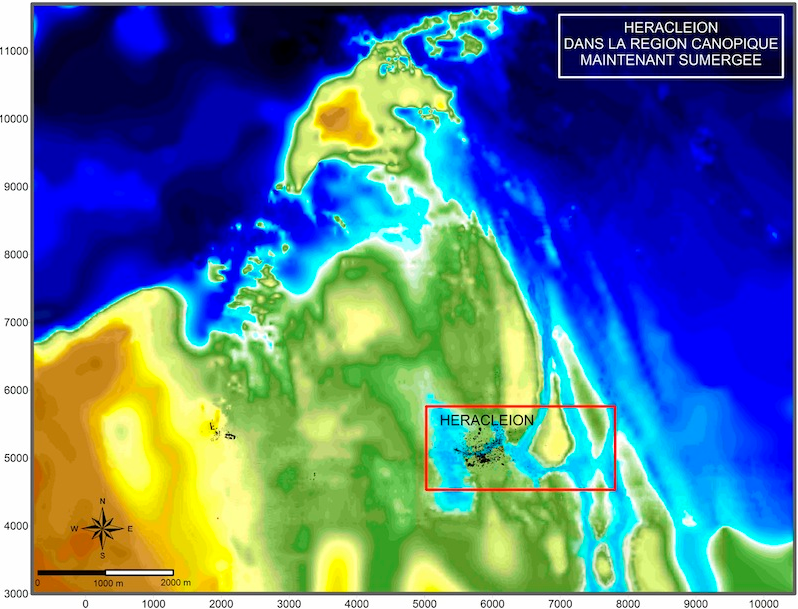
And all the same, if you were Europeantrader in the 5th century BC - perhaps an importer of grain, perfume or papyrus, or an exporter of silver, copper, wine or oil - then Thonis-Heraklion was a must-visit destination. If you were a Carian mercenary, an educated Greek, a professional sailor or a member of the pharaoh's court, you would definitely visit this ancient city. Scattered across a series of interconnected islands, sands and mudflats, Thonis Heraklion—part swamp, part sprawling city—was ancient Egypt's bustling, cosmopolitan gateway to the Mediterranean and thus its link to the Western world .
 Ptolemaic coins from the flooded Heraklion
Located on the westernmost arm of the Nile,Tonis-Heraklion by the 8th century BC became an important center of trade between Egypt and civilizations with access to the Mediterranean Sea. Underwater excavations around the city have revealed a vast harbor with quays and pools sheltered by strips of sandbanks. A systematic archaeological study of the basins has revealed more than 60 sunken ships of the 5th and 4th centuries BC, which indicates the volume of maritime traffic in this place.
Imported products recovered from the ruinsTonis-Heraklion, show the degree of contact between the city and the Mediterranean region. Pottery from southern Italy and Athens reflects trade with the Greek colonies. Coins from Cyprus testify to exchange with the Phoenicians of the Levantine coast, who used Cyprus as an important trading depot. Metal objects from the Persian Empire in the center of Mesopotamia indicate that goods traveled vast distances overland before heading to Egypt.
The presence of these diverse objects incoupled with evidence from ships at the port of Tonis Heraklion confirms that this ancient city is a crossroads where travelers, merchants and commercial entrepreneurs from all over the Mediterranean met, did business and communicate. It was here that the millennial Egyptian civilization converged with the relatively young emerging culture of Greece.
 A monumental stele attributed to Ptolemy VIII glorifies his reign and describes his support for the Egyptian gods. The stele was written in Egyptian hieroglyphs as well as Greek.
Crossed by a network of canals and dottedWith harbours, piers, temples and tower houses - all connected by a network of ferries, bridges and pontoons - the city controlled most of the maritime traffic arriving in Egypt from the Mediterranean Sea. It was here that goods were inspected and taxed at the customs administration center, and then sent for further distribution inland, or to the neighboring city of Canopus.
Canopus
The city of Canopus is located two miles west of Tonis Heraklion.
Called Canopus by the Greeks and Pe-Guti by the Egyptians,the city was also home to the monumental Temple of Serapis, a new hybrid Greek-Egyptian god created by the Ptolemaic rulers. The city became one of the most significant religious centers during the Ptolemaic period. Pilgrims from all over the world came to the temple dedicated to Serapis, called the Serapeum, in search of miraculous healing.

These pilgrimages ended in the year 391 of ourera when the Christian emperor Theodosius I outlawed pagan cults. Christian hordes destroyed statues, toppled shrines and razed the Temple of Serapis to the ground, leaving only its foundation, which an archaeologist discovered 2,000 years later. Instead of pagan buildings, the people of Canopus built their own buildings, including a monastery, and this site lasted until the 8th century.
Search for the lost
Until 1933, when the commander of the Royal Air Force,flying over Abu Kir, noticed ruins in the water, most historians considered Tonis and Heraklion to be two separate urban settlements located in what is now mainland Egypt. However, the advent of manned devices marked the beginning of a new era of marine research. At the turn of the century, a team of scientists from the European Institute of Underwater Archeology, initially attracted to the bay by French warships that sank in the late 18th century, created a series of maps showing the region's ancient topography.
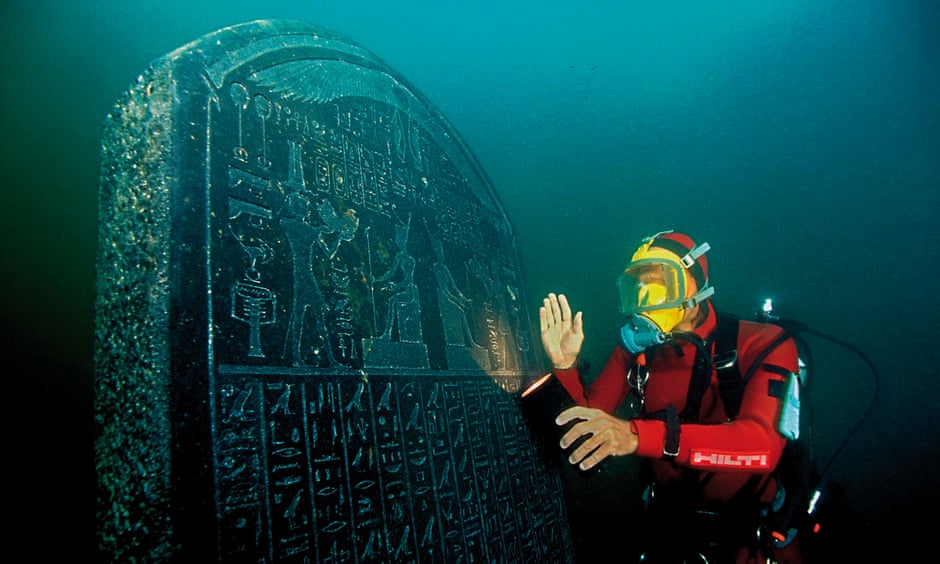 This stele shows that Thonis (Egyptian) and Heraklion (Greek) were the same city. Photo: Christoph Gerigk / Frank Goddio / Hilti Foundation
These maps—and the painstaking work of underwater excavation that followed—rely on high-tech exploration techniques and tireless human effort.
New discoveries
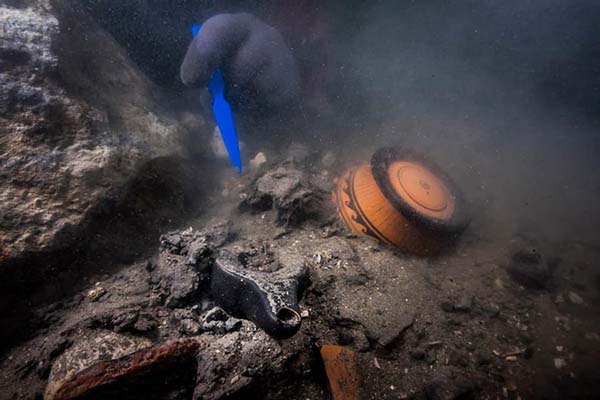
Joint Egyptian-French submarineAn archaeological mission led by the European Institute of Underwater Archeology (IEASM) recently excavated the famous sunken city of Heraklion in the Gulf of Abu Kir in the Alexandria region and announced the discovery of new treasures. So, in particular, it is reported about the finding of wreckage dating back to the second century BC of a warship and a rich burial complex.
Heraklion has been relativelya small but important Egyptian port on the Mediterranean until the founding of Alexandria by Alexander the Great in 331 BC. But several earthquakes and the powerful tidal waves that followed them caused a liquefaction of the land, as a result of which a section of the Nile Delta with an area of about 110 km², including the cities of Heraklion and Canopus, collapsed into the sea. Both of these cities were rediscovered by IEASM, in collaboration with the Department of Underwater Archeology of the Ministry of Tourism and Antiquities, in 2001 and 1999, respectively.
IEASM Secretary General Mustafa Vaziristated that the ship was supposed to dock in a canal that ran along the upper side of the temple of Amun, but sank as a result of the collapse of the temple and later in a devastating earthquake in the second century BC. The fall of these stone blocks kept the ship in a deep channel.
Head of the Egyptian Antiquities Sector Ayman Ashmawiexplained that the wreckage of this ship was found under about 5 meters of solid mud, which is the seabed mixed with the remains of the temple. The work used underwater excavation devices such as bottom profiling devices.
Frank Goddio, head of mission for the European Institute of Underwater Archeology (IEASM), confirmed that ship finds from this time are still very rare.
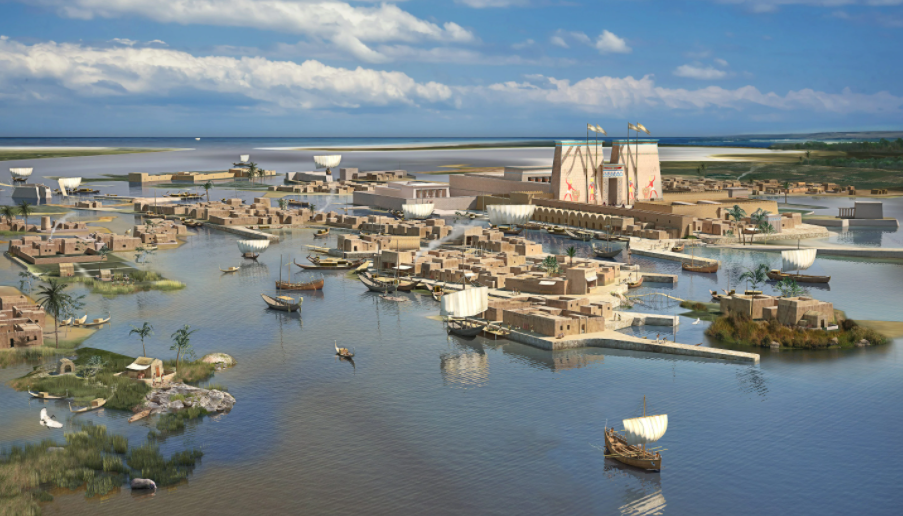 Recreation of what the city might look like. Photo: Jan Bernard © Franck Goddio / Hilti Foundation.
He added that preliminary studiesshow that the ship was long—more than 25 meters. The body is built in a classical style based on the prick and follicle technique, but it contains features of the ancient Egyptian style and is thus a mixed type of construction.
Experts said that thePreliminary examination of the ship's wreck shows that its hull was built in the classical tradition, but it also had some "typical ancient Egyptian shipbuilding techniques." The vessel was a rowing type, having both a large sail, as evidenced by the significant pitch of the mast, and a flat bottom and keel.
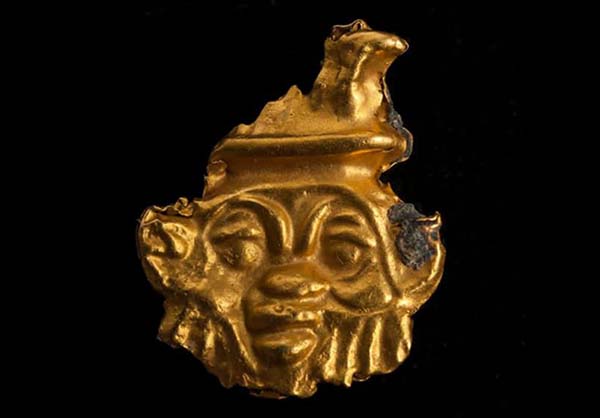
Also, in another part of the city, alongthe northeastern entrance to the canal, scientists have found the remains of a large Greek burial area with rich donations. They date back to the very beginning of the fourth century BC. This discovery proves the presence of Greek merchants who lived in this city and controlled the entrance to Egypt at the mouth of the Canopian arm of the Nile. As you know, during the late dynasties of the pharaohs, the Greeks were allowed to settle in this city. Not far from the huge temple of Amun, they built shrines. As a result, they were all destroyed at the same time, and their remains were mixed with the relics of the Egyptian temple. Several centuries later, the research team discovered them in their original state. They are evidence of the wealth of the sanctuaries of this city, now resting at the bottom of the sea, seven kilometers off the modern coast of Egypt.
Read more
Explained how the universe is reflected near black holes
Solved 180-year-old moth mystery: it was opened six times and named by different names
Media: The Ministry of Digital Affairs accidentally revealed the real scale of the COVID-19 epidemic in Russia