The results of the final stage of clinical trials showed that the gel containing DNA helps to heal
B-VEC Therapy Gel is designed to treata subtype of butterfly syndrome known as dystrophic epidermolysis bullosa. It is caused by mutations in the COL7A1 gene. It codes for a type of collagen, specifically a rope-like protein that helps attach the outer layer of skin to the underlying one. People with dystrophic epidermolysis bullosa lack this stabilization, so their skin layers rub against each other and form blisters.
Gel delivers working copies of the COL7A1 genedirectly into the damaged skin of patients. It contains the herpes virus modified so that it cannot replicate in human cells and carries two copies of COL7A1. The researchers note that herpes is well suited for such therapy: it can evade immunity and carry large fragments of DNA.
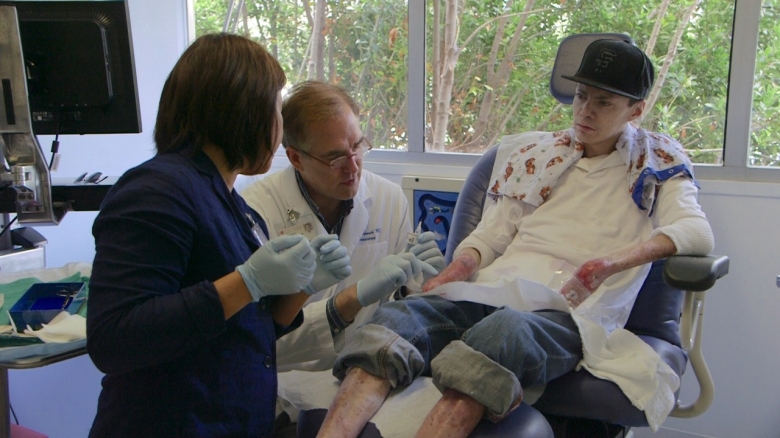 Dermatologists treat a wound in a patient with epidermolysis bullosa. Image: Mark Hanlon, Stanford Medicine
During the trial, 28 patients received the gel onone of the wounds once a week for about six months, and the other wound of a similar size was treated with a placebo gel. After three months, 71% of B-VEC-treated wounds were completely healed compared to 20% of placebo-treated wounds. In addition, the effect of exposure lasted up to six months, preventing the formation of new wounds.
Epidermolysis bullosa or butterfly syndrome isa rare genetic disease in which human skin is extremely sensitive to external influences. At the slightest damage and minor injuries, bubbles and erosion form on it. There are currently no approved treatments. Doctors treat only the symptoms as the skin blisters develop. This includes cleaning skin wounds, covering them with ointments and dressings, and changing these dressings daily.
Patient wounds often reopen duringhealing and may remain open for months or even years. Chronic wounds and the accumulation of scar tissue put patients at risk for life-threatening infections, limb deformities, and squamous cell skin cancer.
The researchers note that during the trial, the gel was applied in a clinical setting, but when it is approved by the FDA, it can be used on its own at home when changing dressings.
Read more:
Does science exist in extreme conditions? We answer in numbers
Scientists have found out who benefited from the death of dinosaurs
Look at the photo of the Earth from space: it was made by the first private module