Geneticists from the University of Tokyo have developed a DNA-based drug to treat cancer
Nucleic acid drugs are difficult todistinguish healthy cells from cancer cells, scientists say. This can lead to dangerous immune responses due to "false" positives. To overcome this problem, researchers have developed artificial DNA of an unusual shape - in the form of hairpins. They are fixed only on molecules that are actively expressed only in cancer cells, and cause a strong immune response.
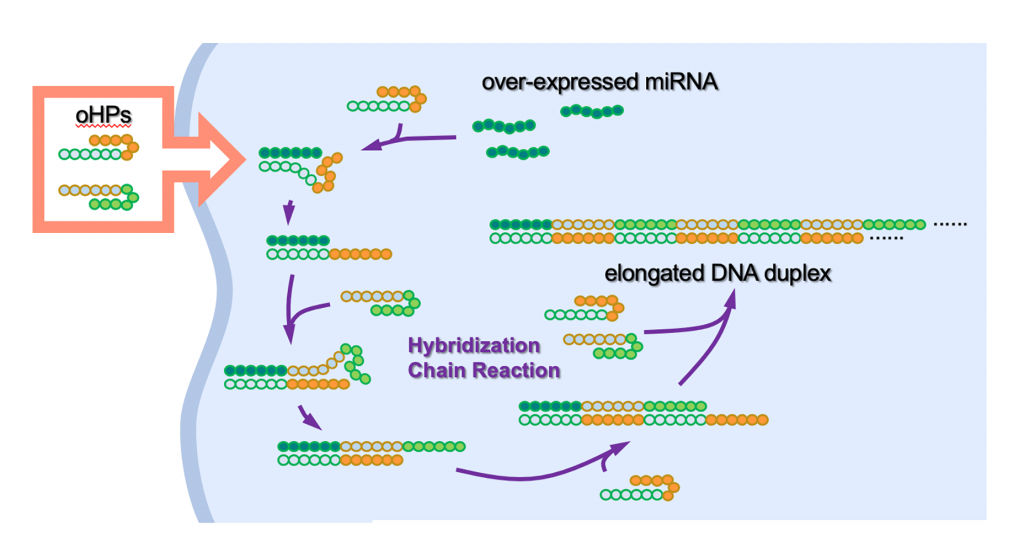 The principle of the drug. Image: Akimitsu Okamoto, University of Tokyo
For their medicine, scientists synthesize twoDNA molecules, each of which is twisted in the form of a hair clip. They called their invention oHP (short for the English "oncolytic hairpins" - oncological hairpin).
oHPs are sensitive to miR-21 miRNA, whichis actively expressed in some types of cancer cells. When the hairpins meet with such RNA, all three molecules combine to form one large, long DNA as a result of a series of successive fusions. Such a molecule becomes “noticeable” for the immune system, as a result, the body begins to fight against cancer cells.
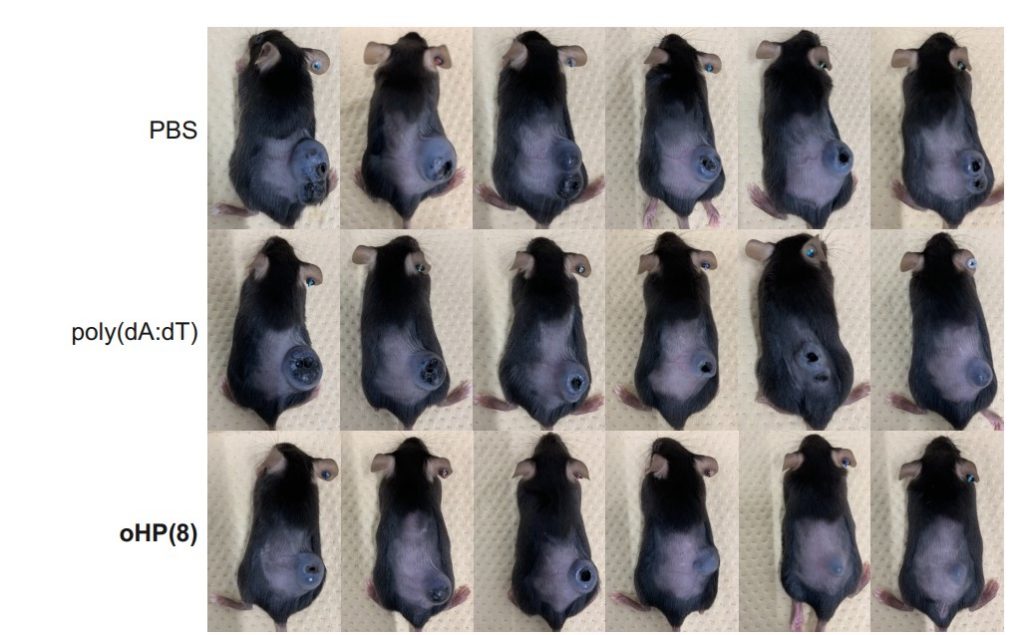 Reduction of tumors in mice 15 days after treatment. Image: Kunihiko Morihiro et al., J. Am. Chem. soc.
The researchers tested theirdrugs in vitro ("in vitro") on cell cultures grown from human cervical and breast cancer cells, as well as in vivo ("live cells") on laboratory mice. In all cases, oHPs not only helped destroy tumors, but also prevented further growth of cancerous tissue. The researchers plan to conduct additional safety testing of the drug before starting clinical trials in humans.
Read more:
It turned out how old the water we drink today
17-year-old engineer came up with a magnetless motor: it can be used in electric vehicles
Two planets have been found not far from Earth. Perhaps they are inhabited