An international team of scientists has discovered a new species of land snail in a piece of approximately 99 million-year-old amber.
The length of fine hairs is only 150up to 200 micrometers. They were discovered on the shell of the recently discovered species Archaeocyclotus brevivillosus sp. nov., using classical microscopy and 3D X-ray microcomputed tomography.
This is the sixth species of hairy Cyclophoridae, a grouptropical land snails found embedded in Mesozoic amber. It is noteworthy that the shells of fossil and modern land snails are often decorated with ridges, hairs, nodules, or folds; however, the development of such "decoration" is still a complex process that usually does not just happen.
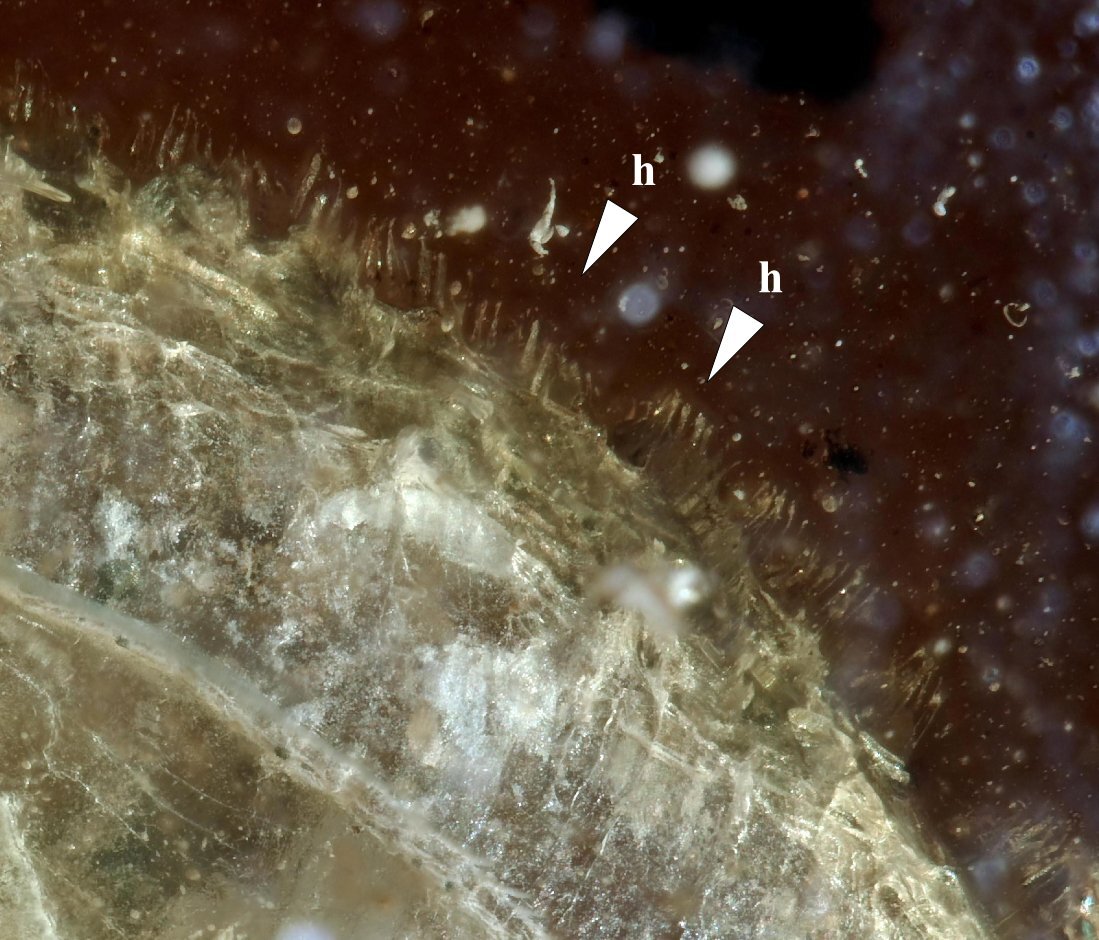 The edge of the snail's shell is lined with tiny hairs. Photo: Senckenberg
The hairs on snail shells appeared thanks tothe uppermost protein layer of the shell (periostracum). Several families of land snails have hairy shells. They appeared several times in different species independently of each other during evolution. Even in those groups that were only distantly related, scientists explain.
New species, Archaeocyclotus brevivillosus,discovered in Cretaceous period amber deposits in the Hukang Valley in Burma. The fossil snail measures 26.5 mm long, 21 mm wide and 9 mm high. The outer edge of the shell is covered with short hairs collected around the opening of the shell.
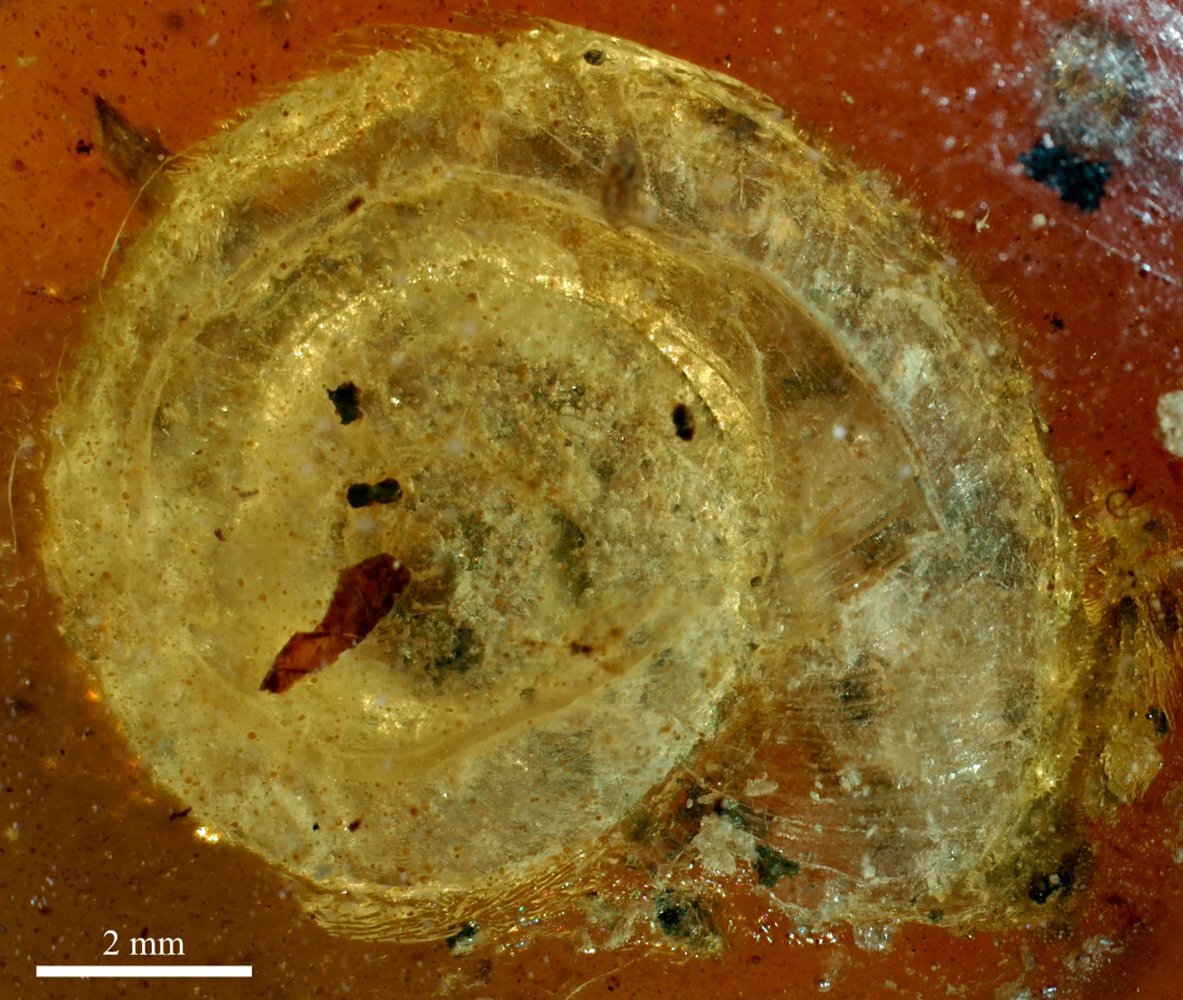 The fossil snail is 26.5 mm long, 21 mm wide and 9 mm high. Photo: Senckenberg
In total, from Burmese amber, scientistsrecovered eight species of the family Cyclophoridae, and six of them were distinguished by bristly shells. Scientists believe that this is no coincidence. They suggest that hairiness gave snails an evolutionary advantage.
Read more:
Starlink signal hacked to be used as an alternative to GPS
"Hubble" looked into the "keyhole" of the universe
NASA revealed the origin of Haumea - the most mysterious planet in the solar system
On the cover: Archaeocyclotus brevivillosus sp. nov. in amber
Photo: Senckenberg