Many readers probably remember those times when almost no smartphone presentation was complete without
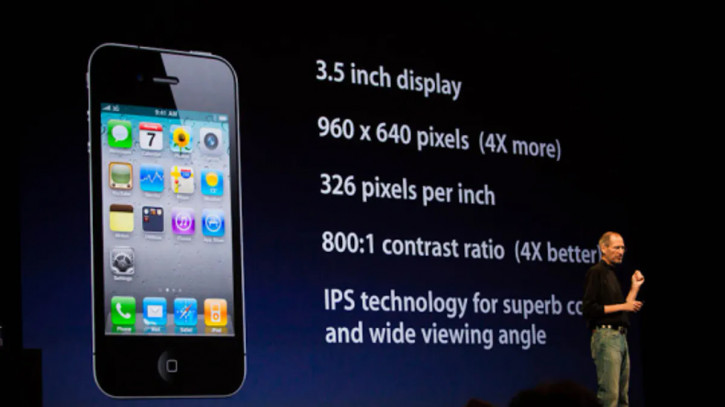

In subsequent years, Android manufacturers quicklycaught up and even surpassed Apple by starting to release smartphones with QHD screens (Vivo Xplay 3S (490 ppi) in 2013, LG G3 (538 ppi) in 2014 and Galaxy S6 Edge (557 ppi) in 2016) and even 4K: Sony Xperia Z5 Premium (806 ppi) in 2015. And although such resolutions are often found in the most top-end devices today, it is often more a tribute to status than some kind of need: practice has shown that FHD+ screens are not only quite suitable for smartphones up to 6.7&# 8243;, but they also load the hardware less, thereby improving autonomy.
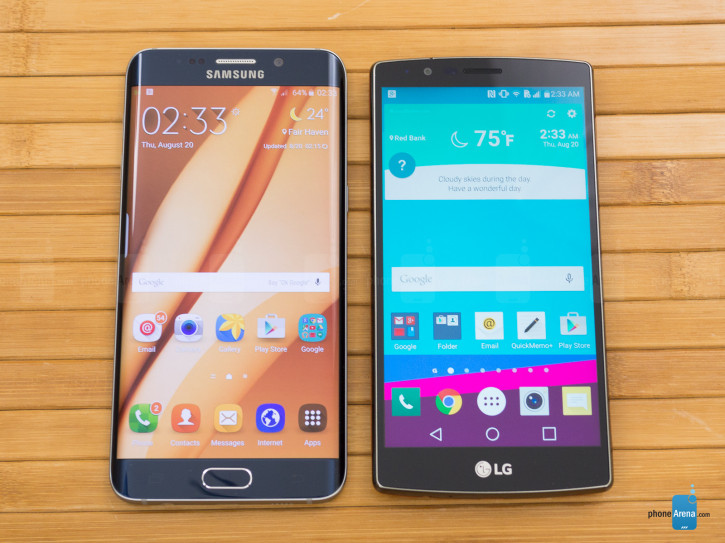
Galaxy S6 Edge (left) and LG G4 (right)
Moreover, more and more often in the device settings you cancome across an option that allows you to reduce the screen resolution from the original QHD + to economical FHD +, and since Android 13 it is built right into the system. In addition, there are much more important display parameters that have pushed the marketing PPI race into the background: high refresh rates, 10-bit colors, no PWM and no color distortion at low brightness. As for the pixel density, today it is enough for a smartphone to have an FHD screen in order to surpass the same Retina bar of 326 ppi.

Galaxy S22 Ultra (left) and iPhone 13 Pro Max (right)
© Vladimir Kovalev.