A team of researchers from the University at Buffalo used headphones and an artificial intelligence system
 The EarHealth system uses in-ear headphones with an inward-facing microphone hook.
Photo: University of Buffalo
The EarHealth system uses a setBluetooth headphones with inward-facing microphones. They are connected to a smartphone app. It sends a sound signal into the ear, and then microphones record how it bounces back into the ear canals. All this allows the system to create a profile of each user's unique inner ear shape.
Readings are taken while the user is healthy,to understand what structure a healthy ear has. The same test is then run periodically to look for changes. In a human trial involving 92 volunteers, the system diagnosed three common diseases that change ear geometry simply by checking for changes in the inner ear with 82.6% accuracy.
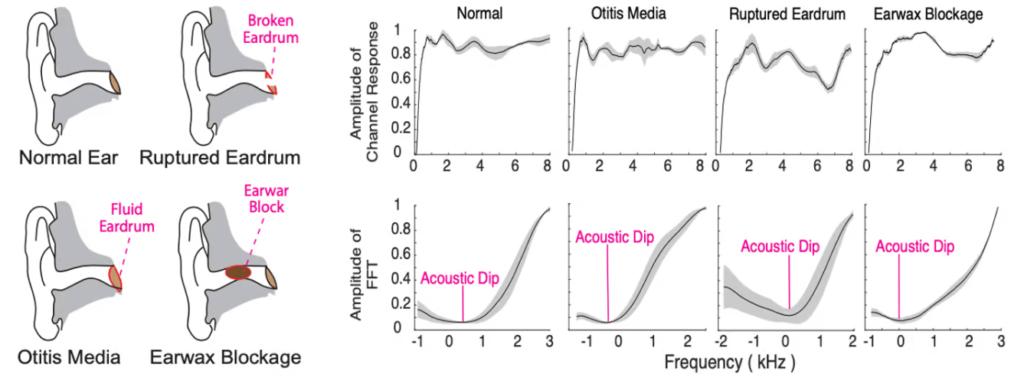 The researchers identified four differentstates that change the returned audio signal in such a way that the deep learning system can recognize and diagnose the pathology with more than 80% accuracy.
Photo: University at Buffalo
The headphones record three states:earwax blockages, ruptured eardrums and otitis media. In many cases, the system identified them long before they became a serious problem.
Read more:
Soon a solar storm will hit the Earth: the material flies at a speed of 800 km / s
What are supergenes and how do they make animals so weird
Cancer tumors were deprived of "fuel" with the help of cold: how it helped