A team of scientists is studying the potential of non-invasive laser therapy to improve cognitive function.
What is transcranial photobiomodulation?
Transcranial photobiomodulationTranscranial Photobiomodulation (tPBM) is a non-invasive procedure that applies near-infrared light (850 nanometers) to the forebrain. In simple words, a special installation sends photons using a laser to the brain, bypassing the skull. The goal is to cause changes in brain activity.
Has this method been used before?
In previous studies, scientiststested how tPBM would improve various aspects of brain function. For example, with cerebral oxygenation (saturation of the brain with oxygen). Biologists are also studying how the method can be used to treat brain diseases such as Parkinson's and Alzheimer's diseases. And right now, clinical trials are being conducted that are studying the effects of near-infrared light on autism spectrum disorders.
How was the experiment?
Previous studies have shown that tPBMhelps improve memory in mice, but these connections have yet to be studied in humans. This is exactly what scientists from Birmingham and China Normal Universities did. They recruited 90 men and women between the ages of 18 and 25 and applied laser light therapy to the right prefrontal cortex.
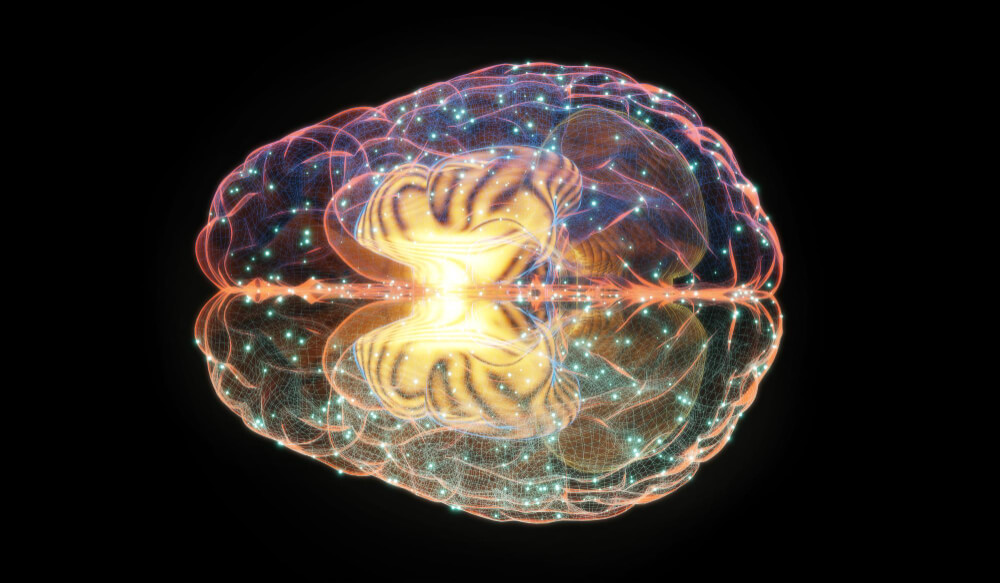 Brain illustration. Photo: en.freepik.com
This region of the brain plays an important role inshort term memory. The scientists wanted to understand how tPBM affects it. To do this, scientists exposed the brains of some patients to laser light with a wavelength of 1,064 nanometers, and some to shorter wavelengths.
There was also a third group of subjects who“irradiated” the left prefrontal cortex. All subjects also received sham laser therapy to eliminate the placebo effect. Throughout all the experiments, scientists monitored the brain activity of the subjects using an electroencephalogram (EEG).
What did the experiment show?
After 12 minutes of tPBM treatment, subjects performedmemory tasks. They were asked to remember the orientation or colors of several items on a screen. Those who received 1,064 nm laser therapy had better memory performance, remembering an average of 2.1 items. And those subjects who received other forms of treatment remembered an average of 1.9 objects.
 Brain illustration. Photo: en.freepik.com
Overall, the control EEG showed changes consistent with memory improvement.
Who can benefit from light therapy?
As scientists explain, people with these conditions,like ADHD (Attention Deficit Hyperactivity Disorder) or other attention-related conditions, tPBM will come in handy. Its advantage is that it is safe, simple and non-invasive. It also has no side effects.
What's next?
Although the results of the study are encouraging and useful for the clinical application of tPBM in the future, there is still much work to be done. You need to understand why this effect has arisen and how long it can last.
“Further research is needed to accuratelyunderstand why tPBM has such a positive effect. It is possible that light stimulates mitochondria—the “energy centers”—in nerve cells in the prefrontal cortex. This is what has a positive effect on the efficiency of cells, scientists explain. — We need to study how long the consequences can last. Obviously, if these experiments lead to clinical intervention, it is necessary to predict the long-term consequences."
The results of the study were published in the journal Science Advances.
Read more:
Does science exist in extreme conditions? We answer in numbers
The Yellowstone supervolcano turned out to be many times more dangerous than scientists thought
The egg was dropped from space: look what happened to it