Touch a hologram, feel pain, cold or heat - all this can happen to you in a virtual
Now companies specializing in solutionsfor virtual reality, for example, Horizon Workrooms from Meta (the activities of Meta in Russia are recognized as extremist and prohibited), create their own metaverses. It is a surreal yet colorful world in which sights and sounds play a key role.
With the help of vibration, users receive feedbacktactile connection, but this is not always enough to completely immerse yourself in the metaverse. IT professionals are now working to replicate the tactile effects of virtual reality using different sensory receptors.
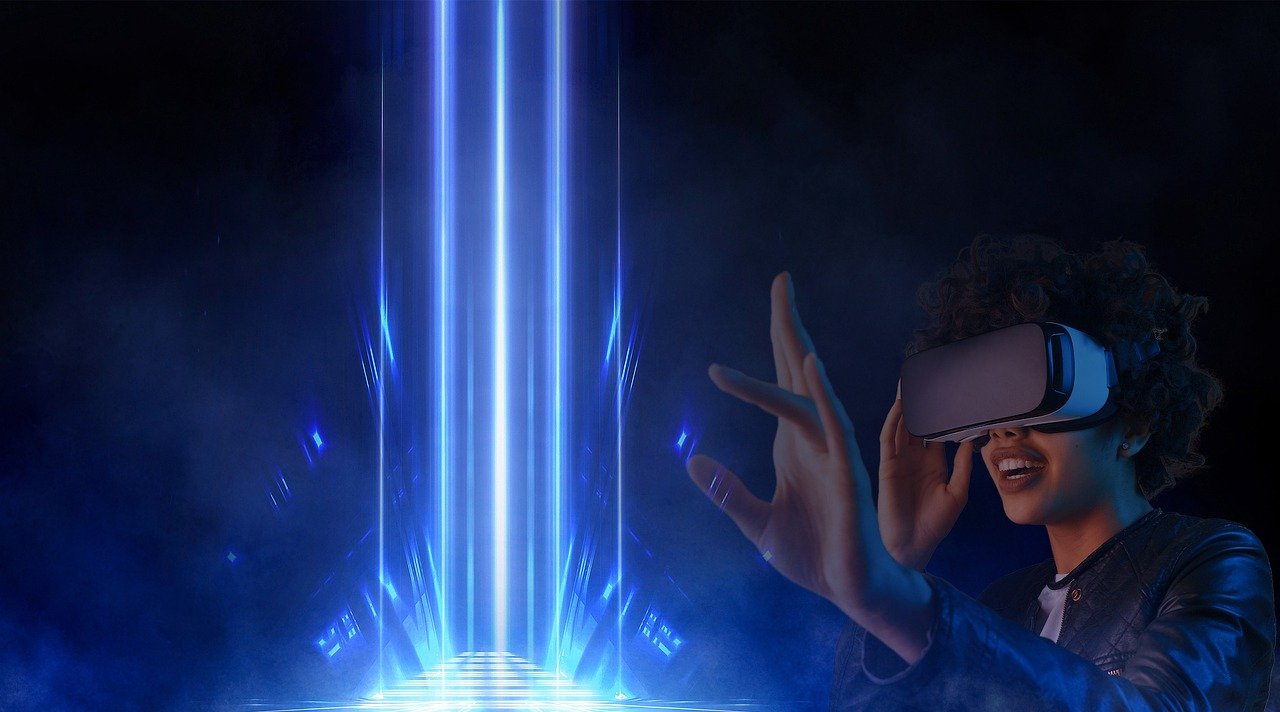 IT professionals are now working on reproducing the tactile effects of virtual reality using different sensory receptors.
Feel the caught ball or the strike of a bird's beak
The Japanese company H2L created a bandage thatreads human muscle contractions: it uses electrical stimulation. So the user can feel everything that happens to him in the metaverse. For example, to feel the caught ball or the impact of the bird's key, the developers say.
The headband also transmits information from the user to the device so that the avatar repeats all human movements.
“H2L technology conveys to users and avatars in the metaverse a sense of heaviness, resistance, and not just pain,” the company said on Twitter.
“The feeling of pain allows us to turn the world of the metaverse into the real world. It enhances the sense of presence and immersion,” says Amy Tamaki, CEO and co-founder of H2L.
Feel numbness, coldness and burning sensation
Experts from the Laboratory of Human Integration andComputers at the University of Chicago have developed an unusual solution that will increase the range of tactile sensations in the metaverse. This involves applying chemical patches to the skin, which release harmless chemicals that cause, for example, heat, tingling or numbness.
The authors described in detail the chemical tactilea system in which certain stimulants are released through a patch. When they reach the skin receptors, they cause a cooling or tingling sensation. The researchers used five stimulants in their system: tingling (sanshool is a spicy spice), numbing (lidocaine is a local anesthetic), burning (cinnamaldehyde is an oily liquid), heat (capsaicin is a component of chili peppers) and cooling (menthol This is a compound from peppermint oils).
The system looks like a haptic bandage in the form of a soft silicone patch: it contains micropumps that push liquid stimulants through open channels onto the user's skin.
When the user is in the metaverse and,for example, walking on a virtual street, the system uses menthol to create a feeling of coolness. And to show that tea or a bowl of soup is hot - capsaicin.
But there are also limitations.First, the effectiveness of this chemical tactile system will vary depending on the characteristics of the user's skin. In addition, mimicking skin sensations is a slow process, and more research is needed to discover new chemical stimulants for a wider range of sensations.
 When the user is in the metaverse and, for example, walking along a virtual street, the system uses menthol to create a feeling of coolness
Touch the hologram
Researchers have developed a hologram thatcan be felt. According to Ravinder Daahia, a researcher who worked on the project, he and his colleagues created a holographic system that uses jets of air to convey sensations of touch. Jets of air can reproduce touch on fingers, hands and wrists.
“In the future, you will be able to meet a virtual avatar of a colleague on the other side of the world and actually feel the handshake,” said Ravindera Daahii.
The aerohaptic system does not need a manual controller orsmart gloves to create a sense of touch. Instead, the nozzle, which is able to respond to the movements of your hand, blows out the air with the right force.
"Sensory feedback from air jetscan also create a virtual surface of a basketball. The user will be able to feel its rounded shape as it rolls off the fingertips, bounces off and falls back into the hands,” emphasizes Ravinder Daahii.
Put on a glove to touch the metaverse
Meta (Meta company activities in Russiarecognized as extremist and banned) presented a tactile glove with tiny motors. It has air currents that simulate touching different objects. A prototype of a tactile glove, created by Meta Reality Labs (the activities of Meta in Russia are recognized as extremist and prohibited), is designed to work with virtual reality systems.
Meta (Meta company activities in Russiarecognized as extremist and banned) uses the principles of soft robotics and pneumatic and electroactive actuators to quickly create differently ordered air flows. These actuators are essentially tiny motors that can provide the sensation of pressure and touch.
If you place thousands of these actuators on a gloveand combine their work with what's happening in virtual reality, the user can reach out and feel something that doesn't actually exist.
To “revive” the metaverse there is a bigThere are a number of solutions, but not all of them are suitable for the mass user - some are too expensive, and some have not yet been tested enough to enter the mass market. But work in this direction is underway and soon we will begin to distinguish this world from the virtual one a little less.
Read more:
"James Webb" took the clearest photo of a star in history
Quantum charging will allow record-breaking fast charging of electric vehicles
The rarest blood in the world: how people with zero Rh factor live