A previously unseen colony of emperor penguins—one of the 66 existing ones—was accidentally spotted on
It is estimated that the colony is home to about 1,000adult birds, 500 pairs with chicks, making it relatively small for a breeding site for emperor penguins (Aptenodytes forsteri). But this is an important addition to what is known about this species.
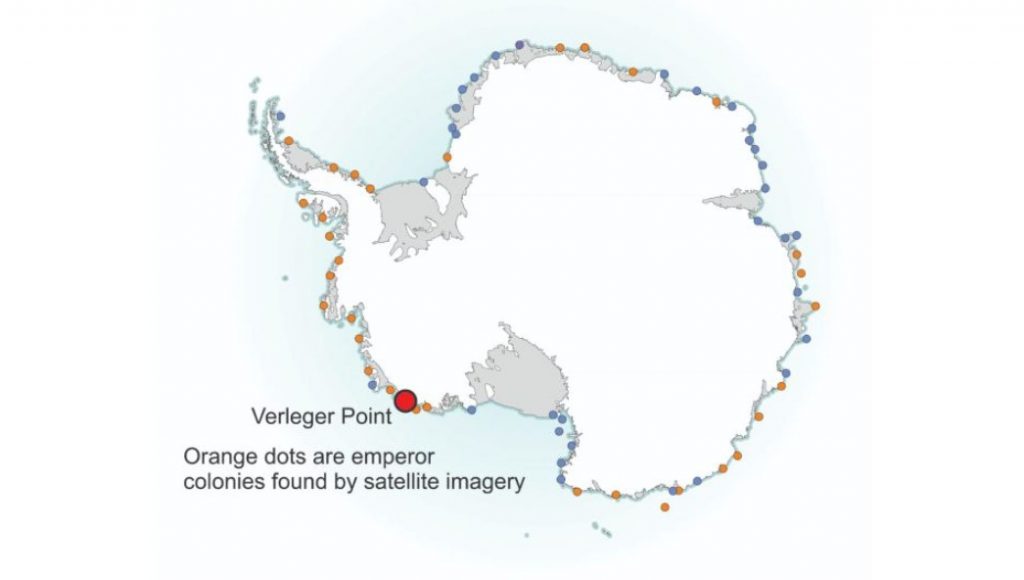 To date, scientists have discovered 66 colonies of emperor penguins on the coast of Antarctica;
many of them are in remote areas and are only visible on satellite imagery. Image courtesy of Peter Fretwell/BAS
Peter Fretwell, Geographical Service OfficerAccording to the British Antarctic Survey, the colony was discovered in December. However, the official announcement was postponed to January 20th, Penguin Awareness Day, which is held every year.
Fretwell told Live Science thatHe initially studied sea ice loss in photographs from the European Space Agency's two Copernicus Sentinel-2 satellites. That's when he noticed the telltale signs of an emperor penguin colony - guano.
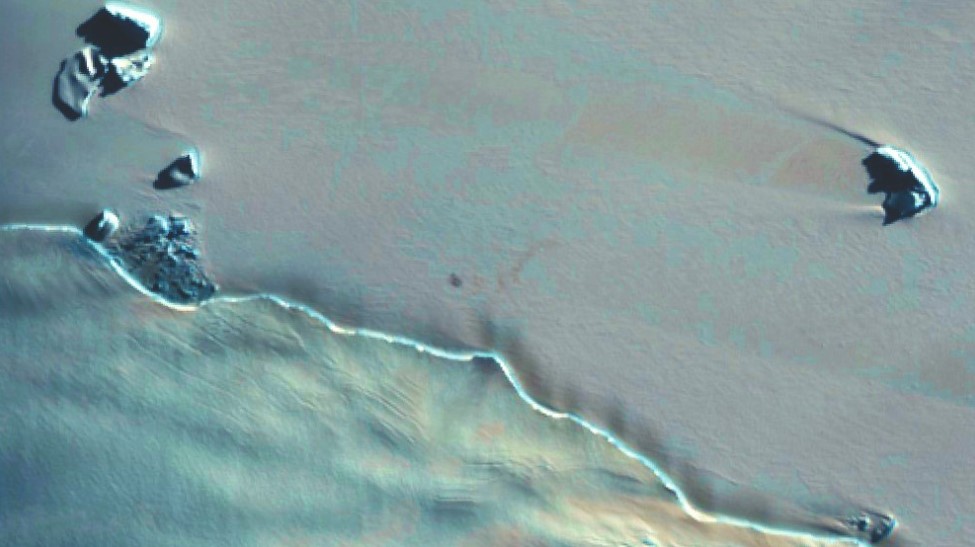 Brown spots on the ice that appeared due toEmperor penguin colony guano were first seen in medium-resolution photographs of West Antarctica taken by the Copernicus Sentinel-2 satellites in December. Image Credit: Copernicus Sentinel-2/BAS
Photos of the same area with a higherresolution taken in October by the Maxar WorldView-3 satellite. It displays objects measuring up to 30 cm across and has confirmed the presence of a breeding colony near Cape Verleger in West Antarctica.
As penguin guano accumulates andturns ice and snow dark brown, making it much easier to see from afar than the emperor penguins themselves. But the high-resolution images also show individual emperors - as tiny dots. The population estimate is based on them,
Read more:
Blazar, which was found 20 years ago, turned out to be an extreme object
TESS discovered a "new Earth": a stone planet with water is in the habitable zone
Look at the consequences of the collision in 1181 of two stars
On the cover:High-resolution photographs taken by Maxar's WorldView-3 satellite in October show a previously unknown penguin colony on sea ice. Now patches of guano and even individual penguins are visible. Image courtesy of MAXAR Technologies/BAS