Medicine will change in every way in the near future. Computer technologies are penetrating ever deeper into the sphere
Development and synthesis of drugs
Creating a new drug from an ideabefore the start of mass production takes up to ten years. It also additionally requires billions of dollars of investment for the work of research teams and the launch of multi-stage testing. On average, according to statistics, only 12% of created drugs receive a patent and permission to manufacture, while the rest do not pass clinical trials, and the process begins anew.
This is why machine learning and neural networksbegan to be used to simplify the process of creating drugs. Today in the world there are approximately 30 large-scale projects using artificial intelligence that work in this direction.
American FDAThe Food and Drug Administration launched its own project, the goal of which is to reduce the cost of clinical research by orders of magnitude using machine learning.
The project's AI is trained based on the last 20 yearsclinical trials of American drugs. And, according to experts, with its help you can significantly increase the likelihood of successful completion of studies: from 12% to 80%.
According to preliminary estimates, the use of artificial intelligence and neural networks will help reduce investments in the creation of drugs by four times, and development time by half.
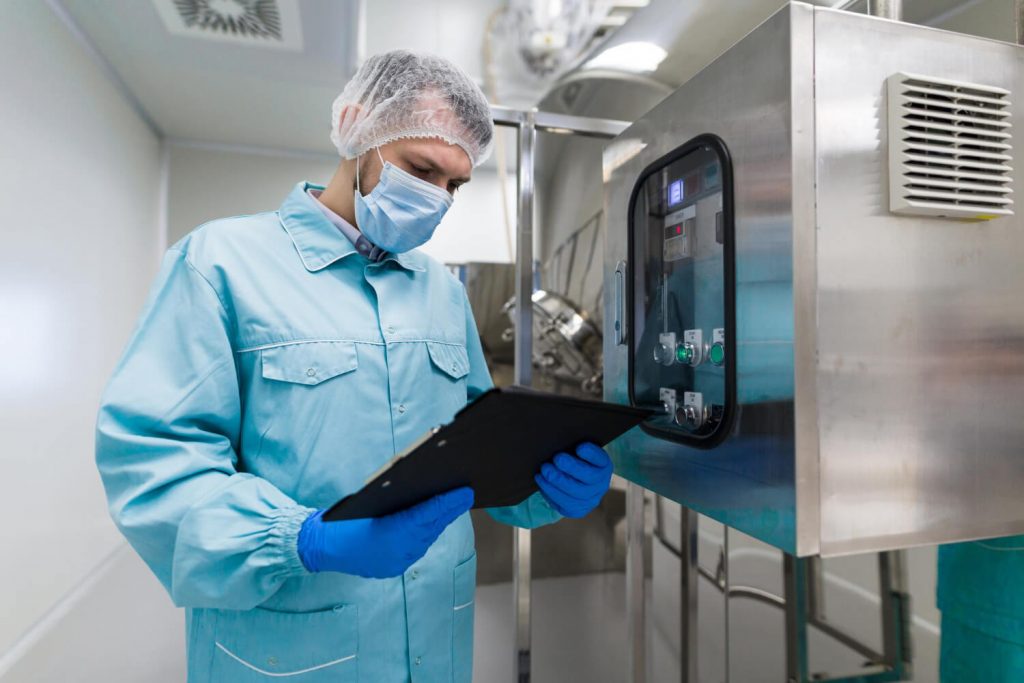 Clinical trials require large investments and can take several years
So far, the concerns are using AI only as an auxiliary tool for the synthesis of drugs, conducting all stages of clinical trials as usual. But the projects are already showing good results.
AI at the service of nutrition
Advances in artificial intelligence creationcoronavirus vaccines are known all over the world. Computer technologies have reduced the time to develop an effective vaccine to just a few months, when classical research methods require at least a year or two.
But the research is actually much deeper thancan be imagined. And they concern not only virology, but also preventive medicine and nutrition, for which natural organic compounds are analyzed. There are tens of billions of them, so manual research is not very effective.
Clinical trials require large investmentsand may last for several years. To develop a new drug, it is necessary to test dozens and hundreds of chemical compounds in cell cultures, which in the future will need to be tested in living organisms. Because of this, all phases of clinical trials can take several years.
Computer power can helpresearchers, significantly accelerating the process of creating new drugs, as well as significantly reducing the cost of expensive clinical trials. For example, the British-Irish company Nuritas is using artificial intelligence to search for active organic compounds that, in theory, can be used to treat and prevent diseases.
According to company experts, the technology for analyzing chemical compounds using artificial intelligence is 600 times more accurate and ten times faster than standard methods.
However, it is still impossible to do without a person. After the neural network discovers a promising compound, biochemists undertake in-depth research.
For eight years, company employeesregistered 65 patents in the medical industry, the company is now actively developing drugs for muscle recovery, normalization of glucose metabolism and slowdown of cellular aging.
This is just one of dozens of projectswho study chemical compounds for the development of dietary and biological food supplements, as well as drugs. And the development of artificial intelligence in the future will further accelerate research and improve its effectiveness.
Research of rare diseases using neural networks
Today, 95% of rare diseases do not have standardized and internationally accepted treatment regimens.
According to the World Health Organization, diseases with a prevalence of 1 case per 1,000 people to 1 case per 200,000 people are considered rare.
Concerns do not often invest insearching for cures for such diseases. After all, a company spends from $200 million to $2 billion on the invention of one drug. The payback time for such research will be decades, if they ever pay off.
The main difficulty in the treatment of rare diseases is not in the synthesis of drugs and laboratory testing, but in the lack of clinical data.
Therefore, Healx company using neural networkscreates a complete information database of 7,000 rare diseases, in which it collects all the information from scientific materials, patient databases and drug studies.
The created database helped in the development of the drugfrom Martin-Bell syndrome. In 18 months, the team was able to create a drug that has already successfully passed two phases of clinical trials. In comparison, under normal conditions, the development and testing of a drug takes five to ten years. At the same time, the costs of its creation are simply orders of magnitude less than the classical ones.
In terms of information search and its classificationneural networks show excellent results. They are able to scan the Internet relatively quickly in all existing languages, collecting data that relates to a specific topic. To achieve such efficiency when working manually will not work.
Artificial intelligence and personalized medicine
For most of the most commondiseases, therapeutic schemes for taking medications have been developed. For the treatment of certain diseases (for example, tuberculosis or oncology), rather toxic substances are the only effective drugs. Due to the low selectivity, such drugs have side effects, adversely affect the liver, kidneys and cardiovascular system. And if earlier there were no alternatives and the use of aggressive drugs was considered acceptable with damage to health in the course of treatment, now the methodology is changing. The development of medicine and medicinal chemistry makes it possible to work not only on the search for fundamentally new drugs, but also on the selection of optimal treatment regimens using already known methods.
Individual dosage of drugs that havestrong side effects could reduce the negative impact on patients, but the complexity of the calculations does not allow them to be carried out on a large scale. In addition, they need to be carried out several times a day.
Neural networks are able to perform such calculations quickly.and quality. So, in 2018, scientists from the National University of Singapore developed the innovative CURATE.AI system for combination therapy of cancer patients using artificial intelligence.
Already during the first testing the systemhas shown its effectiveness. For a patient with advanced prostate cancer, the system calculated an individual combination of drugs throughout the entire course of treatment.
As a result, the tumor grows significantlyslowed down, and then the disease completely went into remission. At the same time, the dosages of the drugs were almost two times less than for standard treatment of such cases.
Personalizing therapy opens up unimaginable possibilitiesopportunities for medicine. If there is a sufficient amount of data, neural networks and other machine learning methods can help not only quickly solve the problem of dose optimization, but also select combinations of drugs to increase the effectiveness of treatment, determine the most effective treatment tactics and prevent critical conditions of the patient at the earliest stages.
Similar systems are already in use to controlpatient conditions and collection of long-term medical data, but over time they will be increasingly integrated into the healthcare industry. It is important to note that in recent years, methods of prevention and early diagnosis of diseases have attracted more and more attention.
Artificial intelligence is a powerful toolwhich can benefit many industries and areas of medicine. Neural networks and other machine learning methods are already helping to create new drugs, study diseases, and monitor the condition of patients. So far, they are being implemented only by large research centers and the most advanced clinics, but their impact on medicine is already enormous.
Now there is an active development of neural networks inmedicine - much faster than you can imagine. Most projects and studies do not become known to the general public and appear only in specialized journals. However, they are gradually, step by step, transforming the medicine of today into the medicine of the future. And soon we will see it with our own eyes.
Read more:
The strongest class X flare occurred on the Sun
Look at the consequences of the collision in 1181 of two stars
Blazar, which was found 20 years ago, turned out to be an extreme object