</ img>
In pursuit of “frameless” smartphone manufacturers come up with a wide variety of design
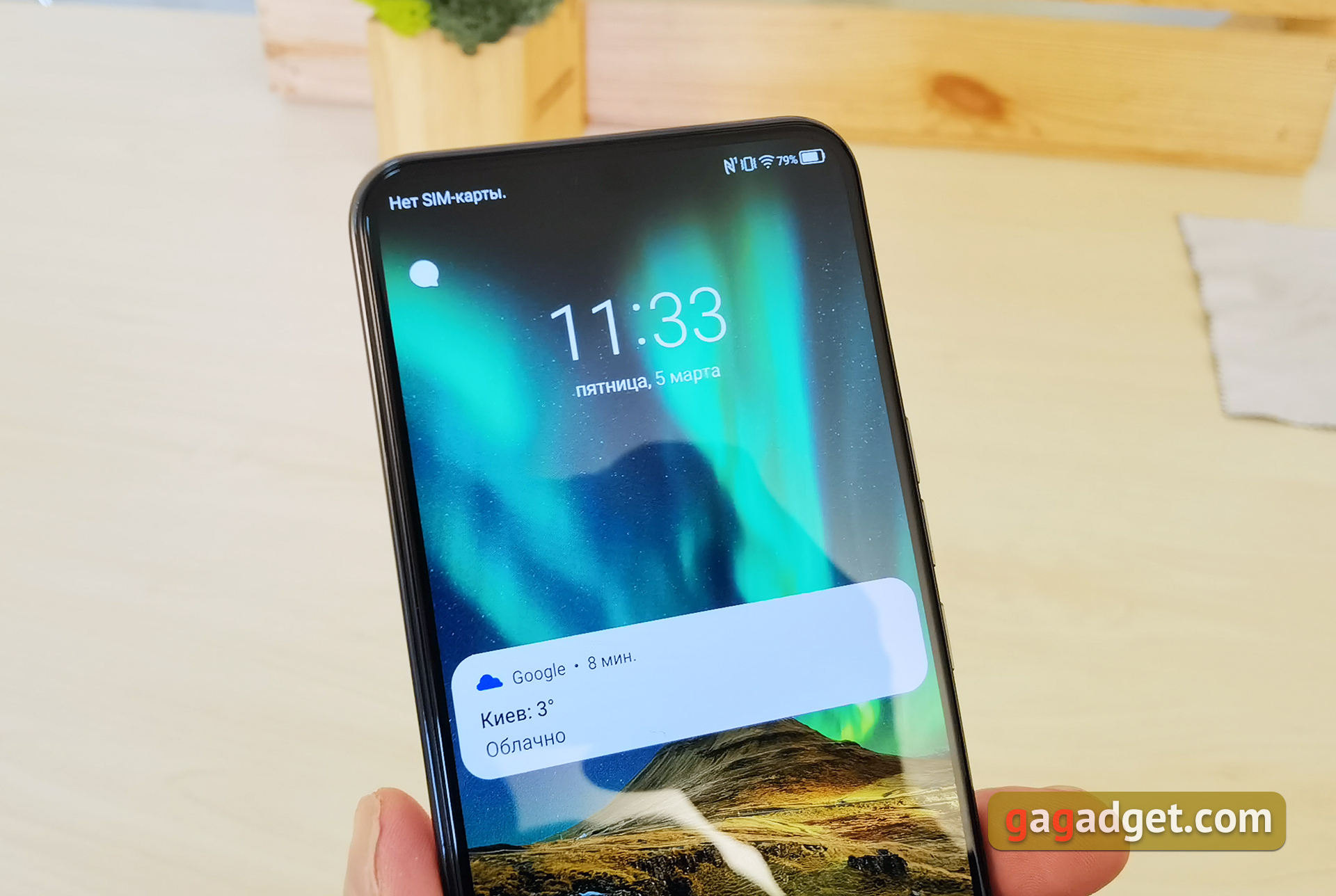
Last August, ZTE announced that it would be the first to...will release a commercial smartphone with a front-facing camera under the screen. No sooner said than done: already in September the announcement took place, ZTE Axon 20 5G really became the first smartphone with a sub-screen front camera that you can buy. The smartphone arrived at our editorial office and we decided to personally study its front camera: how it works and how viable this technology is.
How does it work in theory?
At the moment there are two implementation optionscameras under the screen. The first option involves providing the most transparent layer above the camera. A special material with low reflectivity and high transmittance is used. And, ideally, it becomes transparent during shooting, allowing the camera to receive enough light and information to take the photo. There are a number of issues with this technology, including pixel burnout and a banal appearance. As far as it will be visible.
</ img>
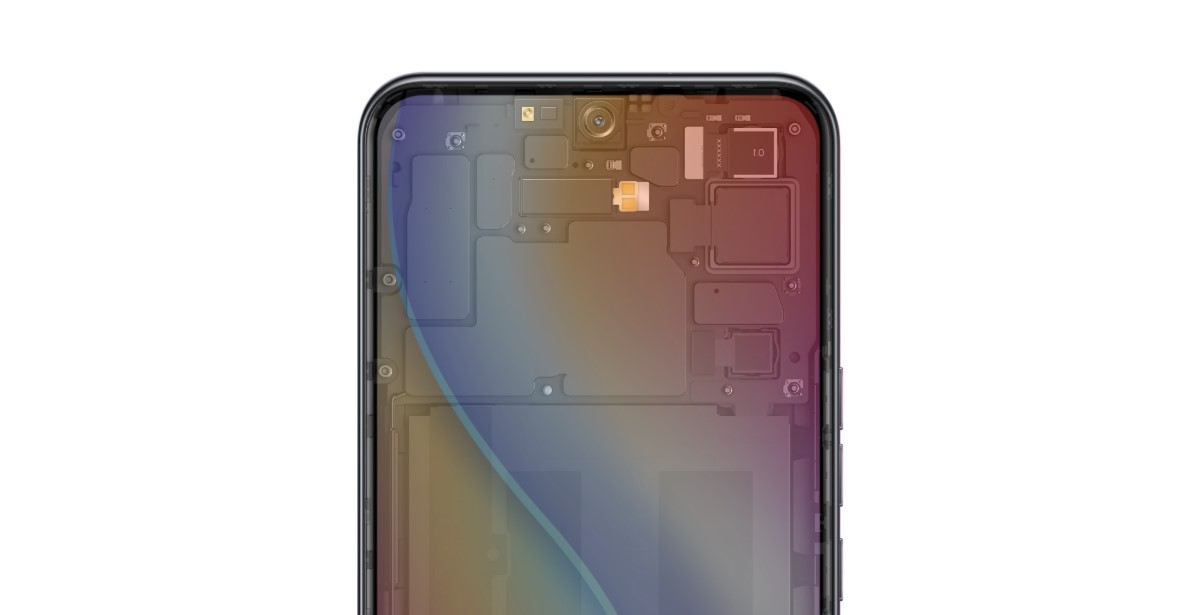
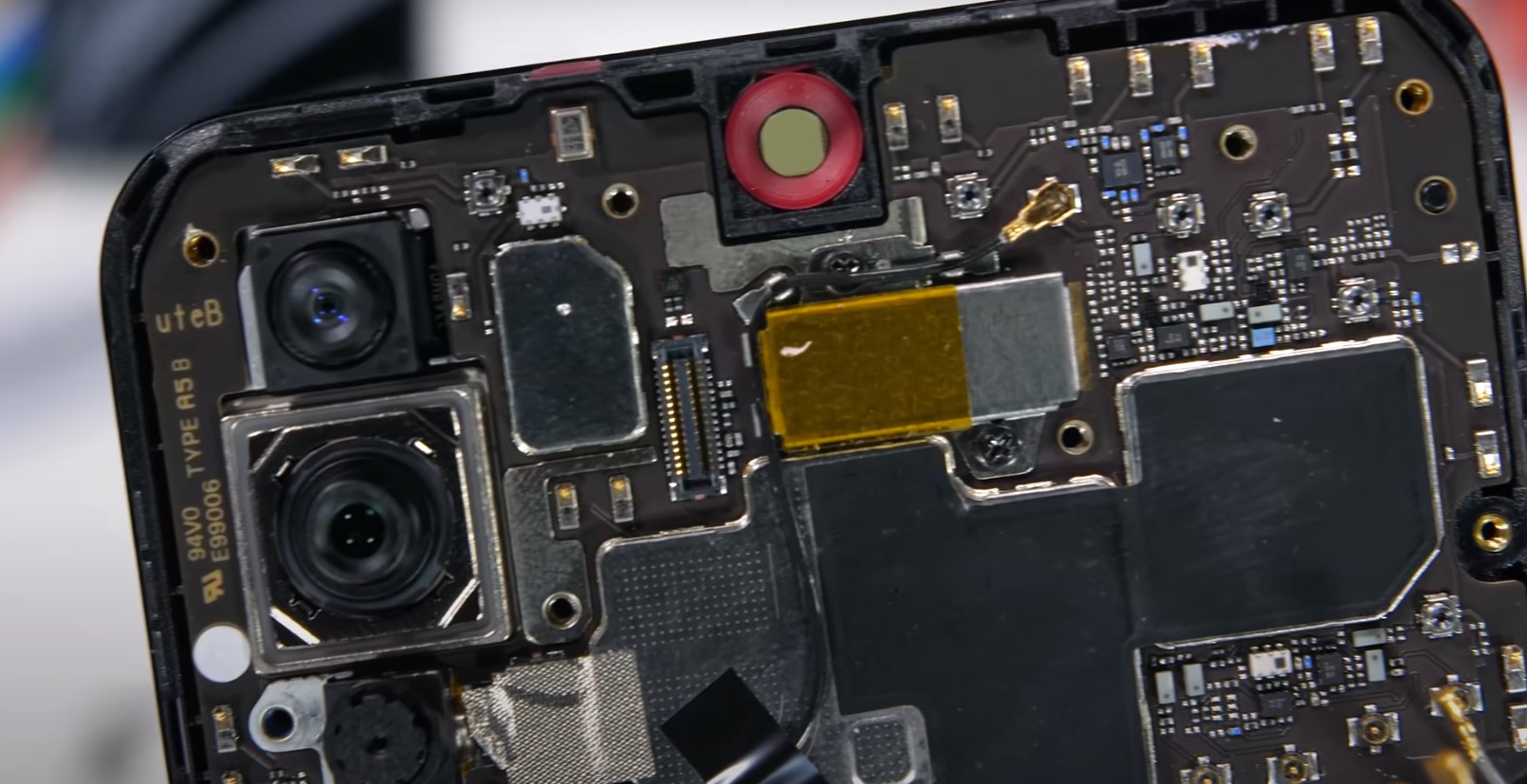
Another option involves using the seconda small, lower-resolution display that sits above the camera. By spacing out the pixels, this screen lets in more light and allows the camera to take the photo. In any of these cases, there is color distortion, artifacts from reflections of neighboring elements, and so on. The ZTE Axon 20 5G uses the second option. Using a small screen with low resolution. Visionox is responsible for the development. As stated in official ZTE materials, “high transparency material, a dual-control chip, a unique driver circuit and a special arrangement of pixels on the matrix” are used. We will not disassemble and study the smartphone from the inside; the well-known JerryRigEverything has already done this for us (you can watch his disassembly video at the link). This is what the screen looks like when viewed from the inside:
</ img>
As you can see, color distortions are very significant.This whole thing is “corrected”after filming. software algorithms. By the way, the front camera itself uses an absolutely ordinary 32 MP module with an f/2.0 aperture, without any special features.
Is the camera really out of sight?
</ img>
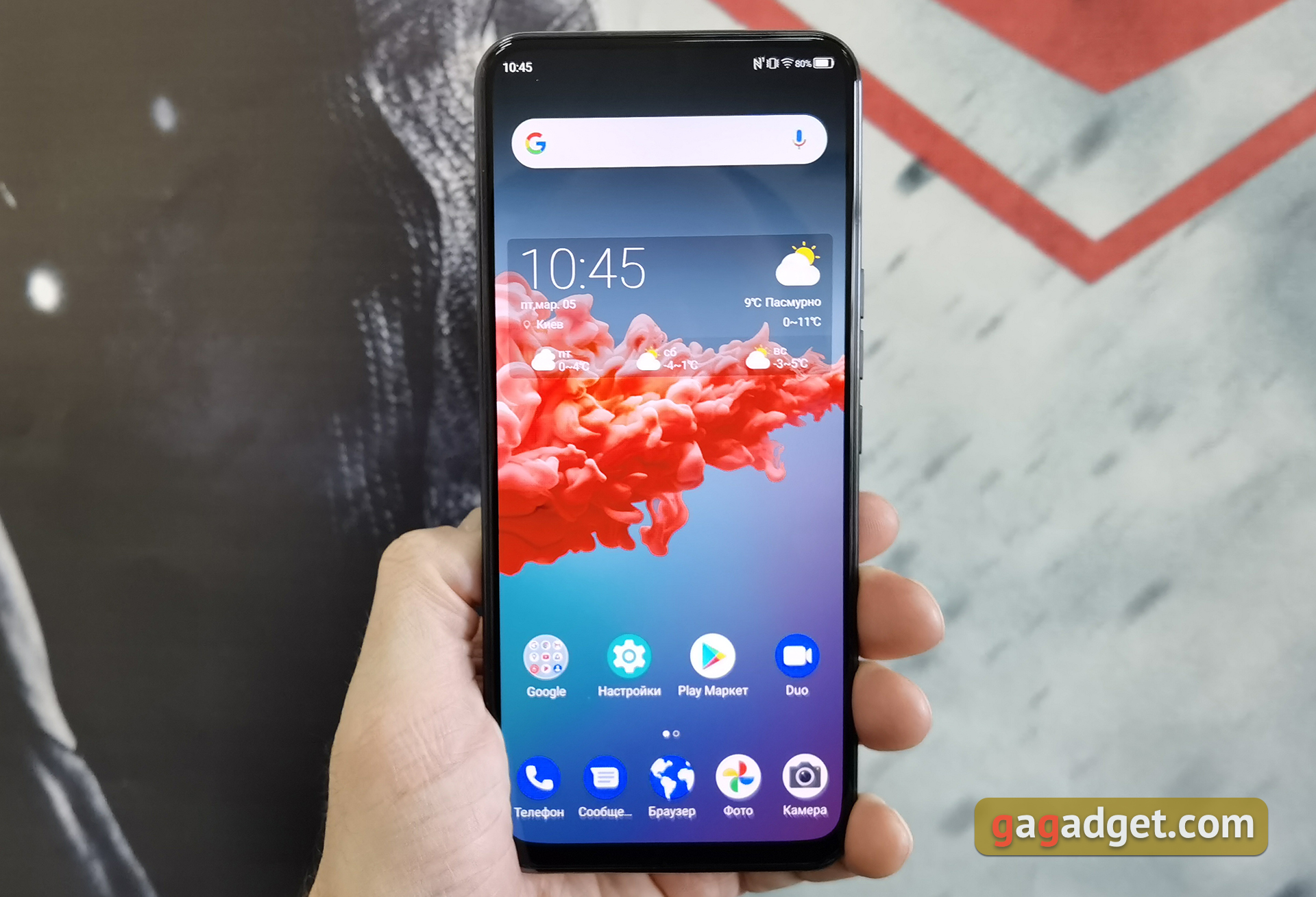
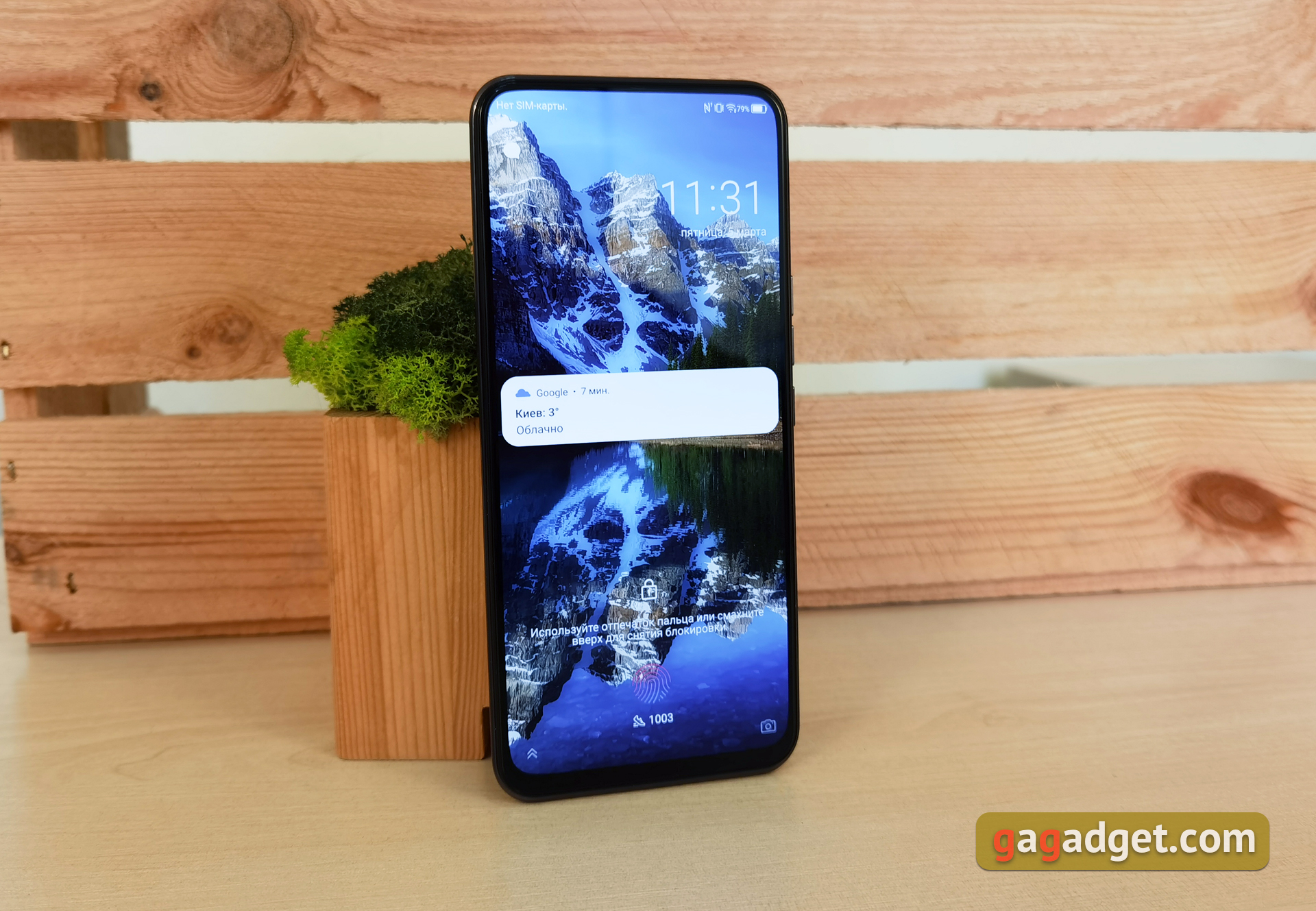
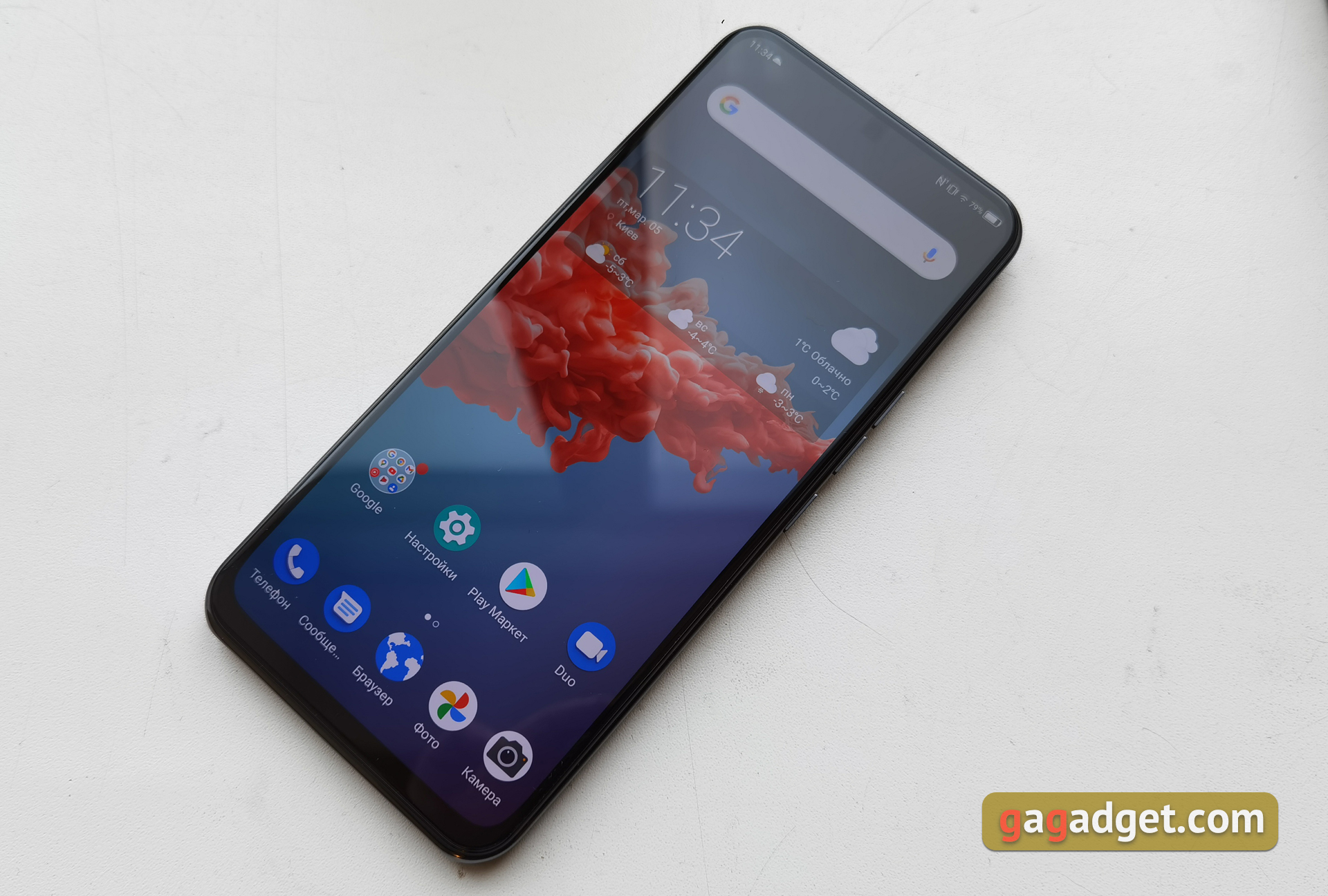
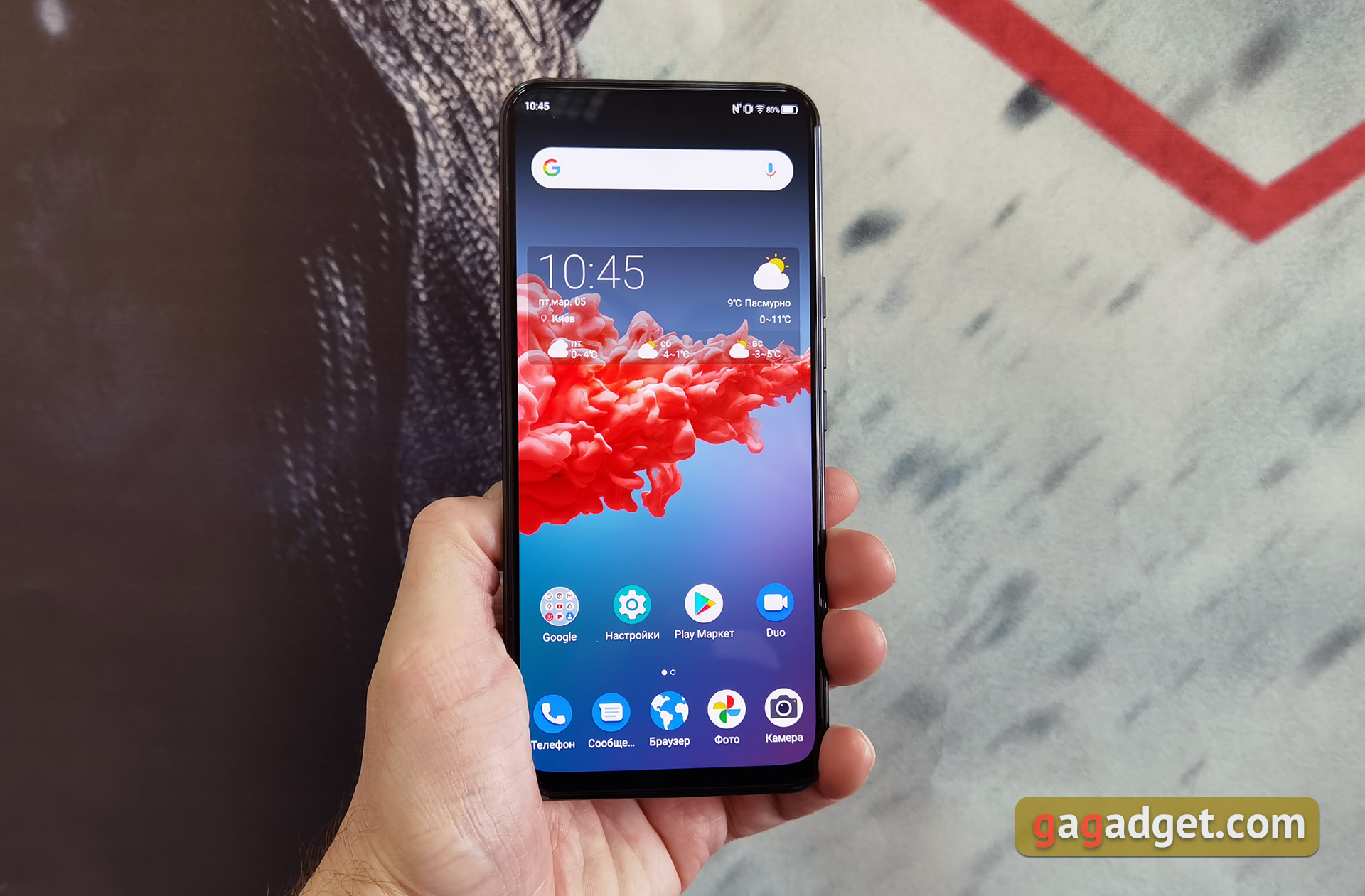
Now let's move on to practice.Let's start with the external component. Is the camera really invisible? The question is very loose. It is not visible if you look at it at the right angle and choose the right desktop background. Plus install a dark interface theme. Under such conditions, in most cases, the smartphone is truly aesthetically pleasing with its “frameless” and the absence of any cutouts.
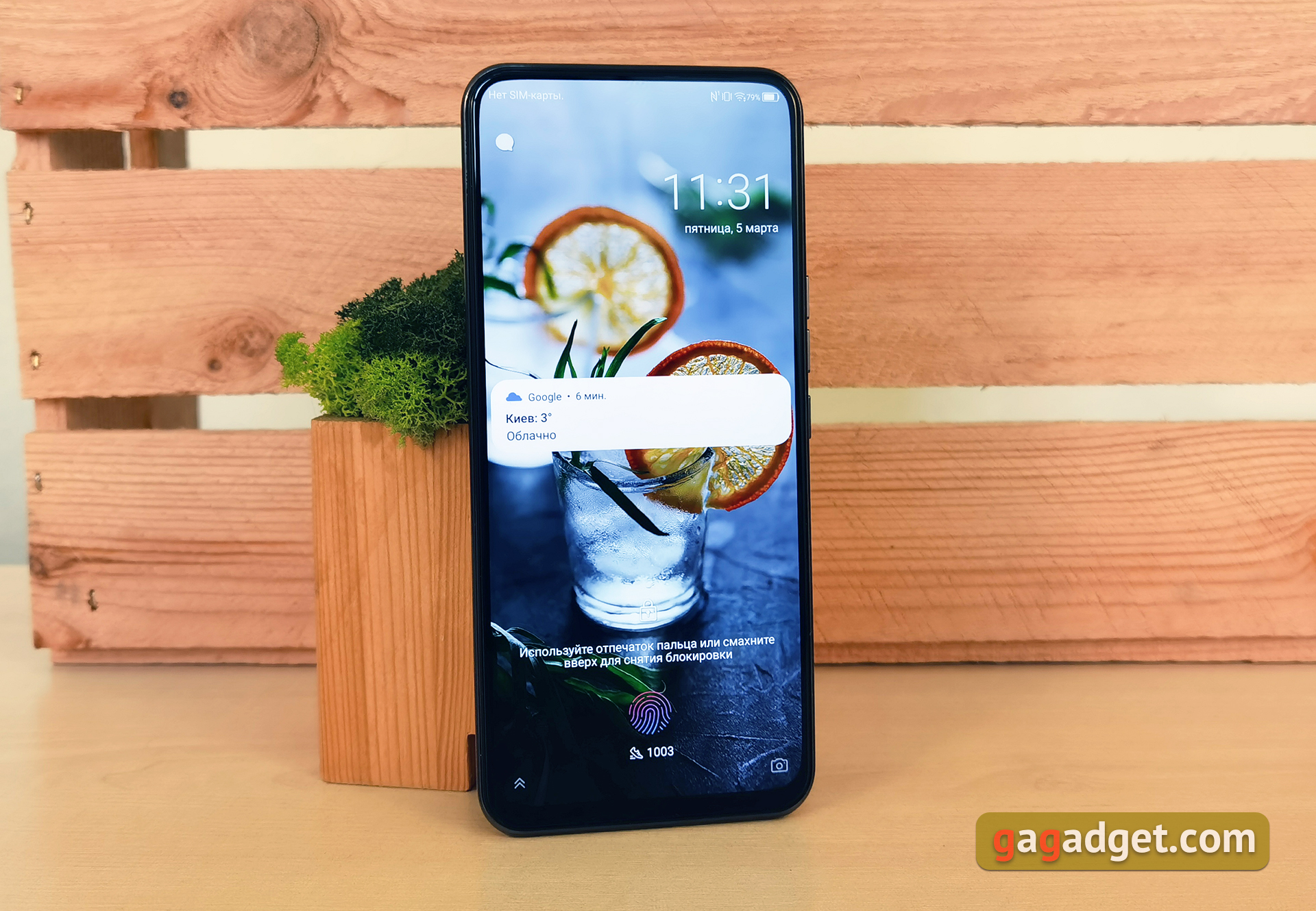
</ img>
</ img>


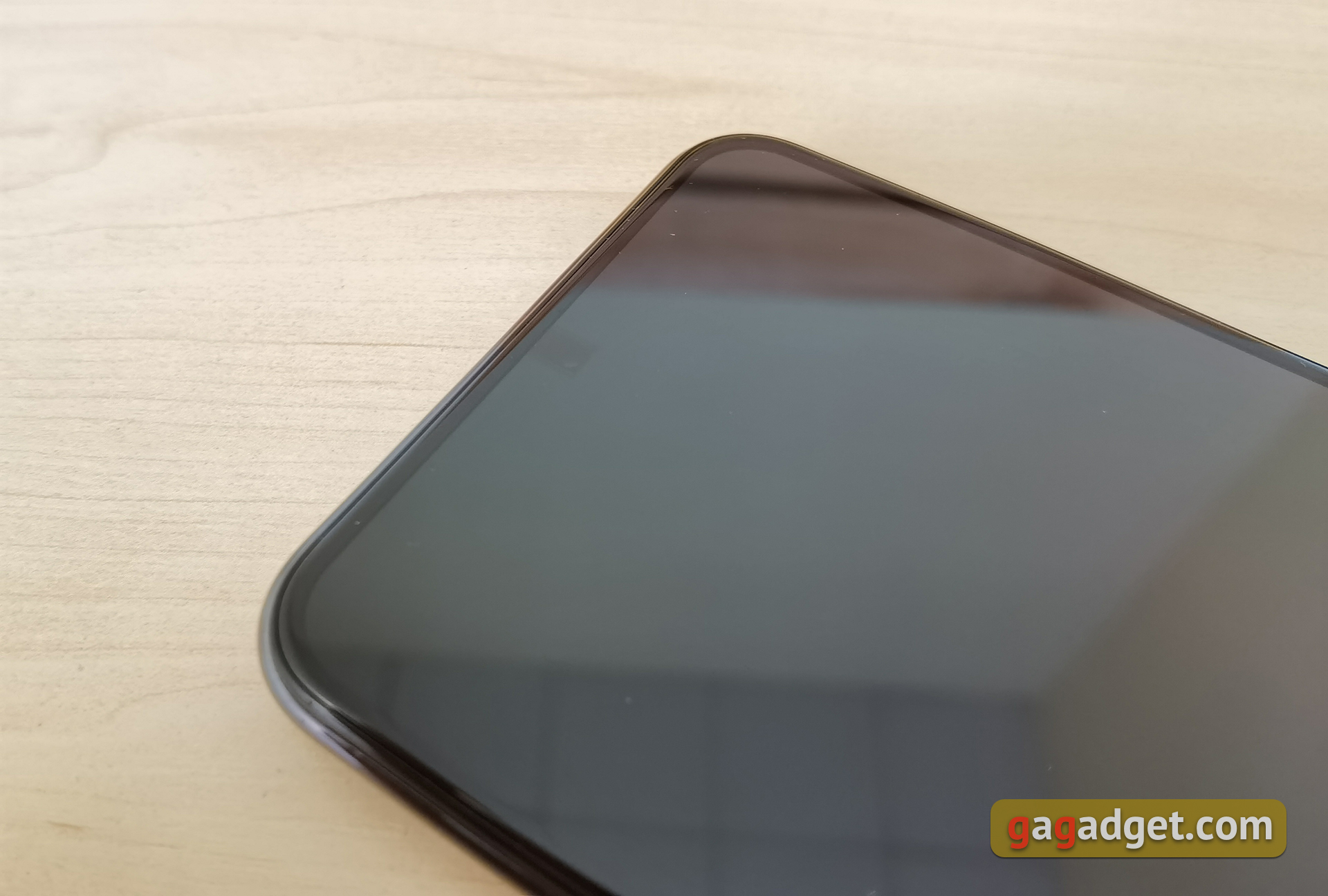
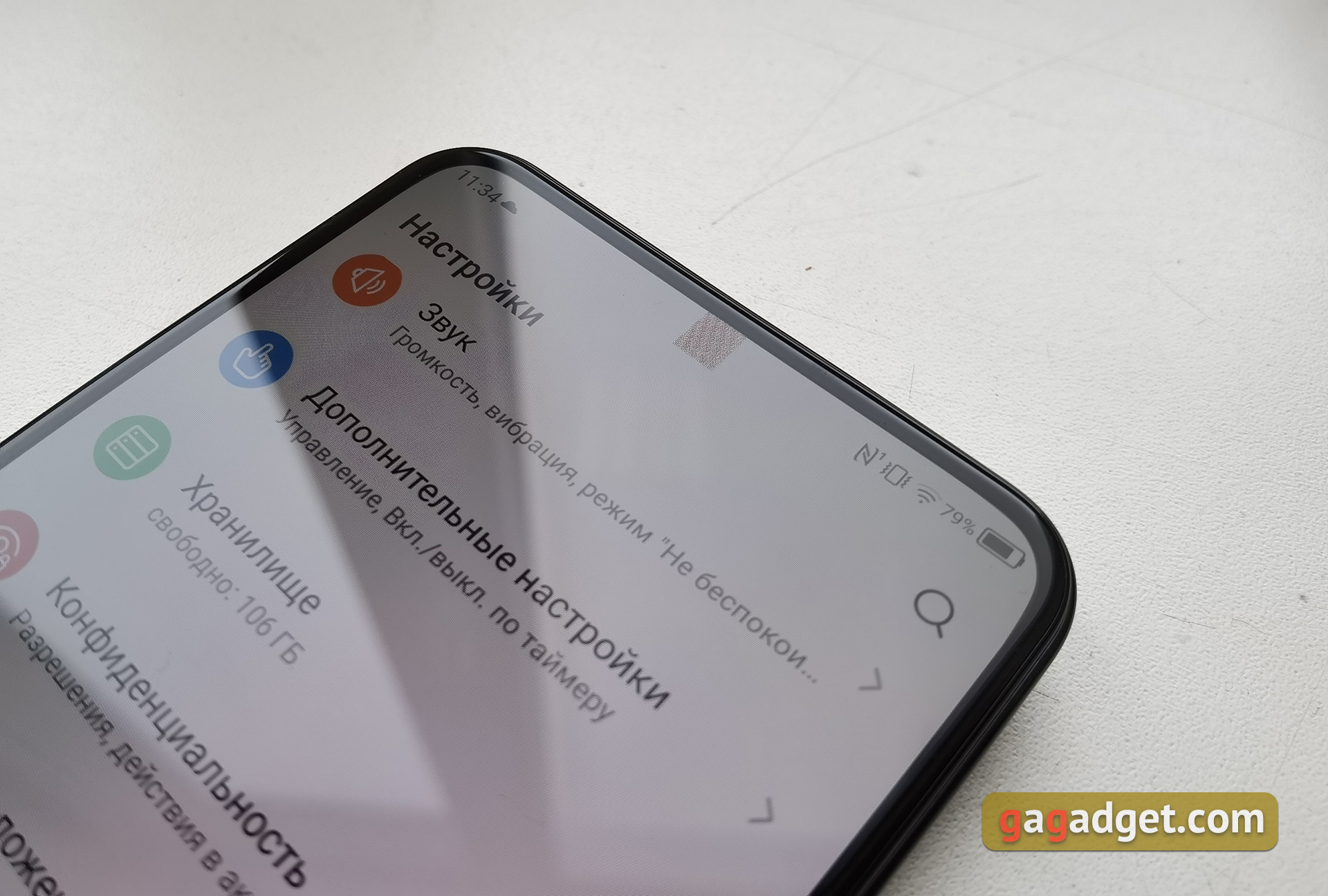
If you look at it from an angle, then this one is the samea small square is almost always visible: it begins to shimmer with different colors of the rainbow. On a black and white background there is a square “window” visible even at right angles. In the white case, pixelation is also clearly visible. Let me remind you that a small display of reduced resolution is used. Plus, its refresh rate is clearly lower than the main one. Which, by the way, supports a refresh rate of 90 Hz and a sensor polling rate of 240 Hz.

</ img>

</ img>
</ img>
</ img>
</ img>





How does it work in practice?
No new technology works well right away.Usually it takes a couple of years to finalize. I think that in the case of under-screen cameras the situation will be approximately the same. ZTE Axon 20 5G is the first smartphone with such a solution, and it is worth noting that the company was not afraid to release a similar smartphone for sale. And note the fact that the under-screen camera actually works. The quality of the photographs is frankly lousy. Overall detail is very low. The photos come out blurry, giving the impression that the photo was taken through foggy glass. Strange halos appear around objects.

</ img>

</ img>

</ img>

</ img>




Color rendition can hardly be called natural,this is especially evident in the color of the skin. It seems that either a filter or some kind of butification mode is on. Of course, the dynamic range is also poor. In general, these results are obtained with or without good lighting.

</ img>

</ img>


The videos, as you might have guessed, are also not particularly pleasing with their quality. By the way, the front camera writes FullHD 30 frames per second.
Overall, as expected, so far the technology is veryraw and the quality of the front camera is very low. Perhaps enough for video calls when the picture quality fades into the background. But for those who like to take a lot of selfies, a smartphone is clearly not suitable. Yes, there is a chance that with firmware updates, the quality will improve a little, but you should not expect a miracle: the physical limitations of the firmware cannot be bypassed. On the other hand, there are users who barely use the front camera. Then there is no particular problem.
What about the smartphone itself?
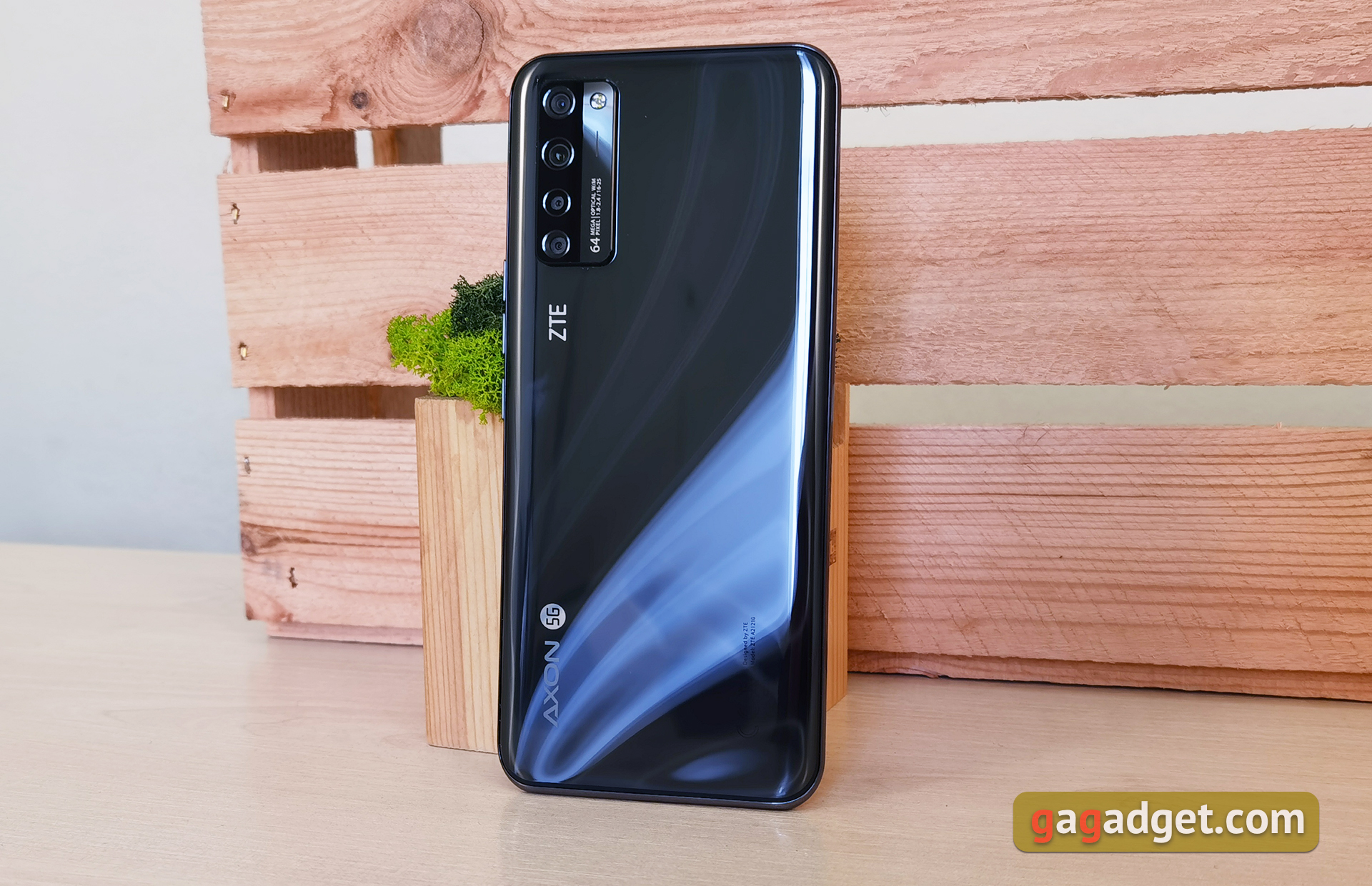
It would not be entirely correct not to talk aboutZTE Axon 20 5G. This is a solid mid-range Android smartphone with a huge 6.92-inch FullHD + screen and a refresh rate of 90 Hz. Visually, it looks in the spirit of most neighbors in the price category: glass front and rear, rounded corners of the case and screen. The main camera is made in the form of a rectangular block that has already become familiar, which protrudes slightly above the body. All functional elements are in place. There is no 3.5mm jack, but there is an adapter included. By the way, the smartphone has not only a front-facing camera under the screen: the speaker and a fingerprint scanner are also stuffed there.
</ img>
The screen is of good quality, and the inside is verya good mid-range processor Qualcomm Snapdragon 765G, which is quite possible to play games on. Memory amounts are typical: 8 GB of RAM and 128 or 256 GB of internal storage. Plus, instead of a second SIM card, you can install MicroSD. Dual-band Wi-Fi, Bluetooth 5.1 and NFC are present. The battery is not record-breaking, but it is stable enough for a day of active use.
</ img>
In more detail:
Specifications ZTE Axon 20 5G
Display
OLED, 6.92 inches, 2460×1080 (20.5:9 aspect ratio), 388 ppi, 90 Hz
Housing
dimensions: 172.1×77.9×8 mm, weight: 198 g
CPU
64-bit 7nm Qualcomm Snapdragon 765G, 1×2.4 GHz Kryo 475 Prime + 1×2.2 GHz Kryo 475 Gold + 6×1.8 GHz Kryo 475 Silver, Adreno 620 graphics
RAM
8 GB
Flash memory
128GB + MicroSD
Camera
Main: 64 MP, f/1.8, 1/1.72″, 0.8µm, PDAF; ultra-wide-angle: 8 MP, f/2.2, 120˚; depth sensor: 2 MP, f/2.4; macro: 2 MP, f/2.4; 4K@30; front camera: 32 MP f/2.2 sub-screen
Wireless technology
Wi-Fi 802.11 b/g/n/ac (dual band, 2.4 and 5 GHz), Bluetooth 5.1 LE, NFC
GPS
GPS, A-GPS, GLONASS
Battery
4220 mAh, non-removable; fast charging Quick Charge 4+ 30 W
operating system
Android 10 + MiFavor 10.5
Sim card
2xNanoSIM
In the dry residue
Despite the fact that the technology is still franklyraw, it has the right to life and prospects for further development. Things will probably get better in the next generations. Moreover, ZTE is already preparing a smartphone with a second-generation under-screen camera. And along with it, similar solutions are being prepared by at least Xiaomi, OPPO and Samsung. And if the first similar models from Chinese manufacturers will most likely go on sale this year, then Samsung will obviously hold off and release its version only “as soon as it’s ready.” In any case, this option for placing the front camera is quite promising. When perfected, this will eliminate the need for annoying cutouts and all sorts of moving structures. Who knows, maybe in four years such a solution will become an industry standard, like holes are now. As for the ZTE Axon 20 5G being tested, this is, first of all, a bold experiment and a “testing” new technology. The only significant drawback of the smartphone is, in fact, the quality of the front camera. Otherwise, this is a pretty decent smartphone in the mid-price segment with good hardware, a large 90 Hz screen, a modern set of rear cameras and fast charging.