“The main thing that 3D printing can do is squeeze the maximum out of structures”
— 3D printing has always been an area where there is
— There is a group of people in Russia, I would call thementhusiasts of a religious type who deify FDM technology (building by layer-by-layer deposition - ed.), they know absolutely everything about it: they know how to assemble a printer from improvised materials, they receive raw materials. This body of knowledge has already been fully explored. FDM is relatively easy, cheap and fast, widely available, there are no restrictions on sanitary standards, and its main charm is that it can be applied in everyday life. The bracket broke, need to print the stand? They are easy to print.
But the metal seal is now the twilight zoneit has elements that do not allow it to become ubiquitous. This is quite expensive, requires a lot of resources and complex infrastructure that only a successful enterprise with the right staff can afford.
Therefore, knowledge on metal printing at the startthere were not so many, but this is the very case of good factory practice, when the master starts as a locksmith or turner, works with his hands to understand how it all functions. And then he applies the knowledge about the installations as a full-fledged engineer.
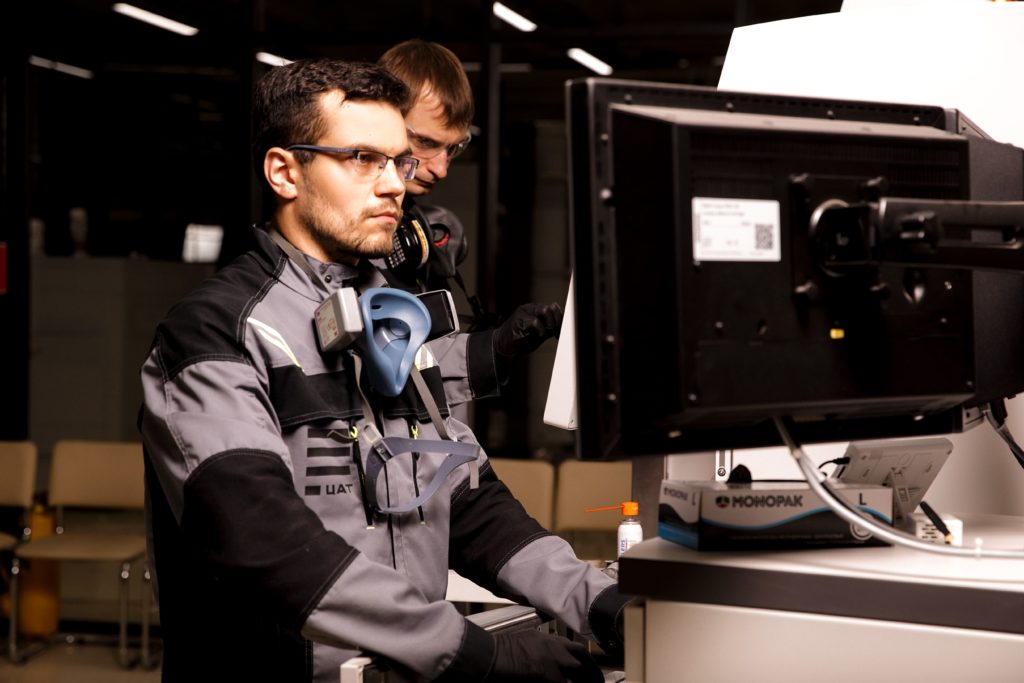 Evgeny Bolkhovetsky
— How is metal 3D printing developing now?
— Additive technology is not an abstraction, but one of the technological components.There is no need to print everything everywhere, the most important thing is to get a technical and economic effect.Roughly speaking, a printed product should be profitable compared to a product that has been melted and turned.For example, bent sheet metal structures do not need to be printed — they are cheaper and faster to make in classical mechanical engineering, where the process has been worked out for decades.Those industries that do this may never come to 3D printing.
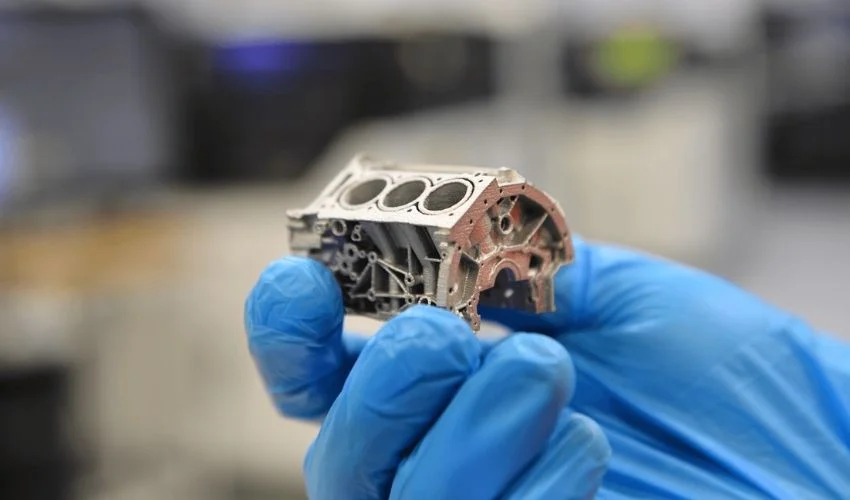
But the main thing that 3D printing can do is squeeze outstructures maximum. For example, it can help make a product lighter while maintaining strength, reduce material consumption, or create a unique model for prosthetics - the classic way to do this will be long and expensive. Or another task - to make the engine lighter while maintaining functionality, performance and strength. So, for example, new aircraft engine blades with complex cooling channels appear to increase their resource and durability.
These solutions appeared only because the engineertackled the problem. He realized that he could try a new approach - making a thin-shell lattice structure that would make the engine element 20% lighter and 15% more fuel efficient. So the plane will fly further, the rocket will eat less fuel, launches will become more economical and the payload can be increased.
All of this can only be done with 3D printing.Those organizations that want to lighten the design and quickly get a prototype, and not wait, say, a year and a half, go to print. In our field, it is possible to make several iterations of the critical engine components of the aviation complex in a couple of months, test the element and understand how it will work. The benefits of using printing are obvious, but this is not a panacea, it will not replace everything, but will find its place where its use is economically beneficial.
— Do you have any examples of individual elements that were made in traditional ways, but are now being printed?
— We helped to transfer the steering of onehelicopter technology on aluminum and printed it. Now the entire kinematics chain has become easier and faster, the design can be tested, understand what can be changed and receive an updated product within a week or two.
More complex example:individual elements of aircraft engines. To do this, we talked with specialists, they supervised products that were previously made by casting. Yes, they have slightly increased in price, but the production speed has increased tenfold - we can provide cases that will be used for bench tests, they will heat it, liquid and fuel will circulate there under pressure, it will be put in the conditions in which it will be work.
Lesser-known examples include optics for wearable electronics or augmented reality glasses.The spectrum is very large – from details, fromwhich do not depend on the operability of the installations, to the devices that stand on the aircraft engine.
“Many do not know about additive technologies, they bring products and say “we want to print exactly the same”
What does the product development process look like using printing?
— There are a lot of organizations in Russia whereprofessionals work, they know everything about their field. But when they come to learn something new, they don't know where to start. Therefore, many people ask a banal question: "We have such a product, we want to print it." Then there is a technique that is cleverly called feasibility screening. To put it simply, this is a selection - the parameters by which you can understand whether a product is worth printing, not worth it, or it has the potential to be printed.
If printing fails or it willexpensive, we are honest about it. The customer himself decides whether it suits him. If the product has potential, we offer new design and technological solutions: add or change something to improve the design. So there will be less risk that we will not be able to print the product or reduce the time of its construction and the amount of material.
And there are customers who have worked everything out, andthe product must be printed "in the forehead." Communication with customers is different, because this is not classical mechanical engineering, which has been done for decades, where there are all the drawings and everyone understands how a lathe or milling machine works. All of these are new technologies. Few people know how metal 3D printing works.
What is the hardest thing to print?
- I would divide the complexity in terms of form andproduction component. Probably more difficult than a generative bionic design with various kinds of lattice structures has not yet been invented. But this is a complex form - such a challenge is created by the customer himself.
And there are purely technological difficulties - this islarge products of an aircraft engine with different types of surfaces. For example, closed channels with complex internal links for perforation rigidity. Separately, these are simple elements, but in total it is extremely difficult to do this. And for large-sized products, the main difficulties are shrinkage, warping and cracking.
“If production is not developed, degradation begins. It is impossible to stand still and prosper.”
— Are you sure you face skepticism of manufacturers? What do they usually say about you and how do you convince them?
— I would even say that this is a bipolar process. There are people who do not believe that 3D printing works at all, while others idealize it and believe that it can do absolutely anything.
The inertia of thinking is inherent in people of a certainage, who have been working in production for 30 years in a row and know exactly what the process looks like, they believe that there is no need to change it. And there are passionate people who are interested in the concept of digitalization and want to try something new. Not because they are forced - this is an internal need of an engineer. And he has arguments - you can do it faster, add a unique shape, increase efficiency and translate all this into the language of numbers. This is the right approach - if you do not develop, degradation begins. It is impossible to stand still and flourish.
When a skeptical customer contacts us -We honestly say that our technological process has limitations. But we also show how he can win. We offer our own solutions - instead of five separate elements, we optimize them into one, print several test cases for free. If they didn’t like it, it’s okay, they got experience, and we got new communication.
The information component is now startingdevelop faster and production will catch up. And 3D printing will be a key area, because otherwise these complex, efficient products simply cannot be obtained. Those customers who ignore this area will be the losers and suffer losses. This is an exaggerated and pessimistic picture of the world, but it is better to face the truth.
 "A lot of people come up with a trivial question: 'We have this product, we want to print it.'"
— What else prevents you from combining additive technologies and mass production?
- I do not want to exaggerate, but always on the sidethe client is left with the management apparatus, which, despite the opinion of the engineer and his initiative, may decide that they do not have the resources. Additive manufacturing is expensive, so it's common that lightening and streamlining designs provide direct economic benefits, such as in the aerospace industry. And those who do not directly benefit from additive manufacturing here and now do not implement it, because so far everyone is happy with everything.
— How to combine traditional production and 3D printing?
— If we trace how the scientific and technicalrevolution and how it was connected with production - at first, artisans did everything in a single copy to order. Then the first machines appeared, production expanded. We began to make products in stock so that we could sell the assortment on the market. When we switched to the assembly line, production became massive and unified. This reduces the cost of production - it is easier to make one form and 10 thousand identical copies. But we are developing, the process of digitalization is accelerating, there is a lot of computing power, optimization and computer simulation of technological cycles are developing.
There is also a concept of the further development of society: changes in technical and economic formations lead toIn the most developed societies, the economical use of resources is already developing, and all this fits very well with 3D printing.We don't need to print thousands of identical products in the hope that the customer will buy them.He comes with his own case and doesn't wait three years for us to prepare the infrastructure and do what he needs.Weeks and months are counted.
Therefore, printing will become an organic component of production and will find its place within it.At the same time, printing some things will still be pointless — there is no need to print sheet structures, it is uneconomical and difficult.And complex and unique products are easier to print and get the most out of it.
</ p>Who do you focus on, who is the main reference point in this area now?
Now the leaders of the industry are European andAmerican companies with many years of accumulated experience. For example, Boeing and Airbus, Aston Martin or Ferrari have been introducing additive solutions into their products for several years. We try to be equal to large global corporations and learn from those who are at the origins of the additive industry.
Relatively recently, we have been trained ininternational program Additive Minds. For example, as part of the training, a number of design implementations were demonstrated. And then a person who does not know where to look will see a beautiful picture, and a professional will see a cool solution that can be used in their work. Of course, we pay attention to such things and apply them to our research.
The Russian arena also has its own leaders and"pioneers of the market", we work with them in collaboration, in the same boat. We exchange solutions and ideas, otherwise we will not survive. First of all, these are UEC enterprises: UEC-Saturn, UEC-Aviadvigatel and UEC-UMPO.
— What do you expect in this area in the next 5-10 years?
- In the direction of printing with metals, I wouldsaid technical irony. There is equipment and GOSTs with which we work. And we see obvious things that can be improved or even removed in order to make complex products faster, cheaper and better.
But there are areas that are beyond the circleour knowledge, and in doing so can lead to the most radical changes. For example, the accelerated development of artificial intelligence will lead to the fact that the entire printing complex will possibly be compressed into one application, where the product will be considered and the model will do everything for a person due to algorithms. And employees will be able to spend this time on the further development of the sphere. I am not a futurist, but it seems to me that this is an obvious change.
Unobvious breakthroughs also happen - for example, who would have thought that the growth of computing power due to cryptocurrencies, video games and interactive entertainment would help in calculating the genetic code?
Read more:
On the pyramid in China found a portrait of the "king of ancestors". He ruled over 4,000 years ago
The length of the earth day is increasing. Scientists don't know why
Engineers have created a "perpetual motion machine" for portable atomic clocks