Why Trench Warfare Is Not A Thing Of History, And This Formatis still relevant today.What are the characteristics and what are the
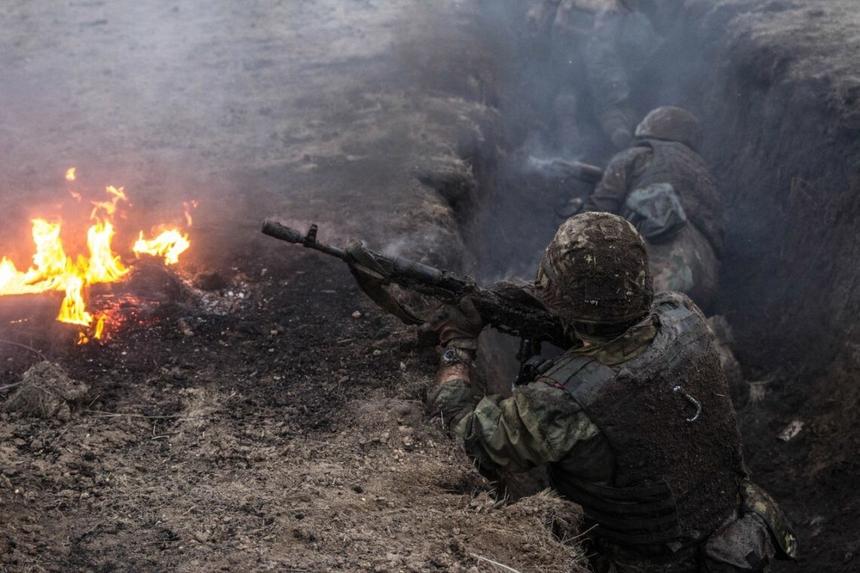
Table of contents
- What is positional warfare?
- Pros and cons of positional warfare
- Is positional warfare possible in the modern world?
- What is fraught with positional warfare
Trench warfare is an obsolete term, and it appeared, in fact, in honor of the only war, the First World War.In subsequent eras, "trench warfare" was the name given to a lull in a certain sector of the front, when both sides had no opportunity to attack.Such a synonym for the term "battles of local significance", when there is a war, they diepeople, but nothing changes in general.
What is positional warfare?
This form of confrontation still has specific features:
-
a continuous front is formed along the entire line of possible contact with the enemy
-
positions are equipped with a dense and complex system of engineering barriers
-
the sides are separated by a "no man's land" - a strip of territory that no one controls (100-250 meters during the First World War, but it happened in different ways)
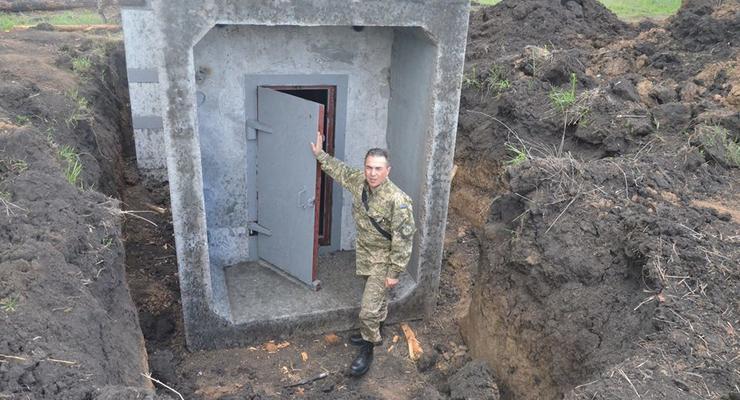
Strengthening the positions of the Armed Forces of Ukraine in Donbas in 2015-2021
facebook.com
- cutting edge is equipped, in addition to facilitiesmilitary purpose, infrastructure for a large number of people to stay there (latrines and washing places, sometimes baths, laundries, eating places, and so on).
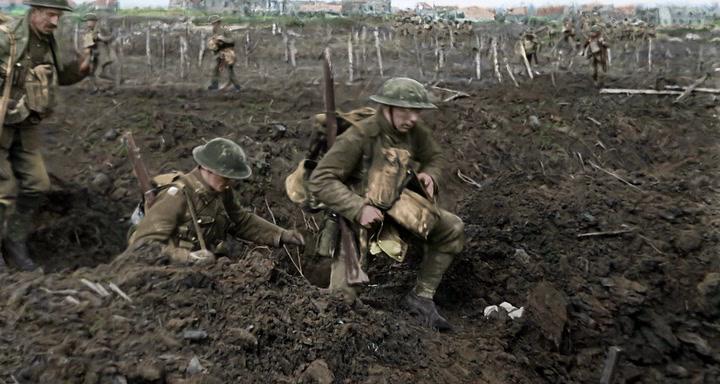
Why did the parties fight in this format?To put it simply, in those years it was possible to defend much more effectively than to attack. Many technical innovations helped you in defense - machine guns, mines, barbed wire. But for an offensive there was nothing better than a loud “hurray”.
Not enough for offensive actionmobility. In short, there are many good killers, but few good riders. By the way, later they found a way out of the positional impasse in tanks, when they guessed to attach the killer to the rider and sheathe it all with armor.
But even after that, the same World War II had positional phases here and there sometimes. And then factors such as:
Infantry on foot will not be able to go far to the operational depth. It is necessary to advance faster than the enemy has time to retreat and fortify in new positions
-
Military-political situation. When politicians told the generals - "wait, first we will talk with respected people, and then we will tell you what to do next."
-
Weak equipment- you are the same beggar as your enemy, so both of you stupidly have nothing to step on, and a shovel is cheaper than a tank.
-
The stupidity of the generals andlack of serious military personnel— communists or capitalists sent you everything you needed, but forgot to include instructions.
Because of this, they slipped into positional warsKorean War, Iran-Iraq, Ethiopian-Eritrean. And also the confrontation between Armenians and Azerbaijanis in Karabakh, and the east of Ukraine until February 24, 2022, should also be attributed to the same format.
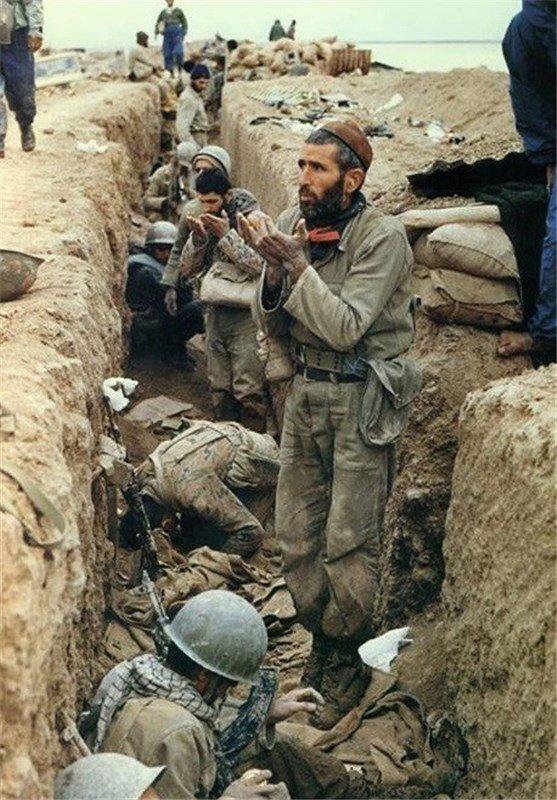
Namaz in the trenches of the Iran-Iraq war
Pros and cons of positional warfare
Let's start with the cons:
-
The war lasts a long time, and fighting is expensive. No, I would say fucking expensive. Therefore, the economy and life in the country, due to such realities, are completely subordinate to military needs.
-
If other factors do not intervene, in such a war, the one who is the first to run out of steam precisely in the military-economic aspect loses.
-
Military tasks are solved by more primitivemethods. Because when it is not possible to advance to a greater operational depth, more and more modest tasks are set before the army, which cost less and less modest losses.
-
The losing side will receive the most unfortunatediplomatic alignments for a peace agreement, because the defeat will come due to the complete loss of the ability to continue the war, that is, there will even be nothing to trade. Not to mention the fact that one's own people will somehow have to explain that all this was not only in vain, but even worse.
An obvious example here is Kaiser Germany,which had to lose the First World War (the Compiègne truce of 1918), although the German troops were 70 km from Paris, and not vice versa (Franco-British at the walls of Berlin). Social tension, famine, blockade of imports and exports under the conditions of the impossibility of achieving victory in the near future led to the fact that ...
Something like this was stated by Quartermaster General Erich Ludendorff in a message to Kaiser Wilhelm II
It would seem that positional warfare is very bad. But why are we all stoking depression? Let's talk about the good. So the pros:
-
The transition to the positional phase allows you to save previously conquered territories with a significant reduction in offensive potential and heavy losses.
-
It allows you to consolidate the population, everyone becomes interested in victory.
-
Under conditions of imminent defeat, allows you to delay the end of the war
During this time, you can have time to regroup forces,transfer the confrontation to the diplomatic field, reconsider the goals and objectives of the war, develop new tactics and strategy. In general, to breathe fresh ideas into the war.
If you have such ideas, of course
The first real positional warfare in historybroke out at the final stage of the American Civil War 1861-1865 (between the northern Yankees and the southern Dixies). Despite a buoyant start, when the southerners almost took Washington in the first month of the war, the north managed to hold its own. The Yankees raked away from the southerners for a long time on land, but at sea they had an advantage - they organized a blockade of the south, he could not sell anything to earn money and buy weapons for the war.
After the Battle of Gettysburg in the summer of 1863,it is clear that the southerners are all exhausted, and there is definitely no strength to win. But the war lasted for almost two more years, because the commander-in-chief of the southerners, General Li, was from the engineering troops in profile. Therefore, his soldiers began to dig in and build sensible defensive complexes. The northerners were already confidently winning, but they had a long and very expensive way to win a de facto victory.
So, as we see, positional warfare is more oftenjust a necessary measure, because the transition of the war to this state increases the risks and stakes in the confrontation. At the same time, the prolongation of the conflict and the inability to resolve it in a reasonable time and at a predictable price will force the enemy to evaluate his capabilities. And even if he has trump cards in his hands, he will not be able to use all of them. You don't lose, you just have temporary difficulties, and they don't win, they just have a temporary advantage.
The film "Cold Mountain" shows very clearlyBattle of the Crater on July 30, 1864, during the Siege of Petersburg, Virginia. Then the northerners dug a tunnel in one of the areas, laying a bunch of explosives, so that a whole crater was formed, which gave the name to the battle. But they were let down by the poor organization of the work of the staff officers - the officer who was assigned to make ladders to climb over the crater was not assigned to carry them there, and no one was assigned to do so.
As a result, the formations of the northerners entered the hugehole, without the ability to either get out of it, or climb up and fight. And it was impossible to convey information about this - more and more new units were introduced into the battle, not understanding what was happening ahead. There was a crush.
The result - the southerners recovered and fought back with negligible forces, destroying over 5000 enemy soldiers, losing about 1000 (most during the explosion).
Is positional warfare possible in the modern world?
It would seem that World War II decided positionalstalemate tanks and aircraft. Especially today, when these weapons have reached a technological peak, and in addition - drones, ultra-precise artillery, cruise and tactical missiles, and so on and so forth. Well, somehow it doesn’t fit with the pictures of dirty and lice-eaten soldiers sitting in the trenches for months?
But, as stated above, the reasons are not necessarilymilitary - there are also military-political ones. If you have exhausted your offensive potential, this does not mean that the enemy has it. In this case, you can carry out limited offensive actions so that the front configuration becomes as inconvenient as possible for the enemy on the offensive.
Create fortified areas on the mostbreakthrough-threatened places. And that's all - you can start linking the enemy in endless negotiations. But here lies the catch. And prolonging the conflict gives you something?
You need to make it clear to yourself that you are readydwell on the achievements that you have received? Or are you able to spend the time won on replenishing troops with people and equipment and accumulating a new advantage in order to get out of the positional war format and achieve your goals further?
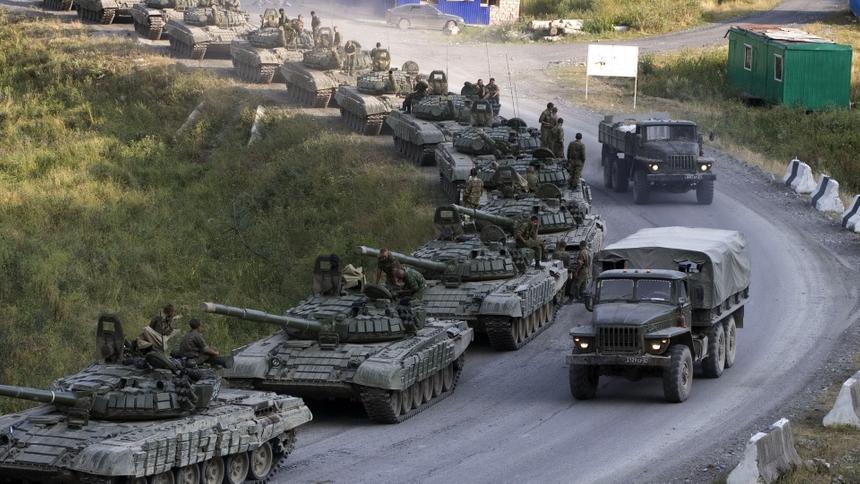
Tanks are not afraid of dirt, but on the offensive they are tied to roads - they are supplied along them
If the enemy has plenty of modernweapons and a good supply of ammunition for them, you will not be able to impose further positional confrontation on him. That is, the one whose losses are restored faster, who can put up as much equipment to the front as they lost, begins to win here.
Combinations of drones and artillery (not eventhe most modern) allow you to quickly destroy any field fortifications. Previously, the configuration of enemy trenches was not fully known, and artillery shells of howitzers could not be aimed accurately (they always fired approximately “out in that direction”, covered the square). Now the drone will give a clear picture, and active-rockets will fall where it shows, from distances of 30, 40, 50 km.
If you do not have the same opportunities, artillerythe enemy will become almost invulnerable to you in counter-battery combat. Strengthening enemy air defense will not allow the full use of aviation. And you cannot use tactical / operational-tactical missiles indefinitely. Especially if you have nothing to really scout targets for them.
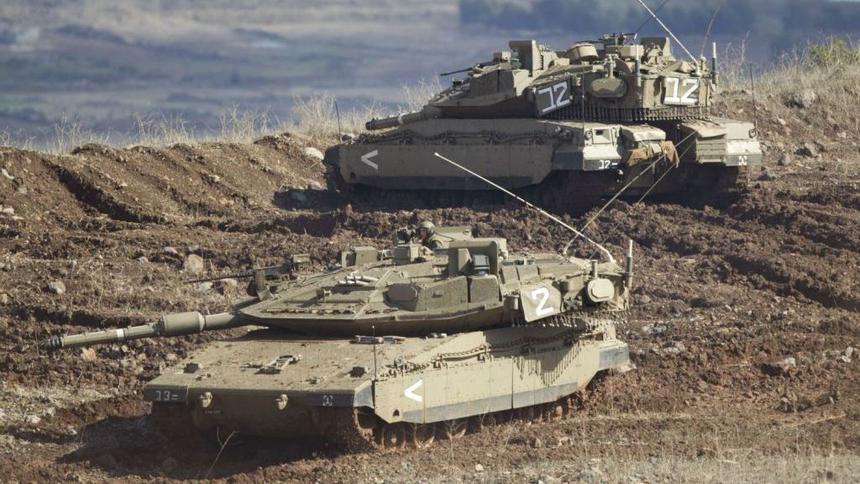
Tanks are not only offensive, but also active defense
Impose your passive defense on the equippedthe enemy will not succeed by modern standards. Very soon he will force you to fight according to his rules, and if you are not able to respond symmetrically, the war will again become maneuverable and offensive, just not for you.
Therefore, in order to go into a positional war in theiryou don't have to achieve equalization in the size of your army and the enemy, but you can't help but have technological parity. It is the technological gap that gives one of the parties the opportunity to take the initiative in the war. Otherwise, you must have an alternative and very strong argument to force the enemy to stay in their positions.
What is fraught with positional warfare
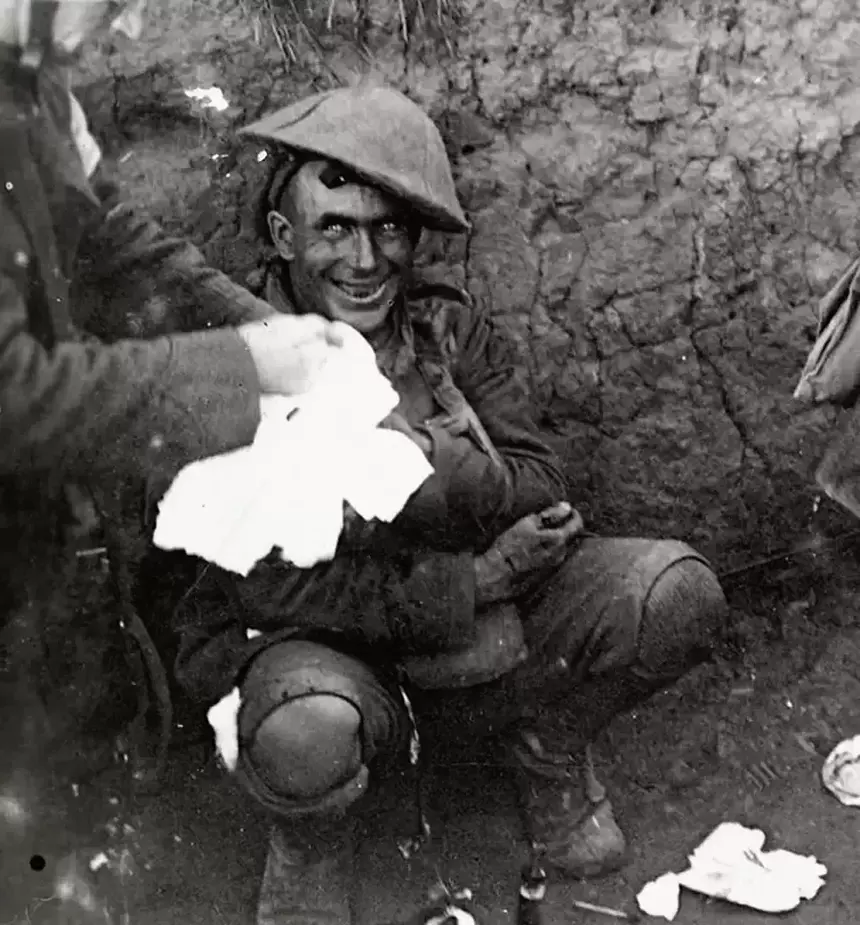
No other format of hostilities denouncesthe senselessness of war, like a positional war. In World War I, she showed all the futility and uselessness of this conflict. Constantly throughout it will make you think about the need to continue the struggle, about whether the results will be worth the resources and lives expended.
It would be better not to repeat such episodes of history anymore.