Content
- Video review
- Equipment and design
- Software
- Usage experience and
tests
- findings
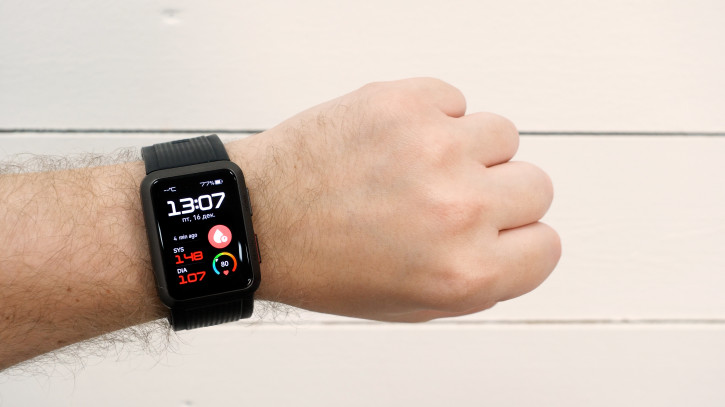
If you go to any majoronline store, open the catalog of smart watches there and select a filter by the function of measuring blood pressure, you will find dozens of different models. But in all of them - from Chinese bracelets for 700 rubles to Galaxy Watch 4 - this function is based on the analysis of indirect photoplethysmography data, which gives a very approximate result. All but one: Huawei has released a smart watch with a real blood pressure monitor! Today we have them on the test - well, we are studying Watch D.
 |
Technical specifications of Huawei Watch D |
|---|---|
| Firmware | Harmony OS |
| Screen | Rectangular, AMOLED, 1.64″, 456×280 pixels, 326 ppi |
| Sensors | heart rate monitor Pulse Oximeter Electrocardiograph Thermometer Tonometer |
| Wireless interfaces | GPS NFC Bluetooth 5.1 |
| Battery | built-in |
| Charging | Wireless |
| Water protection | IP68 |
| Dimensions and weight | 51 x 38 x 13.6 mm (excluding sensors) 40.9 g (without strap) 90g (with L strap) |
Video review
Equipment and design
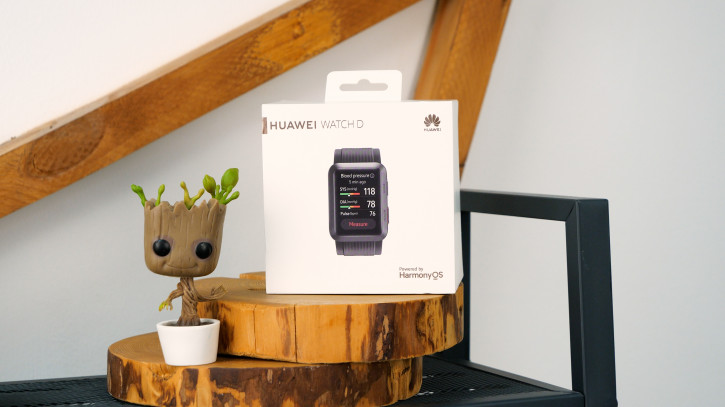
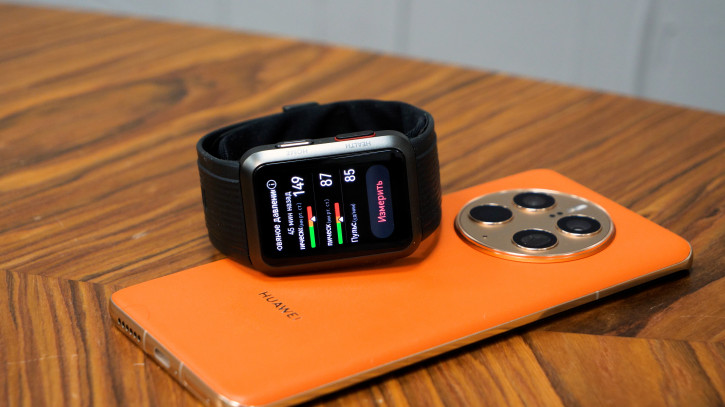
Huawei Watch D comes in a large cardboard boxcube - a very atypical box for smart watches. Its size is due to the rich bundle: in addition to the watch itself and the charger, it included two sets of straps of different sizes, a meter for measuring the girth of the wrist and cases for storing cuffs (they must be placed there if you remove them from the watch). Most likely, this enumeration caused you a lot of questions, and now I will try to answer all of them.
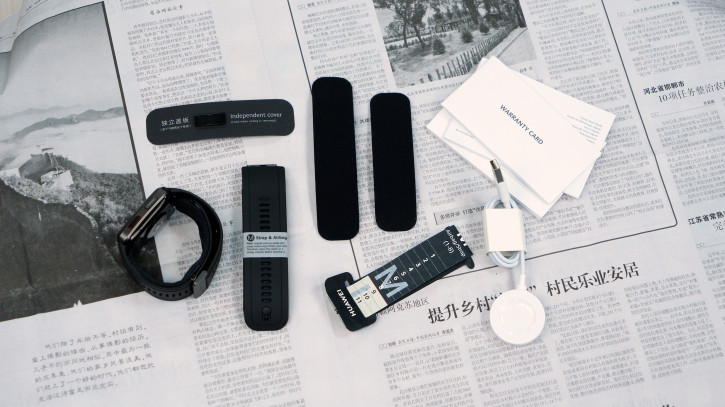
To measure pressure, Huawei Watch D is pumpedair into the cuff that is attached to the inside of the watch band. For the result to be of high quality, the cuff must fit you in size - therefore, the Watch D comes with two straps of different sizes, called M and L, each with its own cuff. And to determine which strap suits you, you need to use a special meter. Well, if you decide to temporarily remove the cuff, then it should be put in a special case so that it does not get dirty or damaged. I note that changing straps on Huawei Watch D is very inconvenient, so do not put off this matter and immediately put on the strap you need.
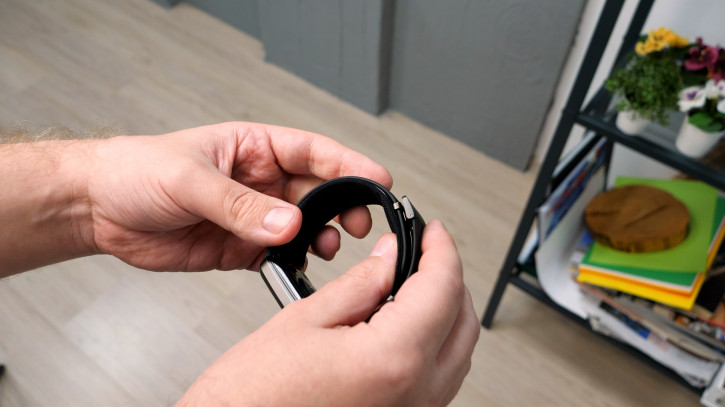
By the way, the strap is awesome.Yes, gray, and there are no other colors, like the watch itself. Yes, fluoroelastomer, not some fancy and pretty material. But they can be removed without unbuttoning, and it's cool. The design of the watch itself is also as minimalistic as possible (oh, how wrapped it up!), Only the Health button with a red outline stands out, symbolizing that it is exactly you need to touch it with your finger when taking an electrocardiogram. Just above it is the Home button.
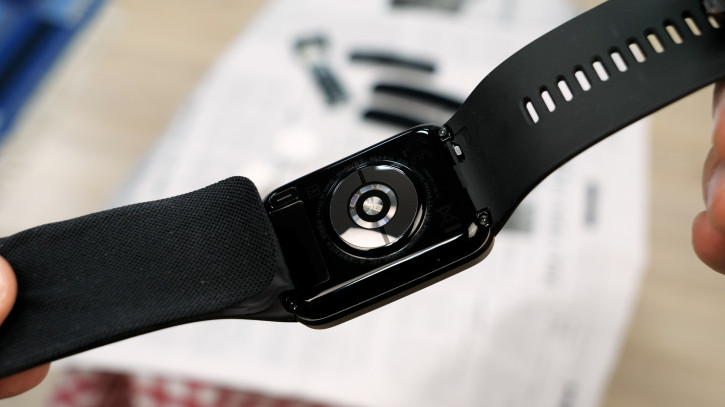
On the back you can only find the heart rate monitor diode andelectrocardiograph panel (and there is also a mysterious hole, the purpose of which I did not understand), and in front - 1.64″ AMOLED touch screen with a resolution of 456x280 pixels (326 ppi). There is auto brightness, so it is comfortable to use for hours both indoors and outdoors. The panel is clear enough to read small print. There is an Always-On Display, but with only two dials, and I didn’t like both of them, so I settled on activating the screen by raising my hand.
Software
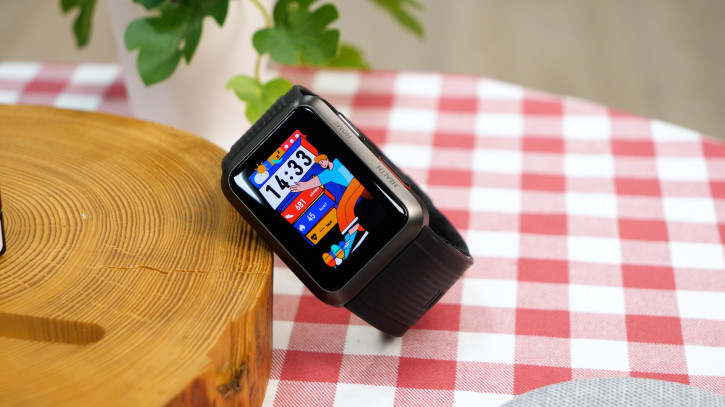
Let's start with the software of the watch itself, then move on tosmartphone application. Like most recent Huawei watches, the Watch D runs on HarmonyOS. But this is not the same HarmonyOS that is on smartphones and is actually a refurbished Android. This is another OS with the same name, based on microkernel architecture and entirely developed by Huawei; at the very beginning of its journey, it was called LiteOS. The main feature of the platform is the minimum consumption of resources, which allows you to install very weak hardware even in advanced watches like these. True, they lag a little because of this, but this is not critical.
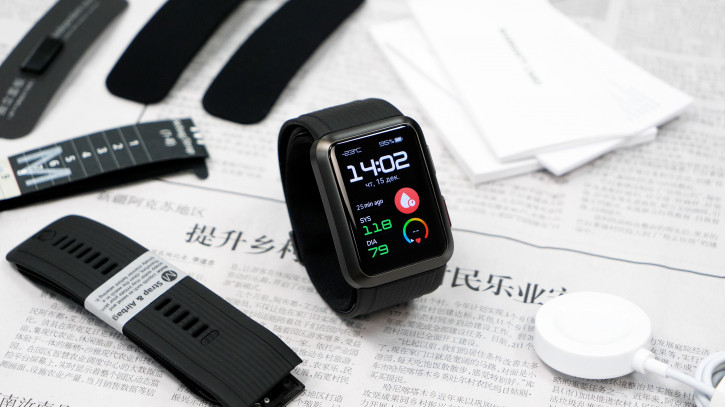
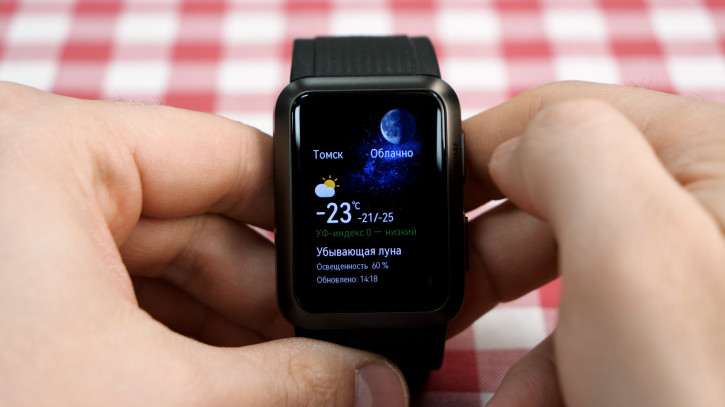
Briefly describe the interface.On the main screen there is a dial with the actual clock, as well as widgets. A long tap opens the dial selection interface, as well as its settings (replacing widgets); even more watch faces can be downloaded through the application. For example, I really liked FourCorners, and I used it all the time during testing. A swipe from the bottom opens the notification panel, a swipe from the left opens a screen with the weather, player controls and, for some reason, the name of the city where you are currently located. Well, suddenly you forgot. A swipe to the right opens a carousel of widgets that you can customize. From many widgets, you can go to the corresponding applications, but for some reason not from all. Finally, a swipe from the top opens a curtain with battery information, Do Not Disturb and Keep Screen on, as well as Find My Phone, Alarm Clock, and Settings apps.
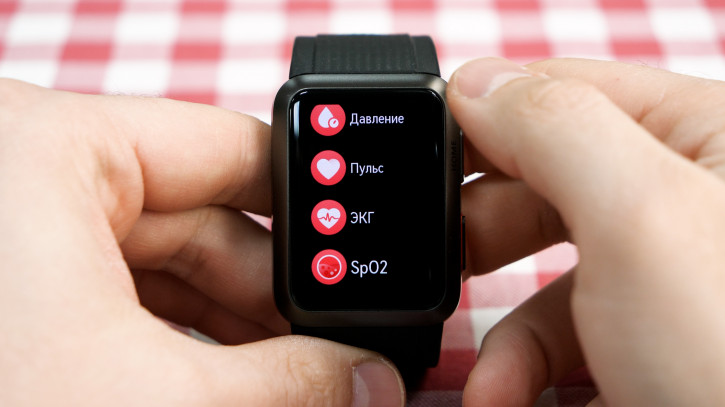
The full list of applications is opened by pressingHome button on the main screen (from all other screens, it opens the main screen). Apps include: workouts, workout records, workout status, blood pressure, heart rate, ECG, SpO2, skin temperature, healthy living, activity, sleep, stress, breathing exercises, music, remote recording, notifications, weather, stopwatch, timer, alarm clock, flashlight, find phone, settings. No additional applications can be installed.
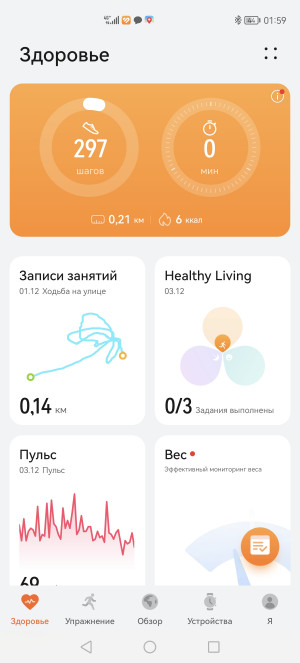
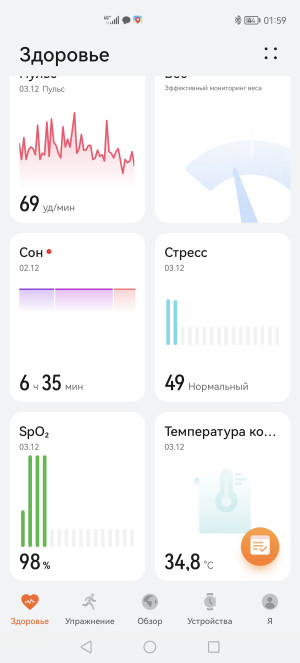
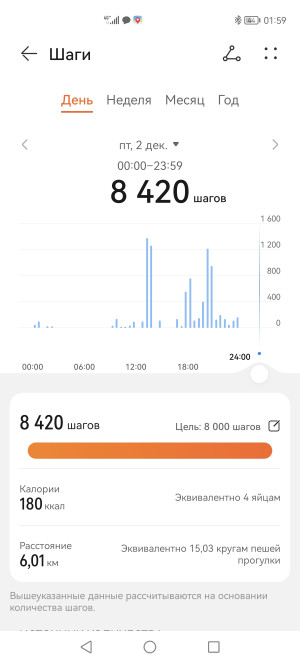
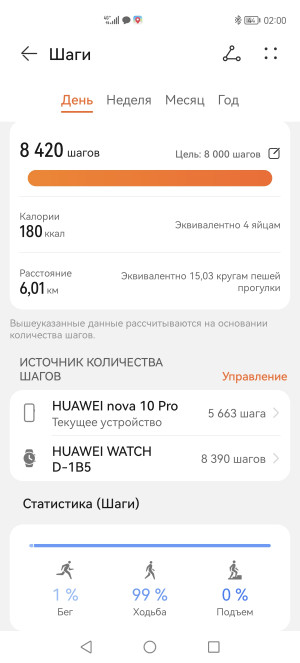
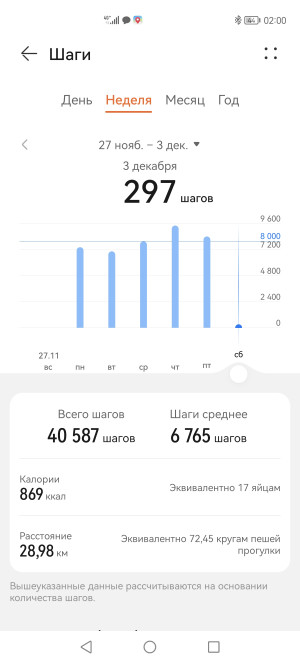
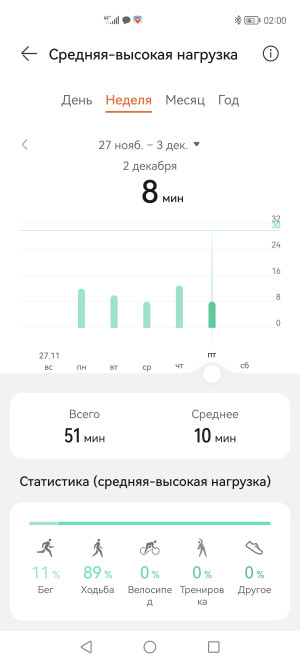
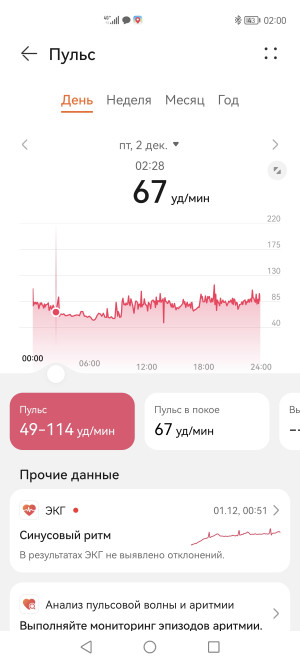
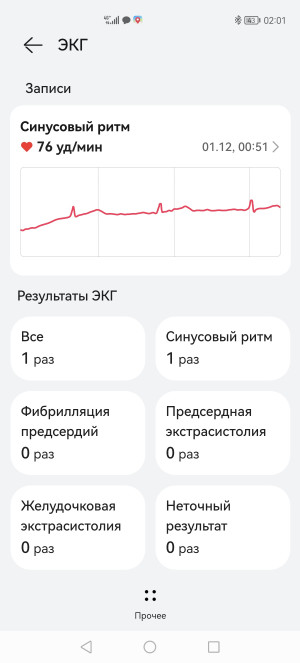
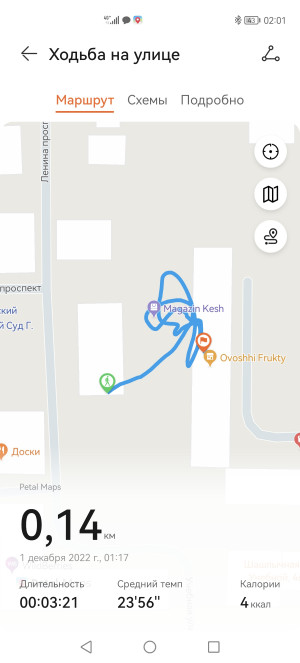
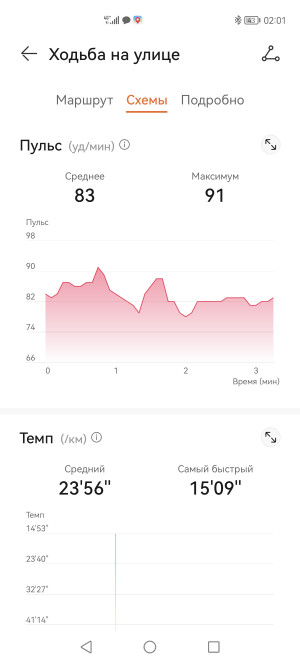
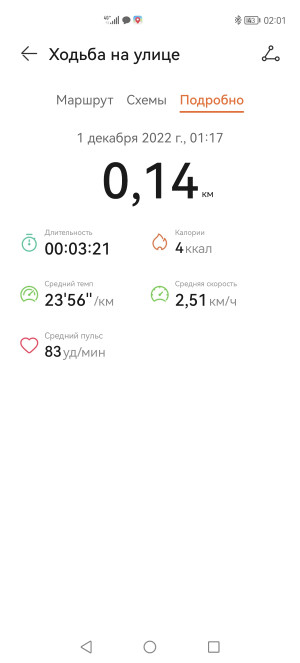
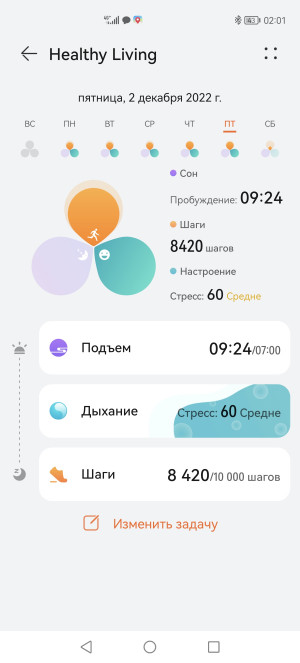
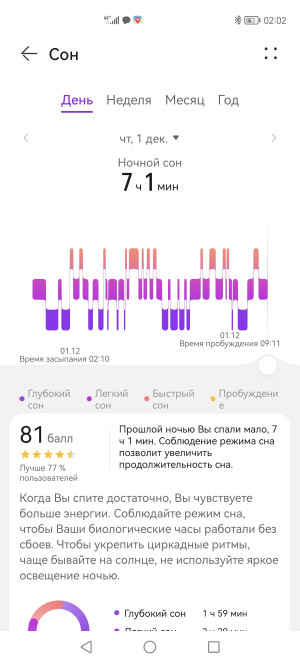
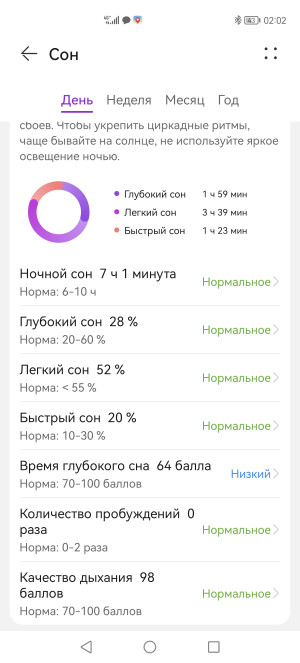
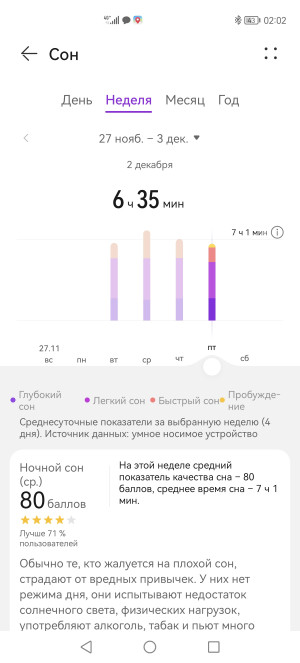
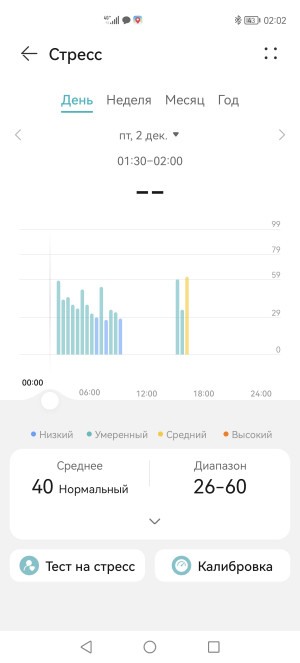
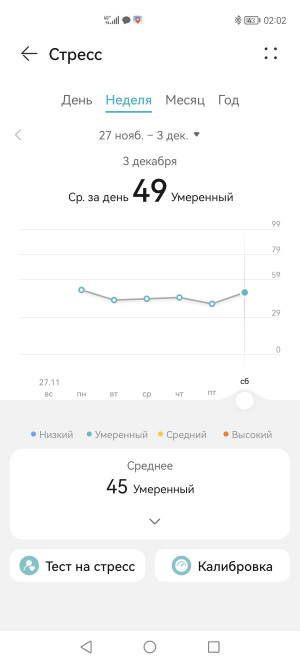
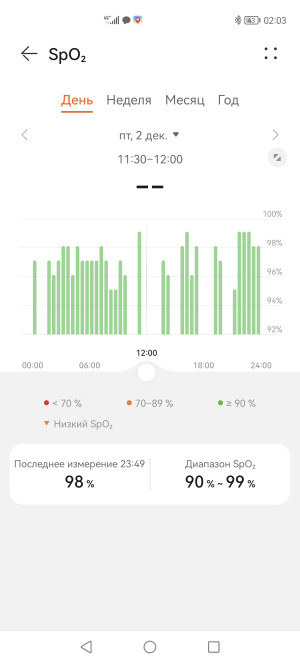
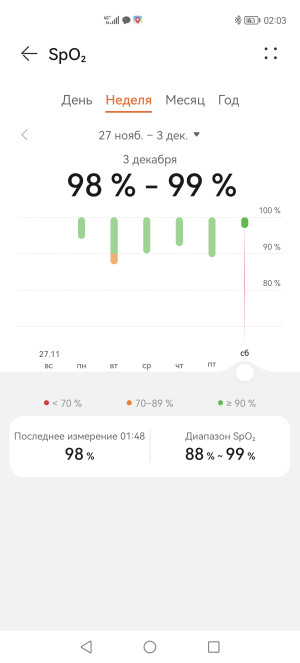
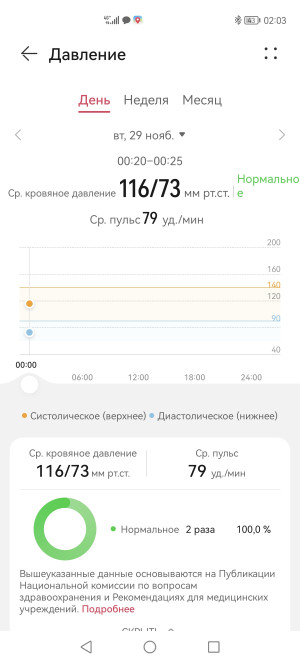
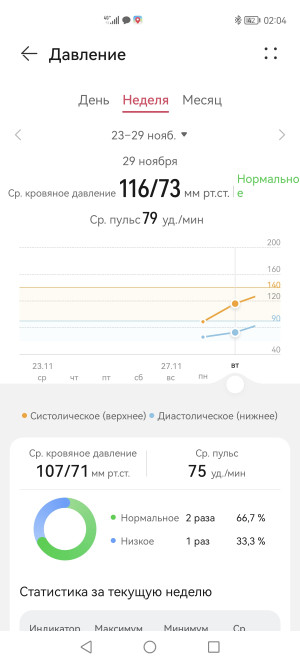
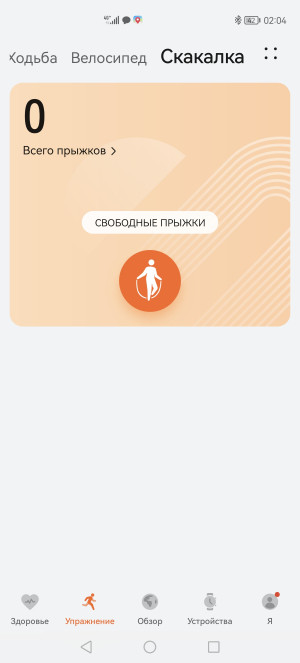
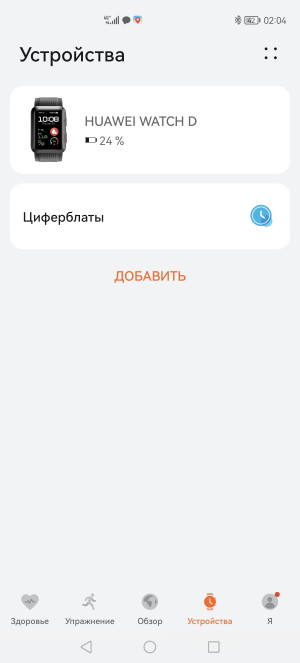
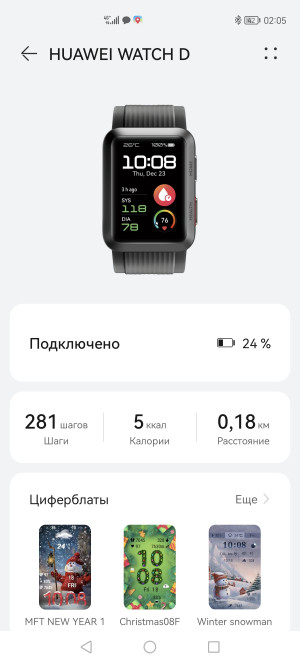
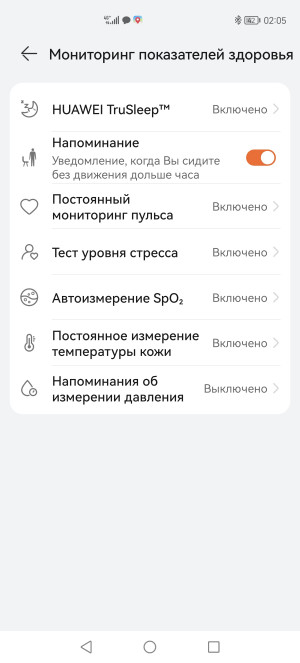
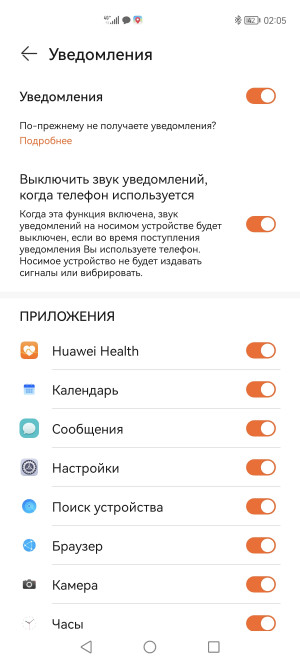
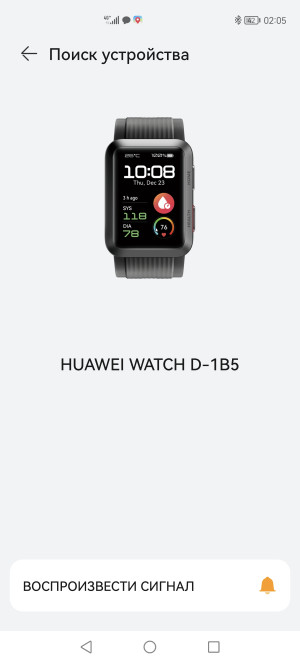
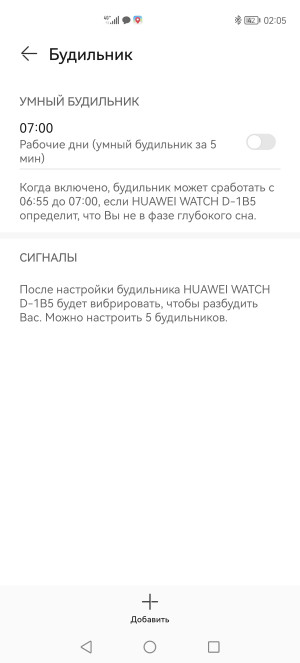
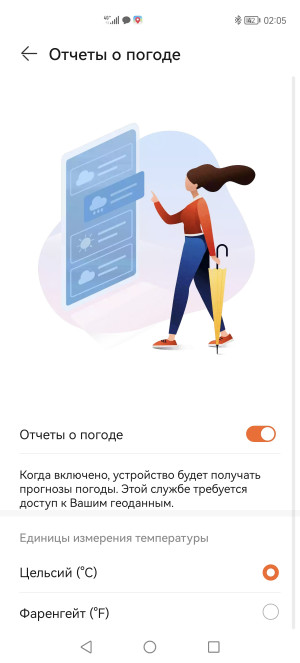
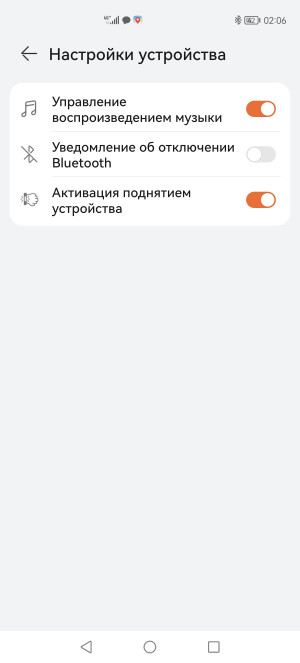
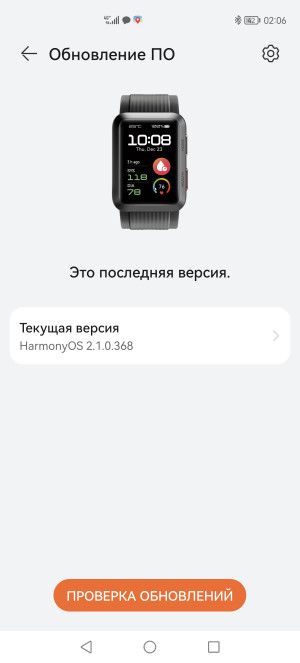
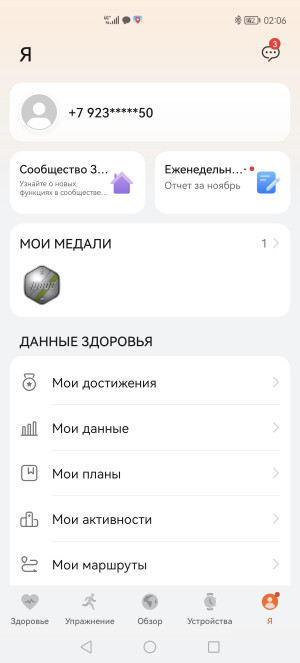
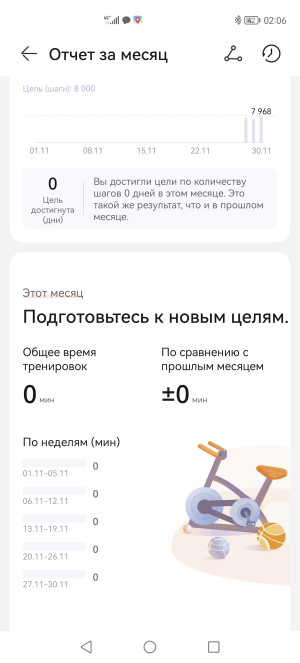
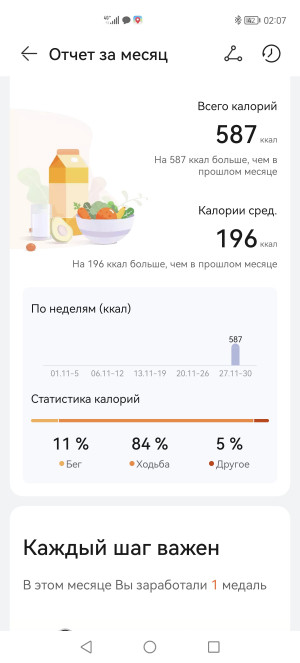
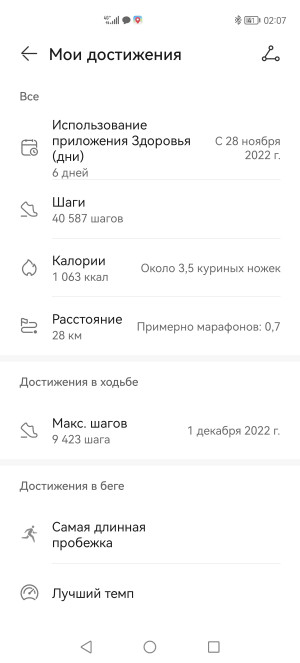
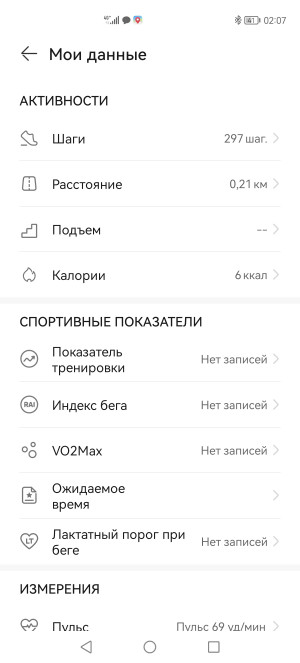
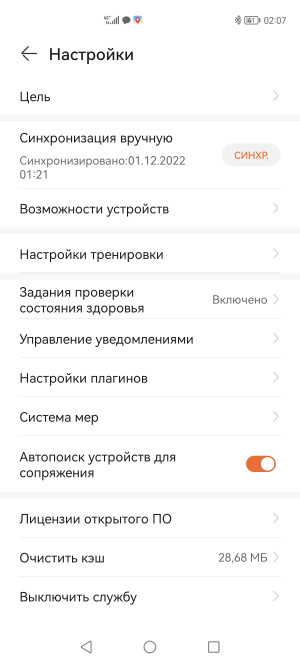
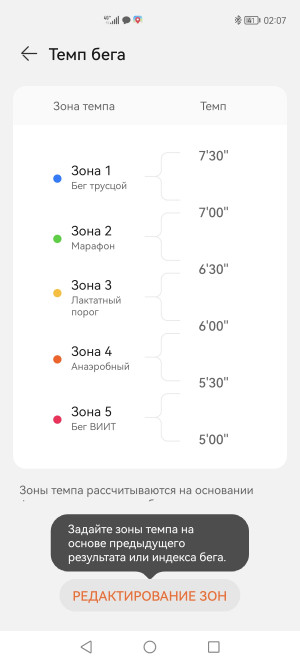
Talk in such detail about the Huawei appHealth, I won’t: you can take screenshots in the application, and they will tell you everything better than me. I will limit myself to words that I, as a long-term user of Xiaomi Mi Band, liked it very much. Beautiful, comfortable, functional, not buggy at all. Learn competitors. Well, now the screenshots:


Experience of use and tests
I spent a week with this watch and it leftvery positive experience. First of all, autonomy. I turned on the background measurement of everything that is possible (heart rate, oxygenation, stress level, skin temperature, sleep), measured the pressure every day - and in this mode, the watch was discharged by about 10% per day. That is, they would not be enough for a week, as Huawei promises on its website, but much longer. Usually manufacturers are cunning in the other direction!
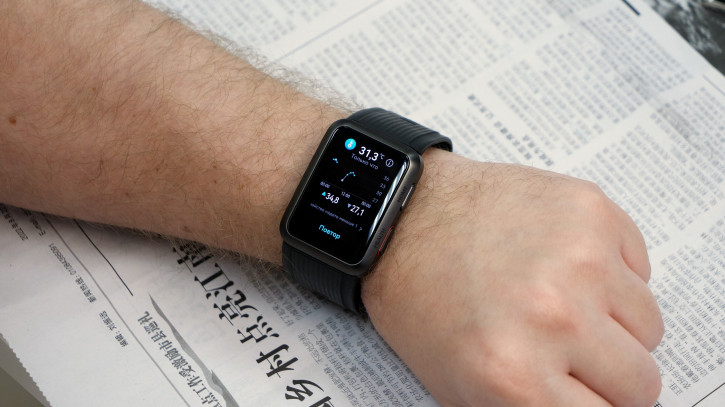
By the way, measuring skin temperature is very coolchip. You can check if you are really cold, or just think (I have such problems). And it works, judging by the graphs, very accurately. I can praise for the accuracy and the pulse meter, but the measurement of oxygenation is always accurate. I also tested the tonometer - and it proved to be very accurate, but capricious. The instruction “keep your hand at heart level, but not on weight, do not move or talk” must be followed very accurately, otherwise the measurement result will be inaccurate. The ECG seems to be good too, but I don’t have a real ECG machine, so I can’t compare. The dream is recorded exactly as far as I can tell.
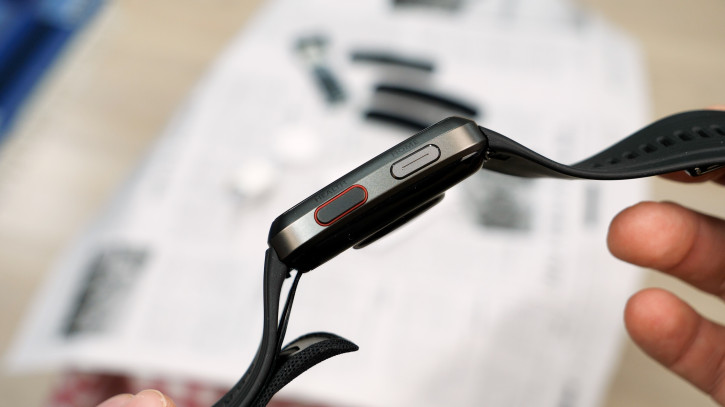
The main disadvantage of these watches is the size.At their thinnest point, their thickness is 13.8 mm; in the area of \u200b\u200bthe sensors, it is more than one and a half centimeters. Dimensions - 51 x 38 mm. And the weight, together with the L strap and cuff, is crazy 90 g. I understand everything - a big battery, I also had to build a pump inside, but when I put on a shirt, I am left without a watch. Because I can't get this bandurina out from under my sleeve. Perhaps a person is talking in me now, too accustomed to the tinyness of the Mi Band, but I can’t help myself.
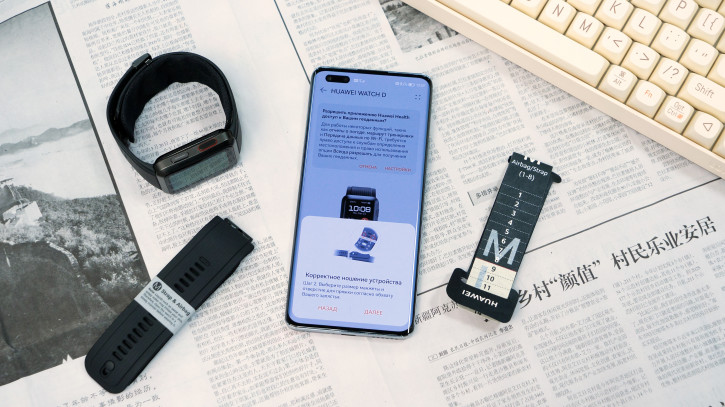
I didn’t have any complaints about the watch software during use - notifications come quickly, localization is complete, menus are thought out. Haven't encountered any crashes or bugs.
Conclusions
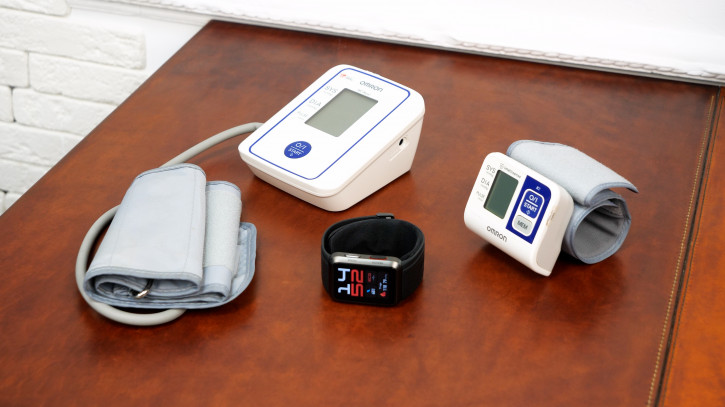
Huawei Watch D continues a series of very successful, onin my opinion, a watch on HarmonyOS that combines high functionality and impressive battery life. All the declared functions work well, including the device's unique feature - a built-in tonometer. Only here is the problem: many Chinese watches for 4-5 thousand rubles work not only much worse, and ordinary blood pressure monitors cost around 2-3 thousand rubles. So why should I pay as much as 29,990 rubles for Huawei Watch D?! With the Watch GT series, premium design explains the price - but that's not the case here either. It is clear that the price includes the work of engineers who created this unique product, but for such money it is of interest only to a narrow layer of enthusiasts.
However, it is encouraging that Huawei is looking for newsmartwatch use cases – and recent announcements like the Watch GT Cyber and Watch Buds show that the search never stops. HarmonyOS allows you to create cool devices with good autonomy, leaving much more room for imagination, and I'm sure that we will see many more cool wearable devices based on it. Huawei Watch D is also cool, only with the price turned down.
Best prices for Huawei!
© Oleg Lazarev.