Unlike rocky terrestrial planets such as Earth and Mars, which are close to their
Over the past 50 years, scientists have been sending gasgiants have many missions. But their colorful atmospheres are constantly changing. To capture them, the Hubble Space Telescope has been observing distant planets as part of the Outer Planets Atmospheres Legacy (OPAL) program since 2014. It takes images of Jupiter, Saturn, Neptune and Uranus at different wavelengths. By studying Hubble images, scientists learn something new about these planets every time.
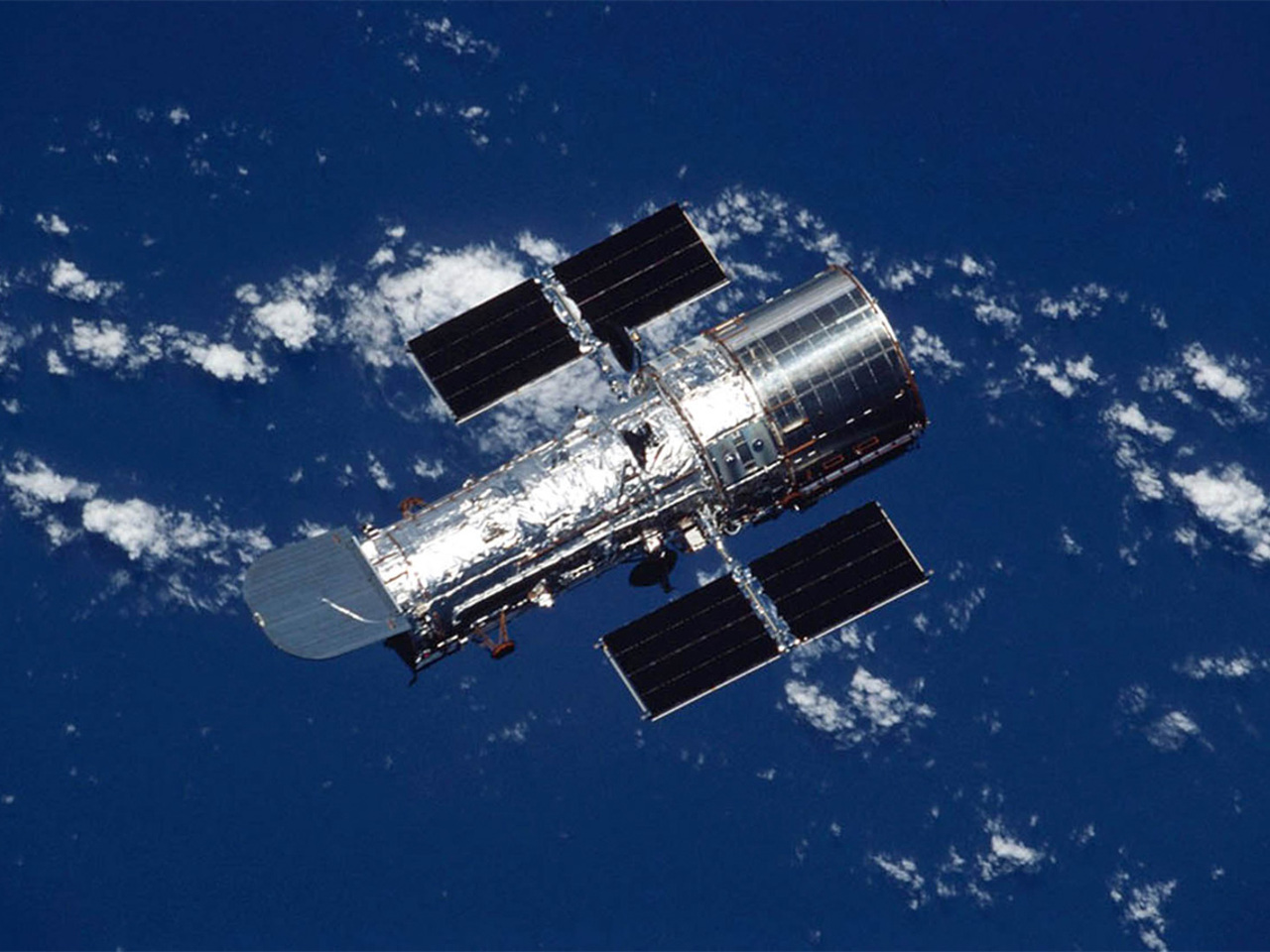
Such studies not only complement the datainterplanetary stations. They help to learn more about the planets that spacecraft last visited at the end of the last century (we are talking about Uranus and Neptune). Hubble's images of the outer planets show both extreme and subtle changes taking place on distant worlds. This helps astronomers explore their reasons.
So, what did Hubble see this year?
Jupiter
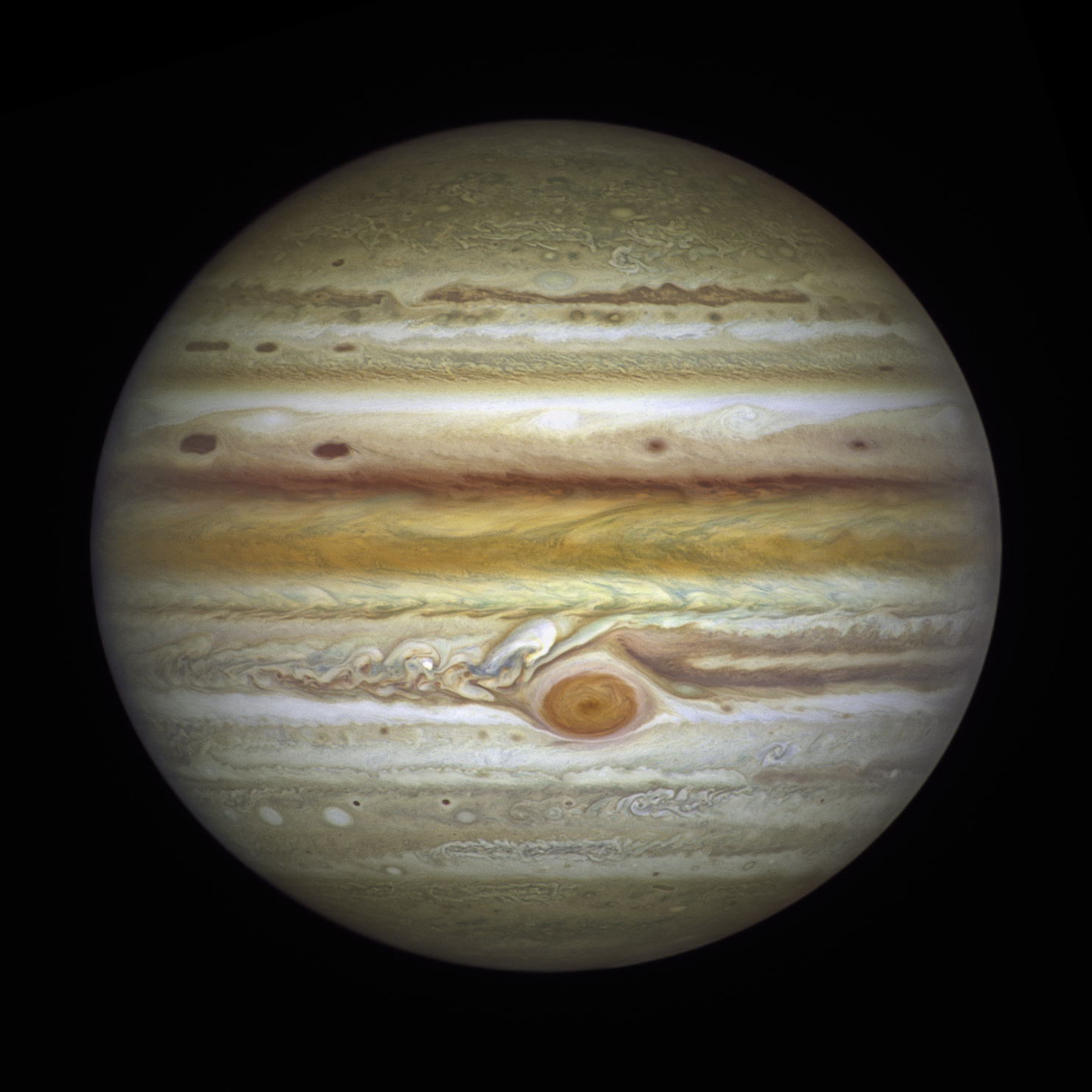
In the images of Jupiter that the telescope tookSeptember 4, the ever-changing landscape of the planet's turbulent atmosphere is traced. Several new storms are visible - some are clearly defined, while others appear blurry and foggy. All due to the different properties of the clouds in the vortices. Scientists also noticed a change in color near the equator of the planet.
Saturn
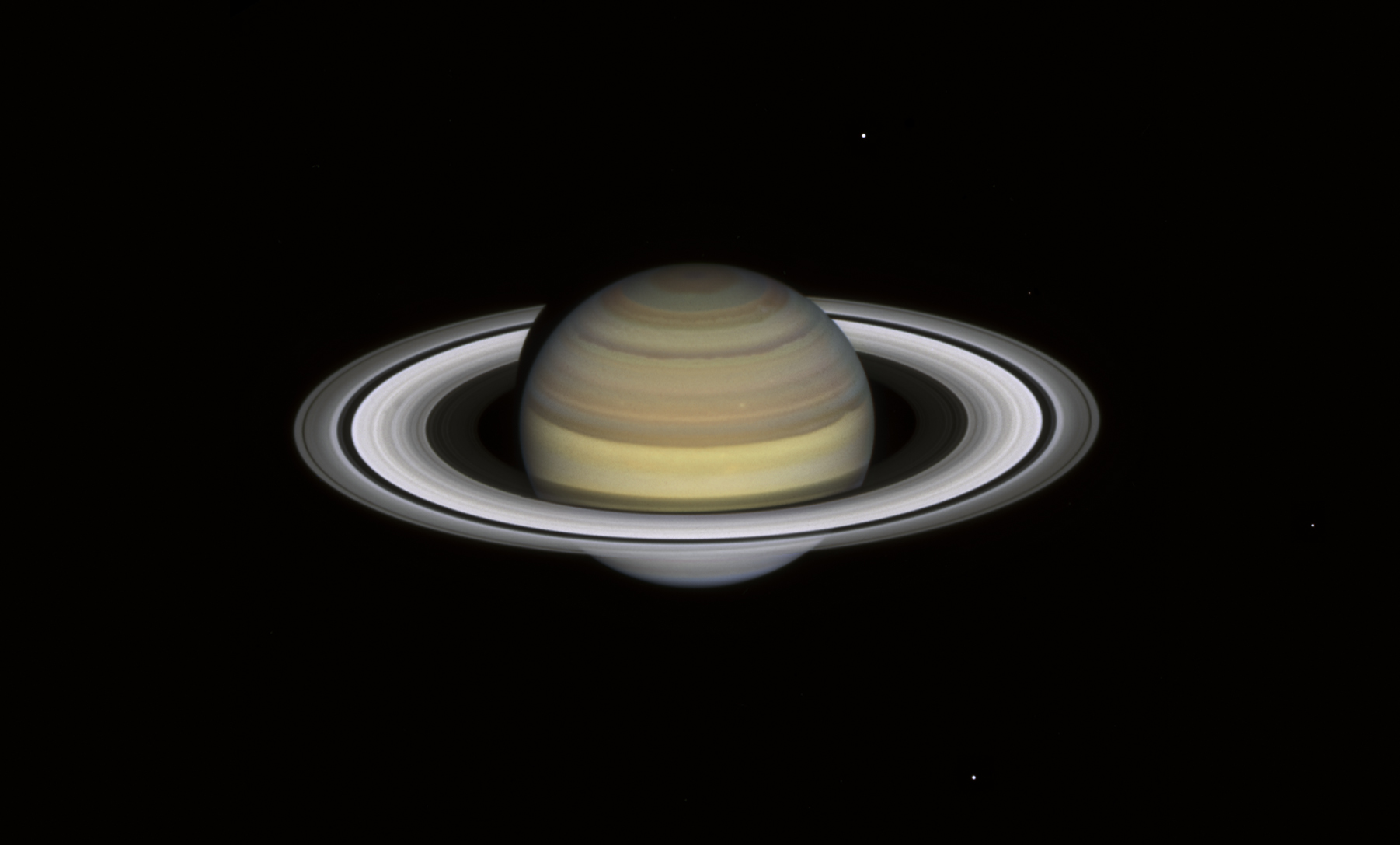
Hubble took a photograph of Saturn12 September. The image shows rapid and extreme color changes in the stripes in the planet's northern hemisphere. This has already happened in 2019 and in 2020 . Notably, Saturn's famous hexagonal storm, which Voyager 2 first discovered in 1981, was difficult to recognize in 2020. But in 2021 it is clearly visible again.
Uranus
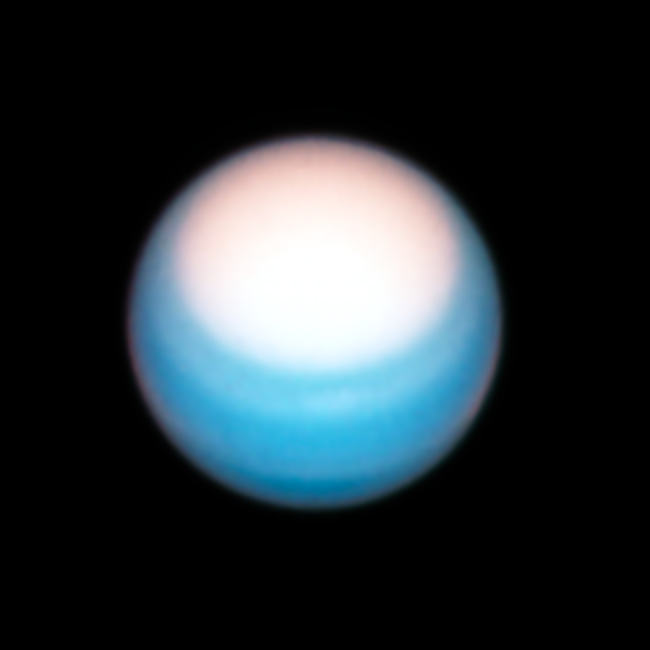
Hubble took a photograph of Uranus on October 25th.Now it is spring in the northern hemisphere of the planet and it glows especially brightly. This is due to the fact that the flux of ultraviolet radiation from the Sun has increased and the concentration of methane has changed. The glow is also influenced by the properties of haze particles and the dynamics of atmospheric flows.
Neptune
In the photographs taken by HubbleOn September 7, researchers again found an unusual dark anticyclone. Let us remember that last year he changed the direction of movement. The space telescope also recorded the appearance of bright clouds on Neptune and showed scientists a dark oblong region around the planet's south pole.
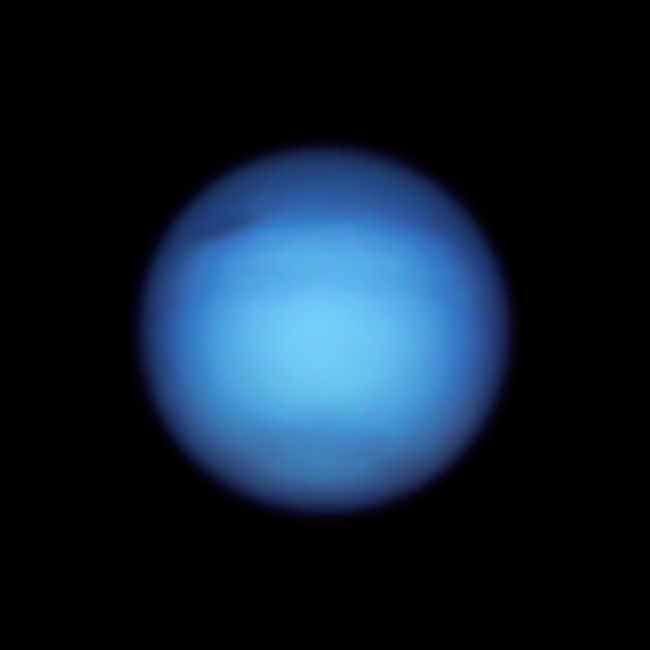
The blue color of Neptune and Uranus isthe result of absorption of red light by the planet's methane-rich atmosphere in combination with the process of Rayleigh scattering. By the way, this is what makes the Earth's sky blue. In 2021, Hubble also recorded several bright clouds on Neptune.
The Hubble Space Telescope is a projectinternational cooperation between NASA and ESA (European Space Agency). NASA's Goddard Space Flight Center in Greenbelt, Maryland, operates the telescope. The Space Telescope Science Institute (STScI) in Baltimore, Maryland, conducts Hubble's science operations. STScI is managed for NASA by the Association of Universities for Research in Astronomy in Washington, DC. For most, Hubble's work is associated mainly with photographs of distant stars and galaxies. But it helps scientists learn more about our Solar System.
Read more
The Chinese launched a missile from a hypersonic glider. Previously, no one succeeded
A flying robot beetle has appeared. This design increases its lifting force.
Scientists have proposed to create an artificial magnetosphere for Mars