A group of astrophysicists processed 200,000 archival images from the Hubble Space Telescope and conducted dozens of
The researchers believe that the glow may bedue to the presence of a dust shell that covers the solar system up to Pluto and reflects sunlight. This is reminiscent of dust particles in a room that shine in the sun, the authors of the study note. Since the glow is distributed very smoothly, comets are a likely source - leaving behind tiny particles.
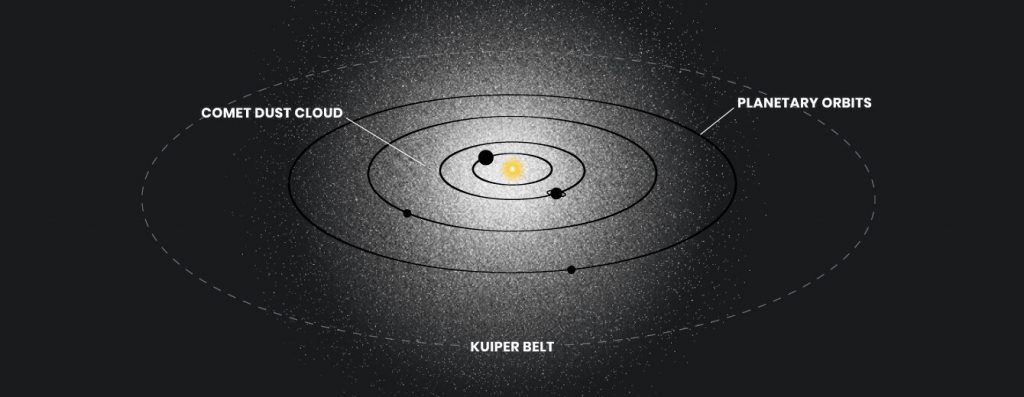 Artistic illustration of a dust cloud around the Sun. Image: NASA, ESA, Andi James (STScI)
In their work, the researchers usedarchival images collected over the years of observations by the Hubble Space Telescope. Scientists analyzed the amount of light in the images, and then removed known objects: stars, galaxies, planets and their satellites. As a result of the work, scientists have established the amount of residual glow.
Version of the dusty origin of the glowbacked up by the fact that the New Horizons spacecraft, which made similar measurements of the optical background far beyond the solar system, found a much fainter glow, the scientists say. This means that between the Earth and the place at a distance of 4 to 5 billion km from it, where the space probe made measurements, there is an additional source.
Because our residual light measurements are higher,than New Horizons, we think it's a local phenomenon happening not far outside the solar system. This may be a new element in the solar system, which was previously suggested, but has not yet been quantified.
Tim Carlton, study co-author at Arizona State University
Read more:
Scientists from the permafrost zone: how they develop smart clothes and a cancer vaccine
"The Walking Dead" existed millions of years ago: scientists told how they appeared
The egg was dropped from space: look what happened to it