The Hubble Space Telescope has received a new image of the unusual nebula NGC 1999. This bright formation in
NGC 1999 is a reflection nebulalocated about 1,350 light-years from Earth near the Orion Nebula, the closest star-forming region to our planet. The reflection nebula resembles clouds of smoke surrounding a lantern. Bright young stars illuminate a gas devoid of its own light.
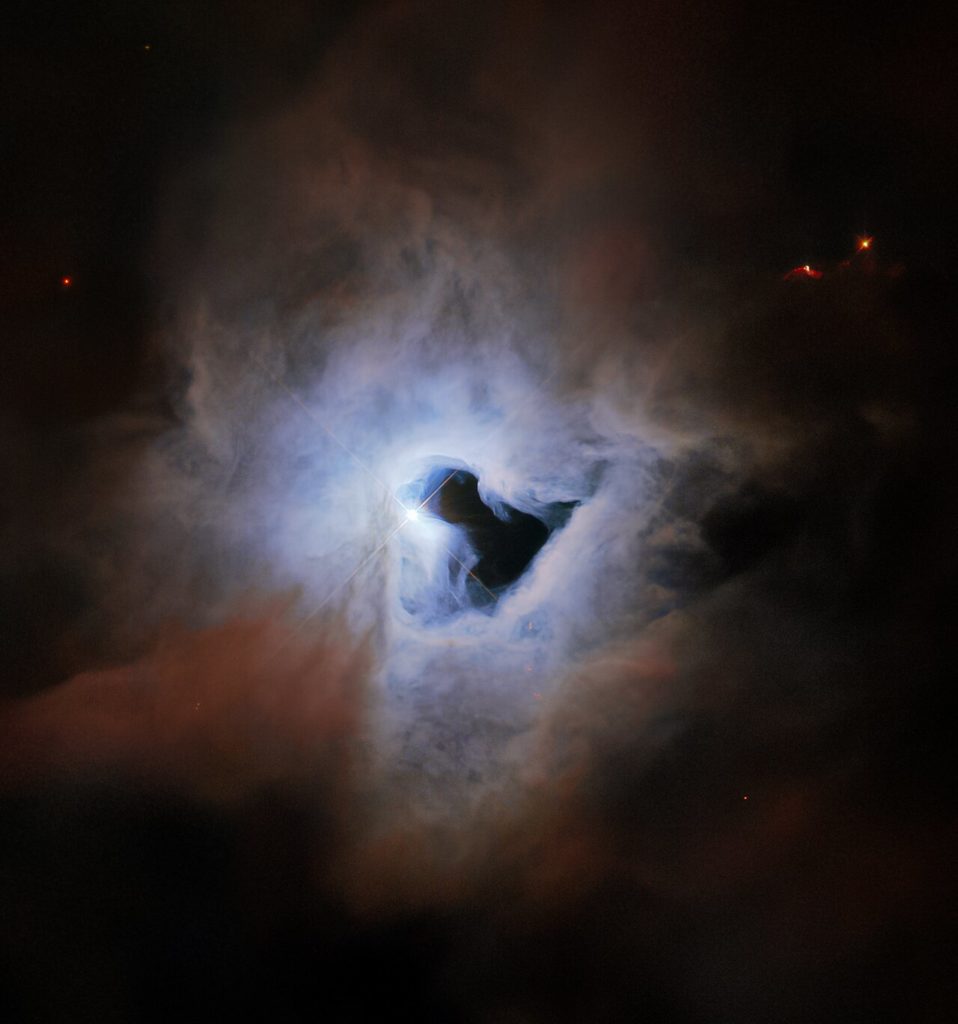 Hubble image of the nebula NGC 1999. Image: ESA/Hubble & NASA, ESO, K. Noll
The reflection nebula NGC 1999 is a relicrecent star formation. It consists of materials thrown out by the newborn star. But the most amazing thing about this object is the hole in the center, resembling a huge black keyhole.
Previously it was believed that the black spot representsAn extremely dense cloud of dust and gas that completely blocks light. But analyzes performed using space and ground-based telescopes at different wavelengths have shown that this region is indeed empty. The exact cause of this phenomenon is still being studied, but astrophysicists believe that narrow jets of gas from some young stars in the region punched through a layer of dust and gas, and powerful radiation from a nearby "mature" star completed the formation of the hole.
The new image was created from combined archival observational data from the Hubble Space Telescope's Wide Field Planetary Camera.
Read more:
Starlink signal hacked to be used as an alternative to GPS
NASA revealed the origin of Haumea - the most mysterious planet in the solar system
Physicists Break Standard Quantum Limit With 'Quantum Horror'