An international team of scientists has published the largest near-infrared image ever recorded.
The Hubble Space Telescope showed space by combining several images into one image. Photo: Ivelina Momcheva
A preprint of the paper, to be published in The Astrophysical Journal, is available on arXiv.
“The 3D-DASH program extends Hubble's legacyin the field of large-area imaging, so we can begin to unravel the mysteries of galaxies beyond our own,” explains Lamia Moula of the Dunlap Research Institute for Astronomy and Astrophysics at the University of Toronto and lead author of the study.
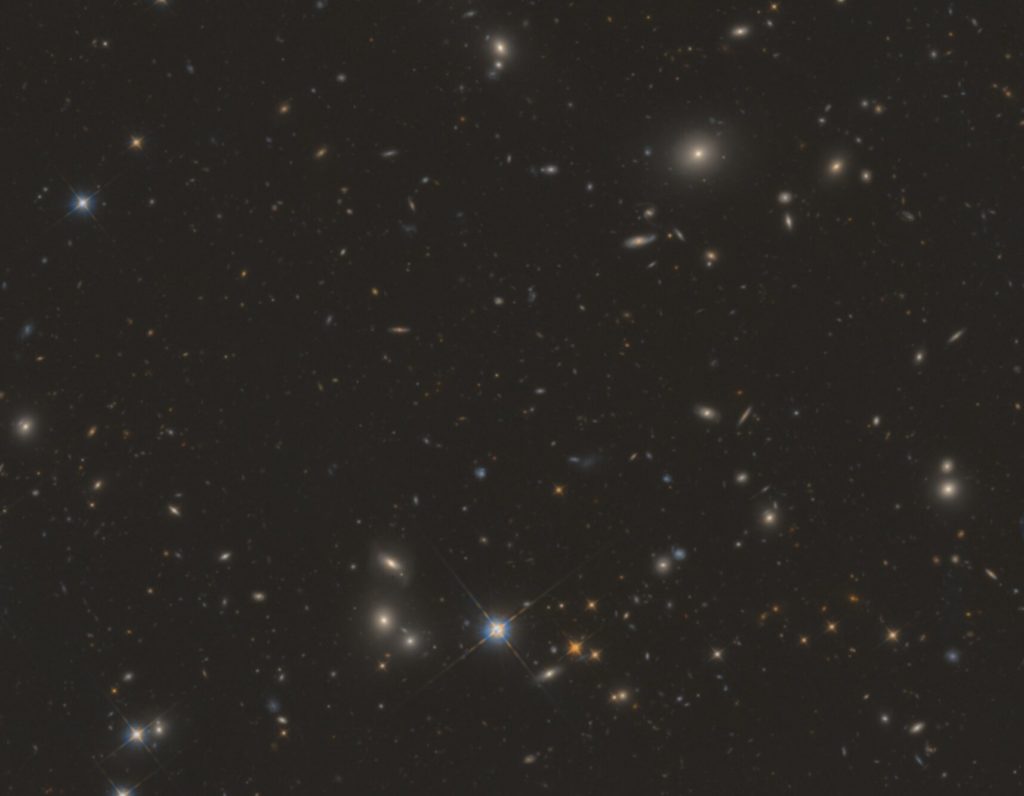 A section of the sky obtained using 3D-DASH shows the brightest and rarest objects in the Universe.
Photo: Gabe Brammer
The program makes images faster than normaltechnique, eight shots instead of one. As a result, it takes not 2,000, but 250 hours to complete the same work. 3D-DASH covers a total area almost six times the size of the Moon in the sky as seen from Earth. This record will likely remain unbroken by Hubble's successor, which is designed for light-sensitive close-up images.
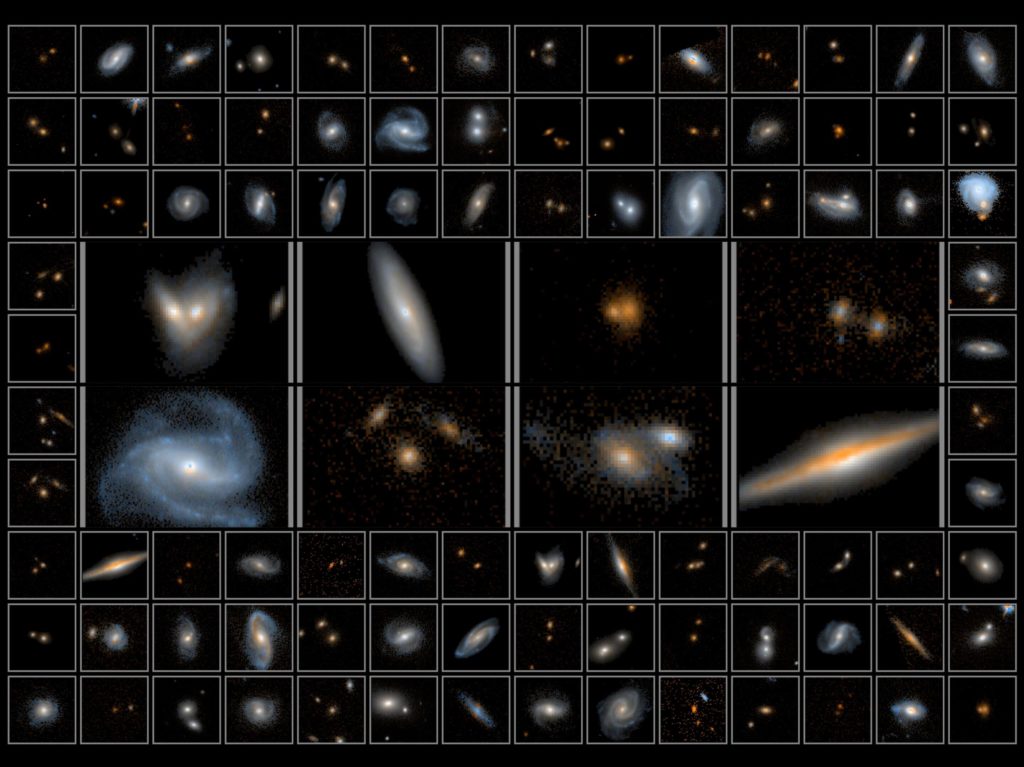 Galaxies from the last 10 billion years as documented in 3D-DASH, created using 3D-DASH/F160W and ACS-COSMOS/F814W images. Photo: Lamiya Mowla
In the near infrared, astronomers will be able to observe the earliest galaxies that are farthest from Earth.
Read more
Chinese AI predicts the course of hypersonic missiles. The retaliatory strike will be ahead
Evolutionists announced a breakthrough: they understood how life could have arisen on Earth
Scientists reveal what killed galaxies in the early universe