Scientists have developed a method to transplant human brain organoids into the developing brain
Researchers used methods for the first timeapplied in Pasca's lab to create cortical organoids using induced human pluripotent stem cells. These are adult skin cells that have been reprogrammed into a state similar to immature stem cells.
This method is usually used to groworganoids (laboratory models of tissues and organs). In their study, the scientists implanted these organoids in the rat's primary somatosensory cortex, the part of the brain involved in sensory processing.
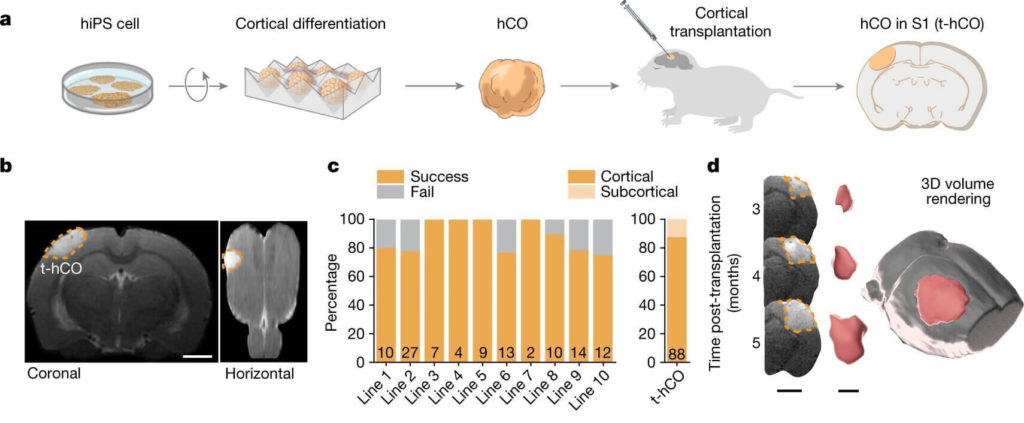 The process of transplantation (a), visualization of the transplanted graft after 2 months (b) and its growth at three months (d) and assessment of the success of transplantation. Image: Revah, O. et al., Nature
The researchers did not find any anomaliesmotility or memory, as well as abnormal brain activity in organoid transplanted rats. Blood vessels from the rat brain successfully supported the implanted tissue, which grew over time.
To understand how transplanted tissuesintegrated into the functioning of the brain, the researchers infected the organoid with a viral indicator that spreads through the brain cells in the presence of functional connections. Traces of this marker after transplantation were found in the ventrobasal nucleus and somatosensory cortex. In addition, the researchers observed new connections between the thalamus and the transplanted area.
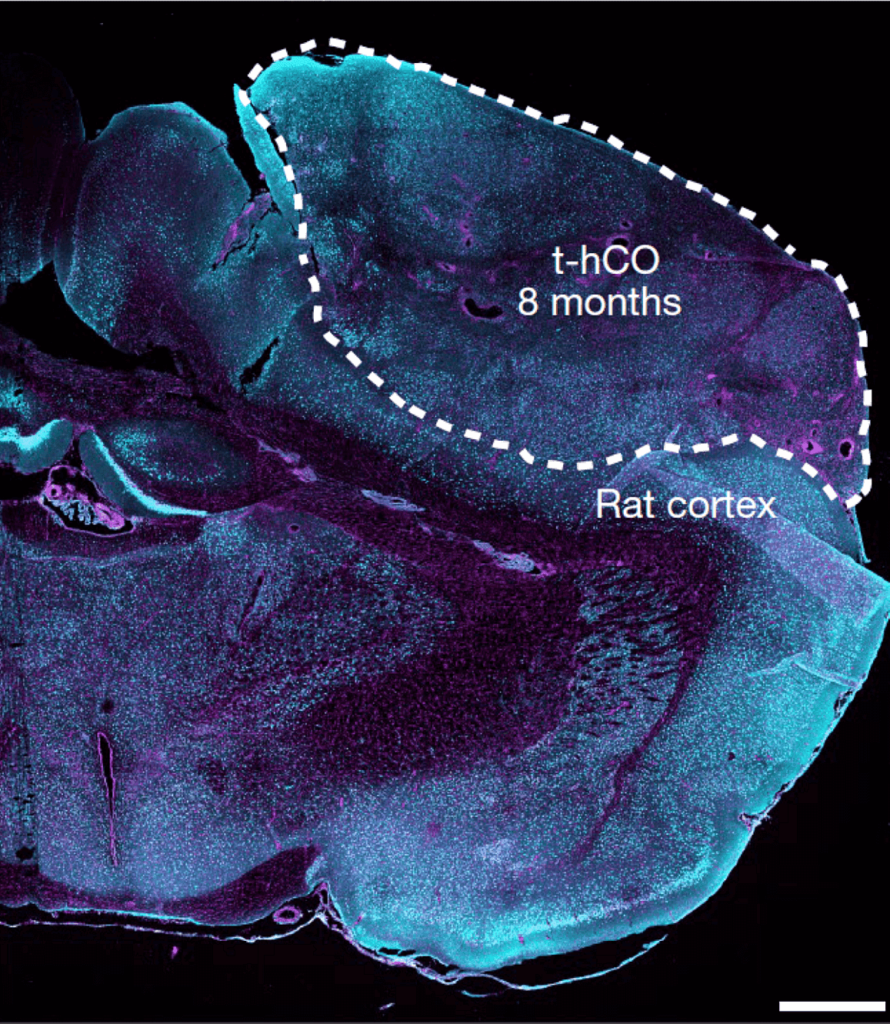 Human cortex organoid (t-hCO) transplant in rat brain. Image: Revah, O. et al., Nature
These links were activated withelectrical stimulation and exposure to the whiskers of the rat, indicating that they received and processed sensory information. In addition, the researchers were able to activate human neurons in the transplanted organoid to modulate reward-seeking behavior in the rat.
After seven to eight months of growth, the structure andThe transplant functions more closely resembled neurons from human brain tissue than human organelles preserved in cell culture, the scientists add. This means that such transplantation can be used for in-depth study of various diseases that lead to disruption of the human central nervous system.
Read more:
Gas leak from Nord Stream was shown from space
Unusual structures found on the edge of the solar system. Only the Voyagers have been there.
See how Jupiter and the Moon approached in the night sky