“Over the past 25 years, there has been tremendous progress in quantum technologies."
— The media writes a lot
— Quantum technologies attract greatattention for several reasons. First, they are related to quantum physics, a very interesting scientific theory that describes the smallest objects with which we can interact. This science helps to describe the states of quantum objects, as well as manage them. The conclusions drawn from quantum mechanical considerations often contradict what we are accustomed to - our "classical" experience.
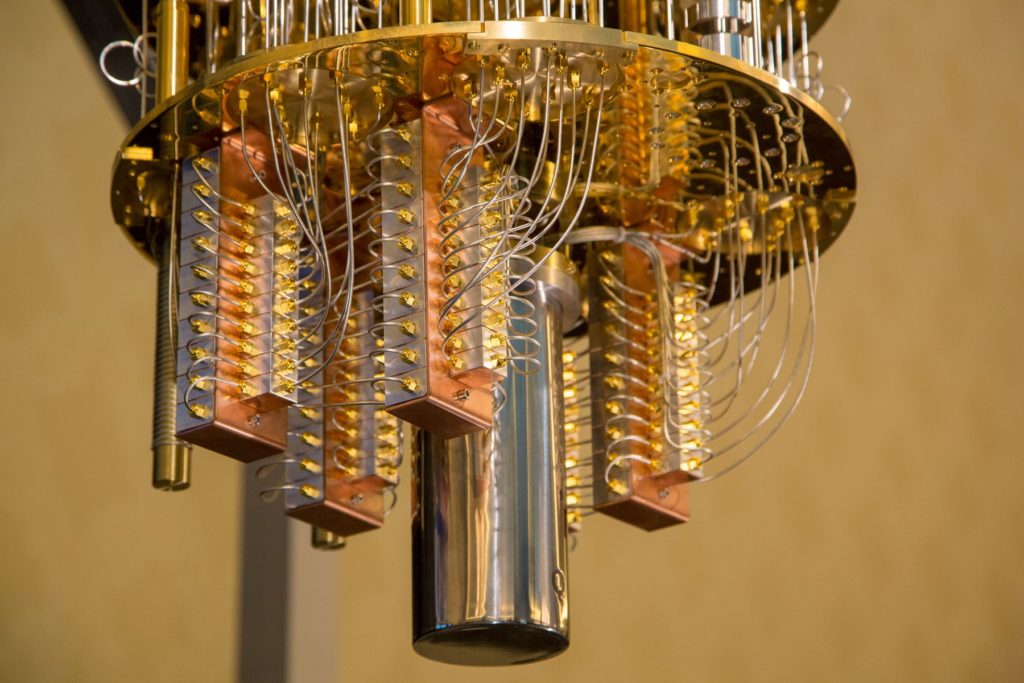
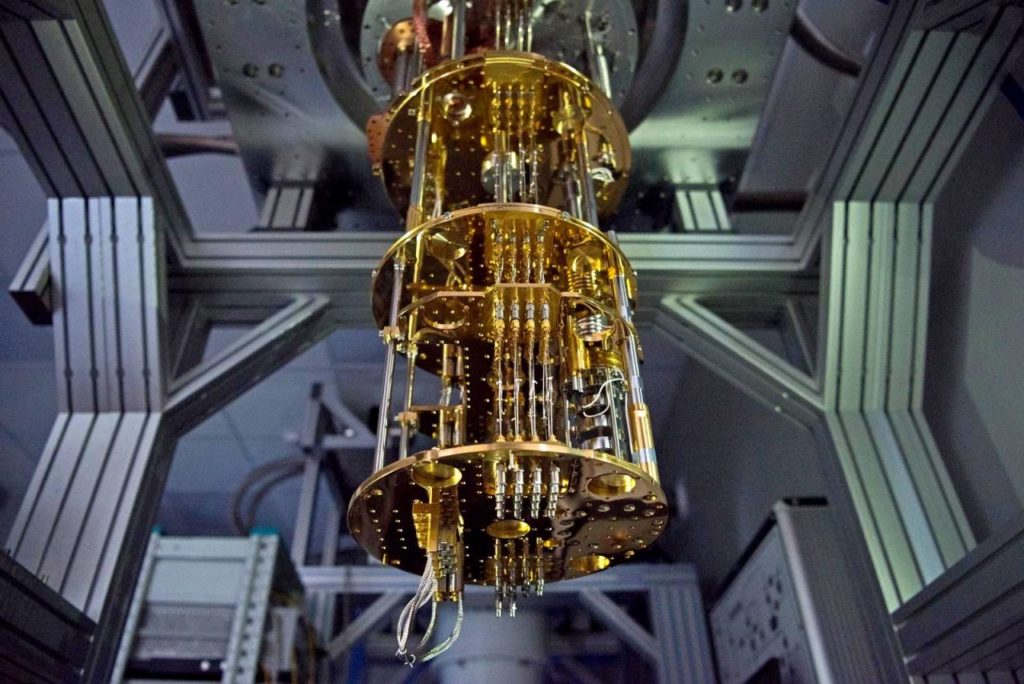
Secondly, the first devices are now appearing anddevices built on the principles of controlling individual quantum systems, and their development makes it possible to solve problems that modern supercomputers cannot cope with. You can solve other important tasks. For example, to transmit information in such a way that security is guaranteed by fundamental physical laws, as well as to measure environmental parameters, temperature, parameters of electromagnetic fields, and so on with the maximum permissible accuracy.
The gap between expectations from quantum technologies andthere is a real status of their development, but it is not critical. The expert community is quite conservative, it speaks of gradual progress and the transition from simple to complex. If you look at what has happened over the past 25 years, it is a colossal leap forward. In the field of quantum computing, we have gone from demonstrating the basic principles of operation of various types of quantum computing devices to solving computational problems that are inaccessible to classical computers.
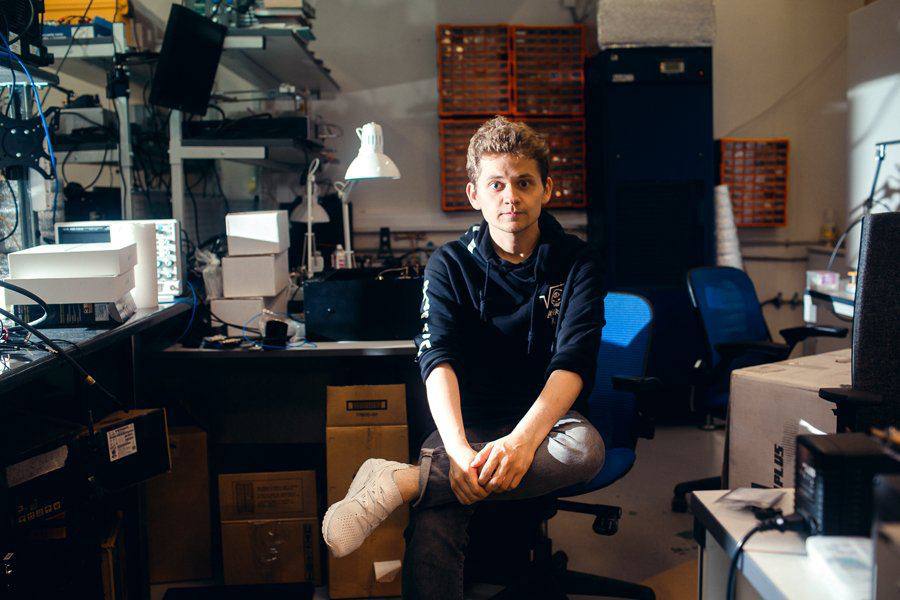 Alexey Fedorov
— Do you have any markers that development in this area is worthy of attention? Now everyone is focusing on the number of qubits - is this an objective indicator?
— The number of qubits as a separate parameter is nothelps assess the status of quantum computing development. If you are interested in any scientific achievement and want to understand its status, As far as this or that result is worthy of attention, there is one simple and very correct recipe - to check that the results have been verified by the scientific community.
For example, Google before the demonstration of quantumExcellence carefully prepared a scientific article. They worked on it for a long time, I think about a year, to convince the scientific community of the correctness of the conclusions. The article was published along with a colossal amount of additional materials in one of the most respected scientific journals. Therefore, despite the problems of "overheating" and overestimation of opportunities, when evaluating technologies, it would be good to look at the status of scientific publications on this topic in leading journals.
Speaking of the number of qubits, the communitytries to choose one understandable number to explain all the progress through it. Therefore, we see publications about 2, 10, 15, 5,000 qubits - but what does this mean? My cautious assumption is that in the near future we will increasingly hear not about the number of qubits, but about the ability of systems to solve real problems.
There is another direction of quantum technologies -quantum communications or, more precisely, quantum key distribution. Here other criteria are the speed of key generation, the ability to integrate quantum solutions into classical infrastructure. Many of them evaluate developments more soberly than one metric or parameter.
— What technologies in this area interested you personally?
- I started with the fact that I was engaged in quantumcommunications and post-quantum cryptography. These are two areas related to the protection of information in the era of the appearance of a quantum computer. If a quantum computer is powerful enough—with lots of good qubits—it will be able to crack some of today's cryptographic algorithms. We have been developing a new generation of data protection devices, algorithms and tools that can be countered by threats using a quantum computer. These technologies have already reached a mature phase and are being developed not by the RCC, but by individual companies.
My current focus is on quantum computing.We work in the field of creating algorithms and software for future quantum computers. The main challenge for the entire quantum algorithm community is to understand whether it is possible to achieve computational superiority in solving practical problems with the current or future generations of quantum computers.
Is data security the only threat that quantum computers pose? Or are there other aspects to be concerned about?
— The main threat is in the direction of providinginformation security. But there are other difficulties - we cannot verify the solution of some problems with the help of quantum computers, therefore we cannot use them. But this is not a unique problem - it exists in classical supercomputing as well. After all, if a supercomputer in a single copy solves some problem, then how to verify this solution? In classical computing, people have been thinking for decades about how to do this and how these tools can be adapted for quantum computing.
- In the field of AI and machine learning, there is often talk about external regulation so that the technology does not get out of control. Are there such talks in quantum technologies too, or is it too early to talk about it?
– Machine learning experience will be useful forquantum computers - plus or minus we are talking about the same thing. But how to use it? I think we need to trust complex technologies, even if we don't fully understand how they work. It will be possible to work with these solutions and we can make sure that they do not harm us.
— Aren't you worried that clumsy regulation will stop progress in this area?
I am a technological positivist. I believe that any technology, despite the risks, has mainly advantages if it is treated sensibly.
"Leading journals remain neutral - the way modern science should be"
— Is it difficult to deal with quantum technologies in Russia? Who is the main customer now, what does he want to get as a result?
— There is a trend that the state is the maininvestor in the development of quantum technologies. If you look at funding, the bulk of it comes through government programs, the so-called roadmaps for the development of quantum technologies. They are in all developed technological countries - the USA, EU countries, Canada, Japan, Great Britain, Australia, China.
In addition, there is a large amount of fundingfrom private companies and investors. Private money allows you to move much faster and requires easier reporting. And in some areas, we see the best performance in startups, somewhere in corporations traditionally associated with computing. The tone is set by Google, IBM, Intel and their partner universities.
In Russia, the trend towards funding fromWe also have states, we have adopted a roadmap for the development of quantum computing, within which work is underway to build several quantum processors and cloud software. These are significant funds, but everything is relative. One day, after a lecture where I talked about funding, a scientist who works in biotechnology approached me and wondered why so little money in the world is spent on quantum technologies.
— How are quantum technologies developing in Russia? Are there startups doing this?
- Dynamic.Historically, much for quantum technologies was invented in the USSR and Russia. If you look at the Nobel Prizes that were awarded for first wave quantum technologies, they are associated with work in the field of low temperature physics, which became the basis of modern quantum computing. Our school and interest have been preserved, everything is conducive to work in this direction. Even the idea of a quantum computer by Richard Fein in the USA and Yuri Mann, a Soviet mathematician, arose in parallel.
Now the plans are to develop a quantumiron, processors on various physical principles. Practice shows that it is possible to move in this direction. This is a very competitive area, every day there are new ideas that need to be responded to. I am optimistic - you need to offer something new and move in your own direction, and not completely base your developments on other people's ideas in order to catch up with someone someday, and in the future to overtake.
There are quantum startups.I have already talked about QRate and QApp, which deal with quantum and post-quantum cryptography, respectively. We are currently working on launching a startup in the field of quantum computing.
— Is the lack of funding related to the long planning horizon in quantum computing?
— Yes, private investors need clear results andadequate time horizons. Public investment allows us to move a little more strategically. But as technology develops and adapts, these investments will increase and take on other forms.
— How has isolation from the international community of scientists affected your work?
— There was a very turbulent period, which putcolleagues in a rather difficult position. But we were and remain open to interaction. Difficulties and obstacles appeared from the other side - often they were imposed by administrative rules. But lately I see a positive trend. We continued those joint articles and works that we planned with colleagues. I hope this continues.
It is difficult to predict, but we have a rather longhorizon of joint work planning. While it is possible to move according to the plan, but there are excesses - sometimes researchers write strange comments about the need to confirm or deny involvement in certain political ideas. But in general, the leading journals remain neutral - the way modern science should be. For example, lately Russian scientists have continued to publish in publications of the American Physical Society. Everything is preserved, everything works.
“Some say that no one needs quantum technologies. Others - that they can solve any problem"
- Are there any misconceptions or inaccuracies that you most often catch your eye?
- The main one is the polarity of opinions about quantumtechnologies. Some say that no one needs quantum computing, that it will never work, and that quantum computers cannot be built. Such scientific articles continue to be published to this day. And there are hyper-optimistic colleagues who are trying to use a quantum computer for everything and solve any problems.
Both extreme points of view make mebewilderment, but there is also a sensible position. We still have reason to believe that a quantum computer will provide acceleration in some class of problems. I am for a balanced approach, focused on testing hypotheses, and if some of them are not confirmed, there is nothing wrong with that, they are just hypotheses.
It's also funny that physicists are apparently at heartromance. Therefore, they sometimes choose not the most successful names for scientific works or phenomena. For example, there is quantum teleportation. The question often arises: is it possible to teleport a person using quantum teleportation methods? But we must understand that quantum teleportation is not the physical movement of mass from one point to another, but the transfer of quantum states.
Many terms that appear in the scientificcommunity, you need to properly explain. For example, quantum pseudo-telepathy is a completely scientific phenomenon. Or, say, quantum homeopathy too. If you look at all this with an unprepared eye, bewilderment may arise. But in this case, the terms are very distantly related to the canonical definition of telepathy and homeopathy.
— Can ordinary people touch quantum computers?
— Yes, write a basic quantum algorithm andto see that it is possible to speed up the solution of the problem in this way. The beauty of such algorithms is that they are quite simple and beautiful. They can be used to understand how quantum computing works, to see the role of entanglement and superposition in solving problems.
Or you can come on an excursion to the Russianquantum center, to see at what stage these technologies are, how they are developed by a whole team of scientists before they become devices that are actually used in practice.
— Why are you a techno-optimist? What arguments do you have that technology will not harm us?
- This is largely due to the fact that everything does not haveone clear side. History shows that the same scientific achievement or technology can be used in different ways. For example, nuclear technology has given us both energy and a new type of weaponry.
But I'm an optimist because the positive aspectstechnology will still be used to achieve overall progress. This also works with quantum computing—devices and technologies that can protect data will appear much sooner than a quantum computer that can hack anything. Such steps will help neutralize the negative aspects and maximize the benefits - this will work with both machine learning and biotechnologies. Therefore, I am convinced that we will use quantum computers precisely to solve the most difficult problems that humanity faces today.
Read more:
Archaeologists have officially confirmed the legends from the Bible
It turned out what happens to the cells of the body when the heart dies
Starlink signal hacked to be used as an alternative to GPS