A team of researchers led by Northwestern University and the University of Texas at Austin
The developed device looks liketemporary tattoo and applied to the heart. Modern pacemakers use hard and rigid materials. "Tattoo", on the contrary, is quite flexible and elastic. It tightly "envelops" all the irregularities on the surface of the heart, can stretch and withstand heart contractions.
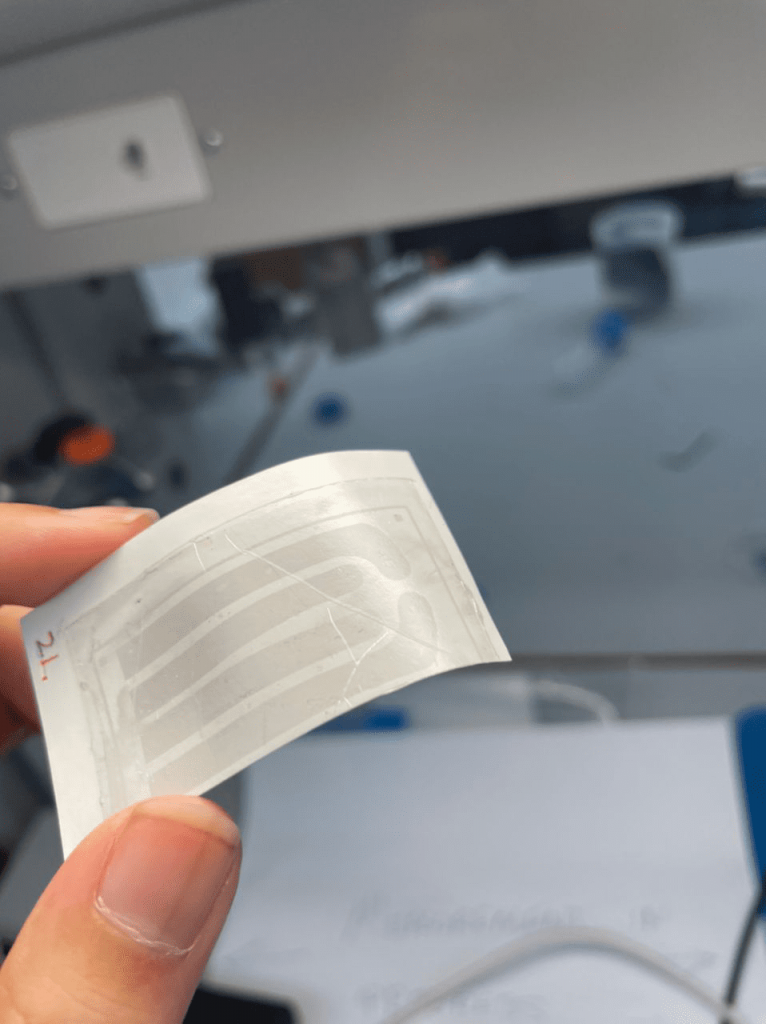
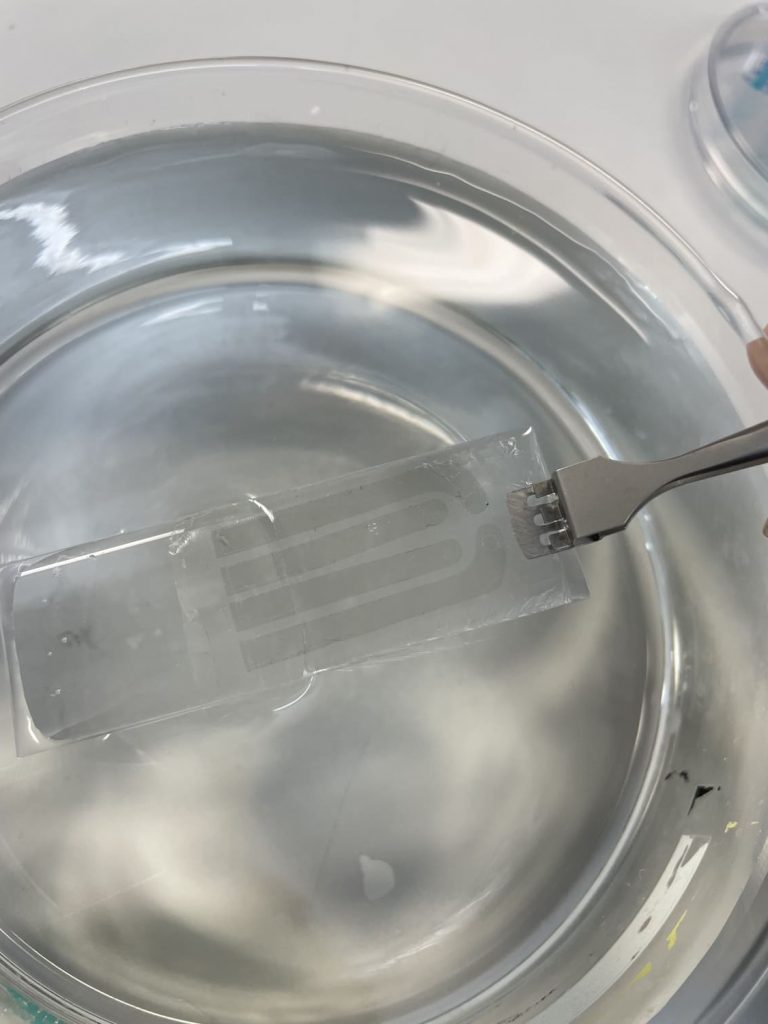
A graphene heart implant on tattoo paper (left) and in solution before being applied to the heart (right).Images: Ning Liu/University of Texas at Austin
Electronic tattoos have already been used onskin surface, but the internal environment creates more difficult conditions. The scientists placed the graphene in a flexible, elastic silicone membrane with a hole punched through it to access the internal graphene electrode. On the sealing layer, they carefully applied a gold tape (10 microns thick) to serve as an electrical connection between the graphene and external electronics. The total thickness of all layers together is about 100 microns.
In a series of experiments, they demonstrated that the device can detect abnormalities in the heartbeat and gently control it with electrical stimulation.
During the experiment, the implant remained stable on an actively beating heart for 60 days. This is comparable to modern temporary pacemakers that are used between surgeries.
Read more:
Tumor size reduced by implanting 'edited' fat
New solar cell breaks world efficiency record
No longer a toy. What will the evolution of GPT and Midjourney lead to?
On the cover: an artistic illustration of a heart implant. Image: Zexu Lin, Northwestern University