Beer is one of the oldest and most popular drinks in the world, with a distinct bitter taste.
It turned out that chemicals extracted from hop flowers in laboratory dishes inhibit the clumping of beta-amyloid proteins. This behavior of proteins is associated with AD.
AD is a severe neurodegenerative diseaseoften characterized by memory loss and personality changes in older people. The difficulty of treatment is associated with a time lag of several years between the onset of basic biochemical processes in the body and the first appearance of symptoms. As a result, irreversible damage to the nervous system occurs before the person even realizes they are sick. Therefore, preventive strategies and therapeutic agents that act even before symptoms appear are of increasing interest.
Particular attention is paid to nutraceuticals orproducts that have a specific medicinal or nutritional function. Hop flowers, which are used to flavor beer, were studied in precisely this context. Previously, scientists found that the plant prevents the accumulation of beta-amyloid proteins associated with atopic dermatitis. The authors of the new work, Cristina Airoldi, Alessandro Palmioli and their colleagues, wanted to find out which chemical compounds in hops have this effect.
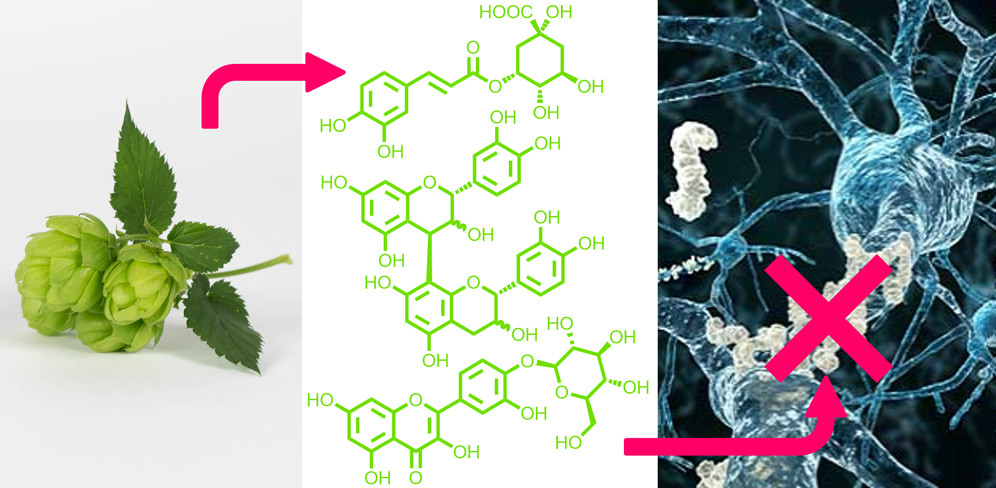 Graphic abstraction. Credit: ACS Chemical Neuroscience (2022). DOI: 10.1021/acschemneuro.2c00444
To identify them, biologists createdand characterized extracts from four common hop varieties. They found that the extracts had antioxidant properties and could prevent beta-amyloid proteins from clumping together in human nerve cells.
Hop extract performed bestTettnang, which is found in many types of lagers and pale ales. When it was divided into fractions, it was found to contain high levels of polyphenols. It also showed the most potent antibiotic and aggregation inhibitory activity. It also promoted processes that allow the body to get rid of misfolded neurotoxic proteins.
As an experiment, scientists tested Tettnang extract on a model of C. elegans.
Caenorhabditis elegans is a free-livingsoil nematode about 1 mm long. Research on this species in molecular biology and developmental biology began in 1974. Organisms are often used as models for experiments.
It turned out that it protects the worms from paralysis,associated with Alzheimer's disease, although the effect was not very pronounced. The researchers say that while this work may not adjust the drinking of hard liquor, it does show that hop compounds may serve as the basis for nutraceuticals that combat the development of neurodegenerative disease.
Read more:
A massive impact from a space object triggered the Earth's magnetic field
Scientists Confirm Alternative Gravity Theory: Why It Changes Physics
Pig heart beats slower after transplant to human