The GLIMPSE robot, developed by engineers from the University of Zurich and ETH Zurich, is equipped with
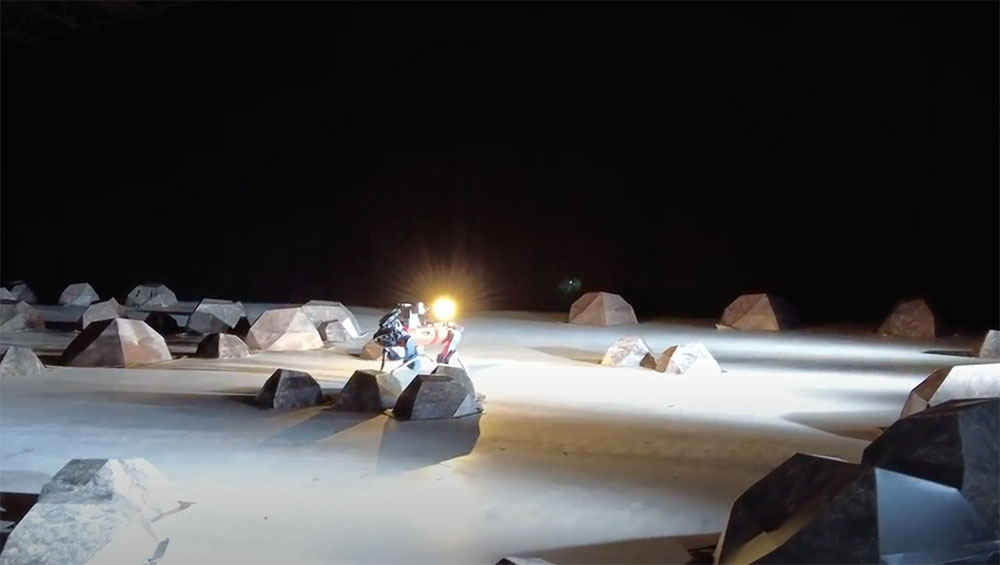 Test run at the ESA-ESRIC Space Resources Competition. Source: University of Zurich
Development is part of the European competitionSpace Agency and the European Center for Space Research and Technology to search for robots to provide a lunar base. Participants are tasked with building robots that can map and explore the moon's shadowy south polar region, between Shoemaker and Faustini craters.
The developers note that the polar region of the Mooncontains many resources that can be useful for the lunar base. But to find them, you need a robotic explorer that can withstand extreme conditions. Numerous craters make movement difficult, and the low angle of sunlight and thick layers of dust make it difficult to use light measuring instruments.
GLIMPSE dog-like robot passes firstpart of the competitive test. All participants had two and a half hours to find their way through an unfamiliar lunar landscape to a specific crater. After that, it was required to collect and analyze rocks. To simulate real conditions, the transmission of commands between the robots and the control teams was carried out with a delay, and from time to time the connection was completely lost.
Five teams that passed the first part of the selection are now finalizing their developments. The final selection of the robot for the lunar mission will take place in September 2022 in Luxembourg.
Read more
Look at the "silent" drone with a new generation of ion propulsion
Ancient trilobite males strapped females on during mating
Russia and the United States have Doomsday planes: how and where they will fly in the event of the end of the world