NASA's InSight mission has come to an end after more than four years of collecting unique scientific data on Mars.
Mission
NASA InSight has ended
Mission controllers at JPLThe agency's movements in Southern California were unable to contact the lander after two consecutive attempts. They concluded that the spacecraft's batteries had run out of energy.
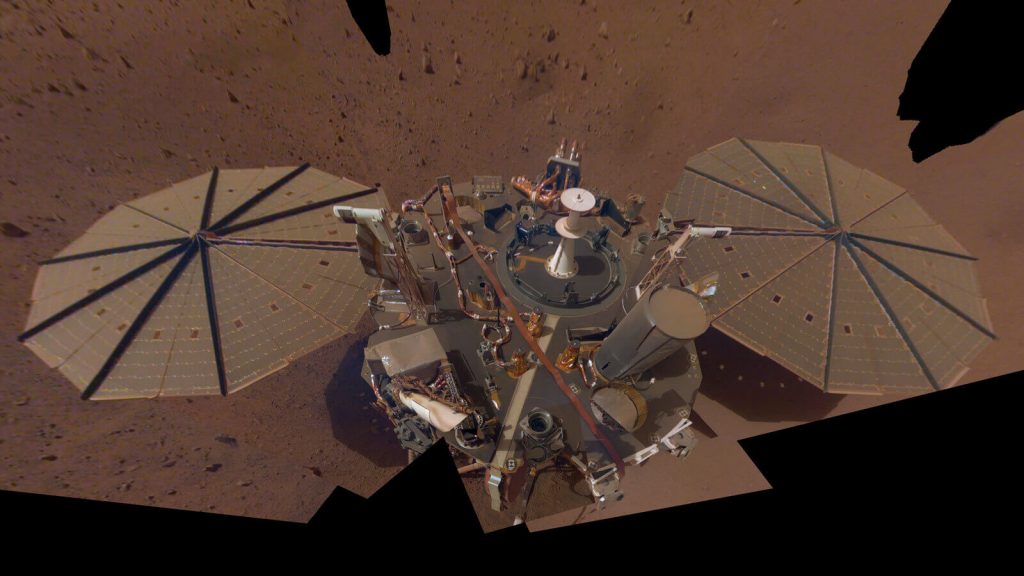
Martian seismograph sent a farewell selfie
Earlier, NASA representatives reported that they would announcethe mission is completed if the lander cannot be contacted two times in a row. Just in case, agency staff will continue to listen to the lander's signal. But at the moment this is unlikely. The last time InSight contacted Earth was on December 15th.
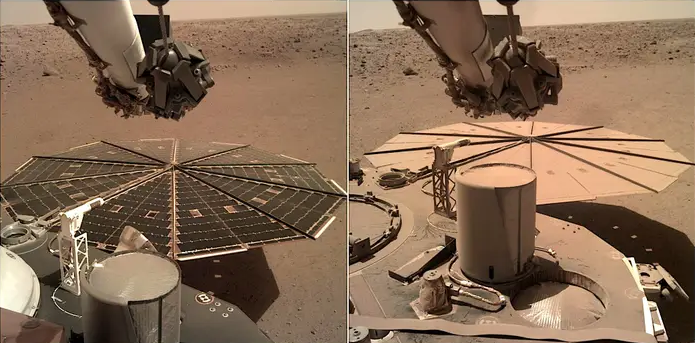
“I watched the launch and landing of thismission, and while it's always sad to say goodbye to a spacecraft, the exciting science work carried out by InSight is very gratifying, said Thomas Zurbuchen, associate administrator for NASA's Science Mission Directorate in Washington. “Seismic data alone has not only improved our understanding of the geology of Mars, but also of other rocky bodies, including Earth.”
How NASA's InSight Probe Works
Lander data provided to scientistsdetailed information about the inner layers of Mars. Its highly sensitive seismometer, along with daily monitoring by the French space agency Center National d'Études Spatiales (CNES) and the Marsquake Service operated by ETH Zurich, detected 1,319 quakes. Among them are those that caused meteoroid impacts.
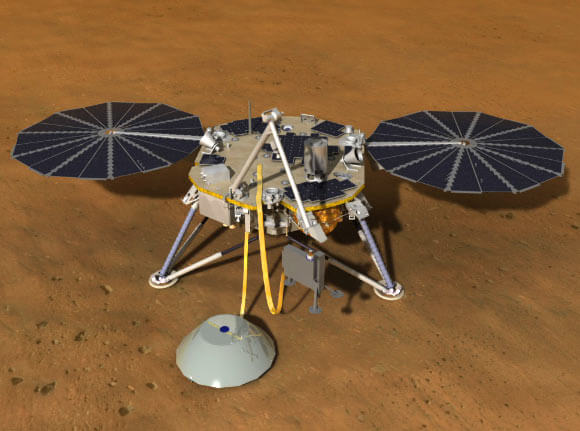
InSight is the first mission dedicated toexploring the depths of Mars. Its scientific instruments include a seismometer to detect earthquakes, sensors to measure wind and air pressure, a magnetometer, and a heat flow sensor to measure the planet's temperature.
The ultra-sensitive seismometer SEIS (eng. Seismic Experiment for Interior Structure, Russian seismic experiment to study the internal structure) allowed scientists to "hear" the trembling of the planet.
Marsquakes
Mars is shaking more often, but also weaker than expected.In the first year of operation alone, the probe recorded more than 450 seismic signals. The vast majority of them are marsquakes. The magnitude of one of the first, which was recorded by the probe, was about 4.0.
The sensitive InSight seismometer records evenweakest marsquakes. He recently tracked strange vibrations on the Red Planet. This helped scientists better understand its internal structure. After analyzing the data, scientists came to the conclusion that their cause was an asteroid impact. It fell near the Martian volcanic plateau of Tharsis, on the opposite side of the planet from InSight. The scientists' conclusions are consistent with satellite images that show the location of the impact.
</ p>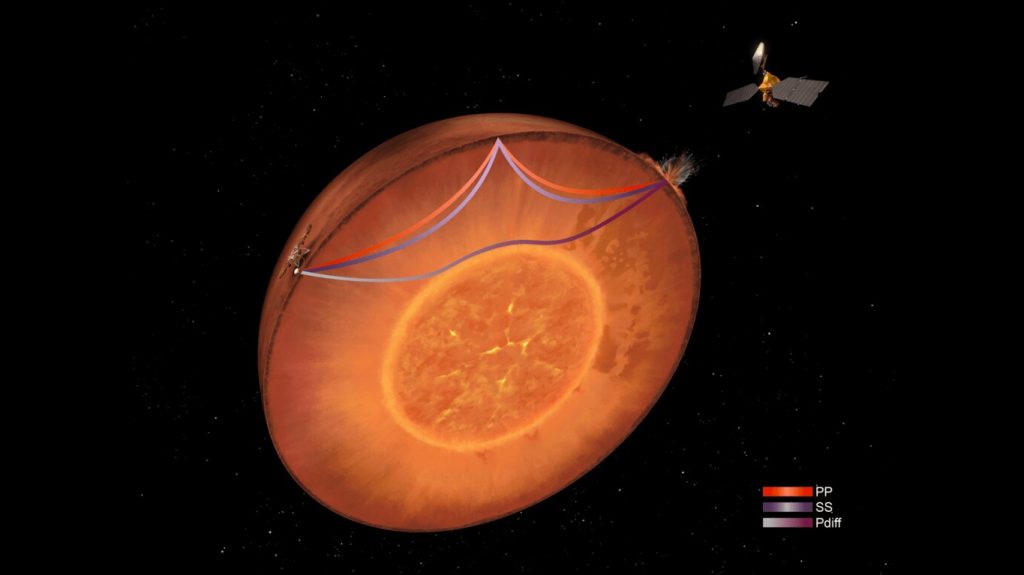 By recording how vibrations bounce and change direction, InSight helped scientists map the location of Mars' crust, mantle and core. Photo: Geophysical Research Letters
The depth of vibrations helped researchersdetermine the structure of the lower mantle of Mars in more detail. They found that the lower mantle is more variable in both temperature and composition than previous seismic models had predicted. However, more data will be needed to understand exactly how the thermal and chemical composition of the lower mantle is changing and why.
The Red Planet does not have tectonic plates like theEarth, but there are volcanically active regions. A pair of marsquakes have been closely associated with one such region, Cerberus Fossae. Ancient floods carved out almost 1,300 km of canals there. Lava flows then seeped in over the past 10 million years—the blink of an eye in geological terms.
Some of these young lava flows havesigns of destruction as a result of marsquakes that occurred less than 2 million years ago. As NASA planetary scientists noted, this is almost the youngest tectonic feature on the planet.
Magnetic field traces
Billions of years ago, Mars had a magnetic field. Its traces were left on ancient rocks that are now at depth. InSight was equipped with a magnetometer - the first on the surface of the Red Planet that could detect magnetic signals. The detector detected signals in Homestead Hollow that turned out to be 10 times stronger than scientists predicted using readings from orbiting spacecraft.
In addition, scientists are intrigued by how theseThe signals change over time. The measurements vary between day and night; They also have a tendency to pulsate around midnight. Theories about what causes these changes are still being debated. But perhaps the whole point is that they are associated with the solar wind interacting with the Martian atmosphere.
Wind speed
InSight measured wind speed almost continuously,direction and atmospheric pressure. The spacecraft's weather sensors have recorded thousands of vortices, known as dust devils, over the years. When they collect sand, they become visible. As scientists note, InSight was lucky to be in an area where there are more vortices than in any other region of Mars. On the other hand, it was precisely because of the winds that covered the probe with sand that it stopped working.
Listen to the beating heart of a dust devil on Mars
“InSight has more than lived up to its name.As a scientist who has dedicated his career to the study of Mars, I was delighted with what the lander achieved. It's all thanks to a whole team of people around the world who helped make this mission a success, said Lori Leshin, JPL director who leads the mission in a NASA press release. “Yes, it’s sad to say goodbye, but InSight’s legacy will live on, informing and inspiring us.”
Read more:
It turned out how old the water we drink today
17-year-old engineer came up with a magnetless motor: it can be used in electric vehicles
Two planets have been found not far from Earth. Perhaps they are inhabited
Cover photo: NASA/JPL-CALTECH