Few figures
Digitalization of the construction industry in Russia is still at an early stage. This
But digital construction is gaining momentum:completely different solutions are emerging, from drones, smart cameras and handhelds to IT platforms for analytics and project management. Potential buyers are beginning to realize the value of such products. The departure of SAP and Oracle from Russia has complicated the work of builders, but in the new realities, Russian companies have a chance to develop and promote their own developments.
The state and large companies are readyinvest in digital construction. In December last year, the Government of the Russian Federation approved a roadmap for the use of information modeling technologies in construction. The document provides for the creation of conditions for the introduction of additive manufacturing technologies, AR and VR in the process of installation and commissioning, aerial monitoring during engineering surveys, and so on. In 2024, it is planned to transfer all residential construction to information modeling.
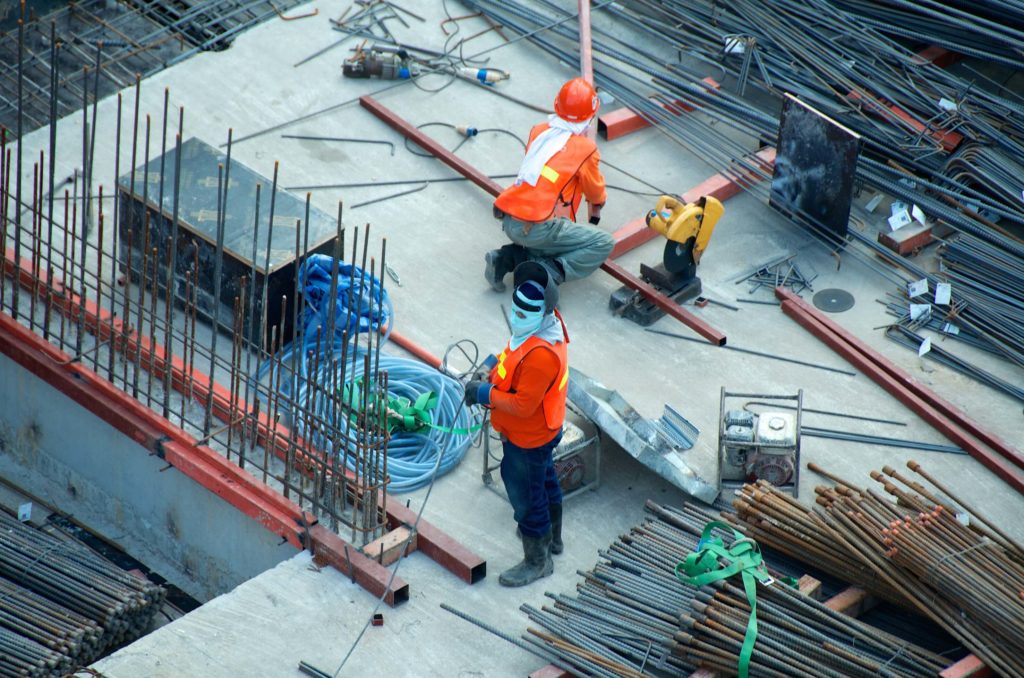 “Crews are idle, and downtime on site, if we are talking about large-scale construction, means up to 20 million rubles in losses per day”
Fight for efficiency
The main request of the construction market participantstoday - increasing the efficiency of construction. It has become relevant during the rising cost of equipment and materials, the destruction of supply chains, labor shortages and declining access to capital. Most of all, small and medium-sized enterprises that are struggling for survival are interested in this.
The problem faced by companies isdata fragmentation. At most facilities it is impossible to find the necessary materials, equipment, documentation in time. Therefore, 80% of the time for participants in the construction market in Russia is spent on obtaining the necessary information and 20% - on making decisions. Up to 50% of the work related to the correction of errors and improvements in projects has to be carried out due to the lack of quality data and poor coordination.
Work with estimates is carried out with irrelevant onesstandards of the last century. Crews are idle, and downtime on site, if we are talking about large-scale construction, means up to 20 million rubles in losses per day. For high-margin businesses, such figures are less noticeable, and it is because of this that the investment and construction activities of such companies are usually the least effective.
A possible solution to the problem is to createa single digital space for all participants in the construction project. We need an ecosystem that unites market players and simplifies their interaction. This will help to see all the information in a form understandable to the client and the contractor, increase the speed of decision-making and the efficiency of the construction process up to 30%.
"Three pillars" of construction
Construction market players need products that will be based on the "three pillars" - integration, uberization and predictive analytics.
Integration
Huge amounts of data that are created onthroughout the construction, linger in different systems and therefore cannot be used for project management. Oracle's 2021 Global Survey found that 81% of construction industry respondents say their information strategy includes merging data warehouses for reporting and analytics into one system. Another 60% seek to integrate multiple disparate systems for seamless operation.
This confirms that the future of construction isintegration. Cloud solutions should appear that will take information from different sources, accumulate it and visualize it in a single space. So construction participants will be able to reduce the number of reports without losing information, visually see at what stage the construction is, and respond to discrepancies in a timely manner.
Uberization
There is a shortage in the construction market:There are about 1-2 million workers missing, both workers and engineers. Companies look for workers through acquaintances, through newspaper advertisements, specialized services and agents, and often overpay. The problem is aggravated by the fact that less than 50% of graduates of specialized institutions go to work in construction. Moreover, today in Russia there are about 3 million unemployed working-age population. These people could master specialties that are in demand in construction.
Uber's business model could be a solution:an online space where companies can find performers in a few clicks. Any participant in the process will see where there are vacancies, what are the requirements for the candidate, and will be able to independently respond to them. And if you lack knowledge for the desired position, the platform will help you improve your skills.
Predictive analytics
Construction crews control a hugenumber of processes, from materials management to interaction with subcontractors. The more complex construction projects become, the more digital tools are needed, because the human factor leads to errors. For example, a builder may, based on experience, make incorrect projections of project timelines or equipment requirements.
Predictive (or predictive) analytics allowsreduce the likelihood of such miscalculations. It is based on using current and historical data to predict outcomes using statistical modeling and machine learning. Example: Teams often find it difficult to manage the budgets they receive from project architects or contractors. Predictive analytics allow these budgets to be formulated based on all sorts of factors, including regional labor and material costs.
 “digital construction is gaining momentum: there are completely different solutions, from drones, smart cameras and handhelds to IT platforms for analytics and project management”
What products are on the Russian market
Today there are many digital products,who help at work. For example, aerial monitoring makes it possible to create digital models of production facilities using drones. BIM models allow you to see a three-dimensional image of an object and eliminate collisions and intersections of engineering systems. Smart bracelets for builders, video cameras on helmets or special beacons help to track the construction process and the absence of violations.
Digital products for construction are developed by several types of players:
- Giants like SAP and Oracle.They offer comprehensive solutions, such as Primavera, a popular project management software among builders. The disadvantage is that these solutions are difficult to implement and need to be constantly maintained. The departure of players from this category from the Russian market will encourage Russian companies to look for alternatives among domestic developments.
- Various IT companies that are trying to automate the construction, but do not understand the needs of customers well enough due to the lack of industry expertise.
- Narrow-profile services that solve point problems: these can be smart bracelets, laser devices. Such products can be integrated into more complex solutions.
- Independent developments of corporations that they make for themselves. For example, automation services that simplify working with 1C.
- Companies with construction experience trying to create a complete solution. Their obvious advantage is in deep expertise.
Among such products 1C:the system is convenient when calculating construction budgets and is useful for those who work with a huge amount of numbers. But often it needs to be refined and localized, and even then it does not answer all questions.
Company with Russian roots TraceAirdeveloped a web-based construction control platform based on drone data. But drones have a limitation - they do not help with indoor work.
Integration of various data into a single systemis handled by PlanRadar. The company has created a cloud solution that collects documents, diagrams and drawings in one space accessible to all participants. Construction can only be managed through setting tasks, that is, it is impossible to see the whole picture. And this is a business with Austrian origins, so there remains a risk of its leaving Russia.
Incepta Group creates its own IT product - a singleinformation space PragmaCore. It is an intelligent system for planning, controlling and monitoring construction. It automates the process of creating and adjusting project schedules, managing resources, and using predictive analytics. PragmaCore should become a link between the client company and the contractor and solve the main gaps in other digital construction solutions: the complexity of implementation, inconvenient reporting format, and the impact of the human factor.
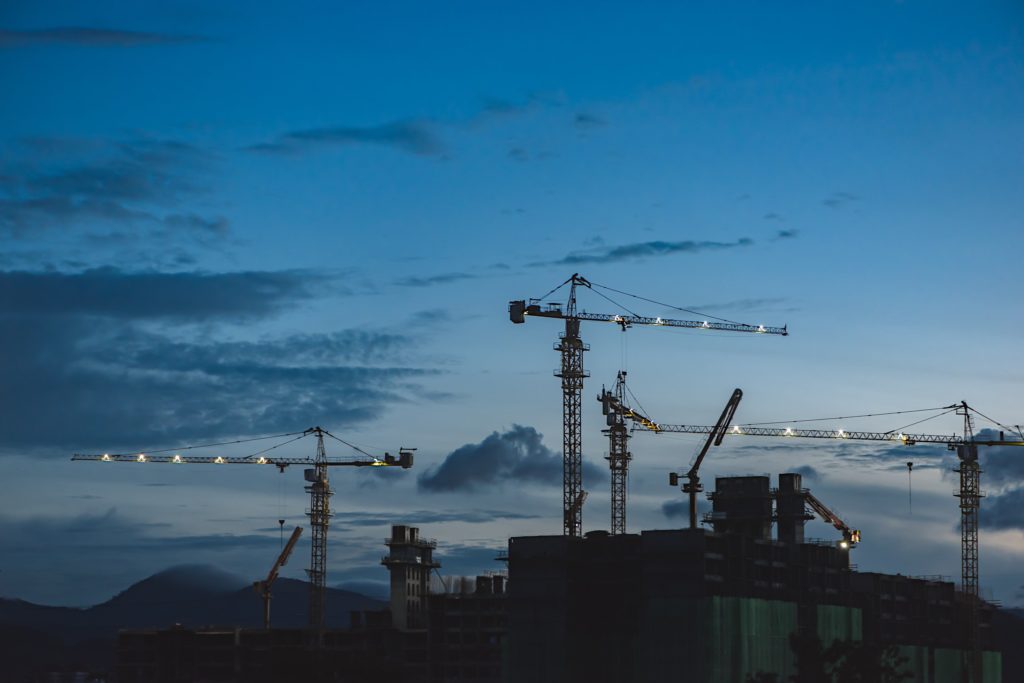 “Smart bracelets for builders, video cameras on helmets or special beacons help track the construction process and the absence of violations”
Finally
The need for digitalization of construction in Russiawill continue to grow. After the departure of Western companies, a struggle may begin among local players to create the best digital tool for the industry. The quality of such developments will most likely be affected by the departure of IT professionals from Russia, but the situation will stabilize over time. As a result, mobile and lightweight solutions will still appear that will integrate data from different sources, do high-quality analytics and connect all project participants directly, without intermediaries.
Read more
The Japanese dumped a giant turbine into the ocean to get endless energy from the current.
Astronomers from Japan have found an unknown structure in the galaxy
Researchers filmed a 'hidden' ecosystem in an Antarctic river