For thousands of years, people have observed Mercury, Venus, Mars, Jupiter and Saturn with the naked eye. But
Mathematical Relations
Before Isaac Newton discovered the laws of gravityastronomers found space objects using their eyesight and resorting to the help of a telescope. But his work made it possible to consider the relationship between the celestial bodies of the solar system in the form of mathematical expressions. This allowed astronomers to make predictions about planets, comets, and other objects using well-defined formulas.
For example, if the orbit of the planet and the mooncorrespond to Newton's laws, but not to direct observations, then scientists can assume that some unknown object is exerting additional gravity on the system. For example, this is what allowed astronomers to conclude about the existence of Neptune.
 The planet Neptune, discovered in 1846 using a lot of mathematical calculations, as seen during the Voyager 2 flyby in 1989. Source: NASA/JPL/Voyager-ISS/Justin Cowart
Using mathematical calculations about influencegravity of an unknown object into the orbit of Uranus, the French mathematician Urbain Le Verrier predicted the existence of the eighth planet of the solar system. This happened in 1846, and 143 years later, the Voyager 2 probe observed Neptune firsthand.
Search for Vulcan
In 1859, Le Verrier used the samemathematical calculations and tried to explain the perturbation of Mercury's orbit. He suggested that the tiny planet Vulcan might orbit close enough to the Sun to be obscured by sunlight, but large enough to disrupt Mercury's orbit.
“If you believe the theory of gravity of Isaac Newton, thenthe discovery of a slight wobble in the middle of Mercury's orbit, which cannot be explained by the pull of Venus or the Earth, has only one interpretation. There may be an undiscovered planet or a group of asteroids that cannot be observed from Earth due to its proximity to the Sun, ”Tom Levenson, professor of science journalism at the Massachusetts Institute of Technology, shared in an interview with National Geographic.
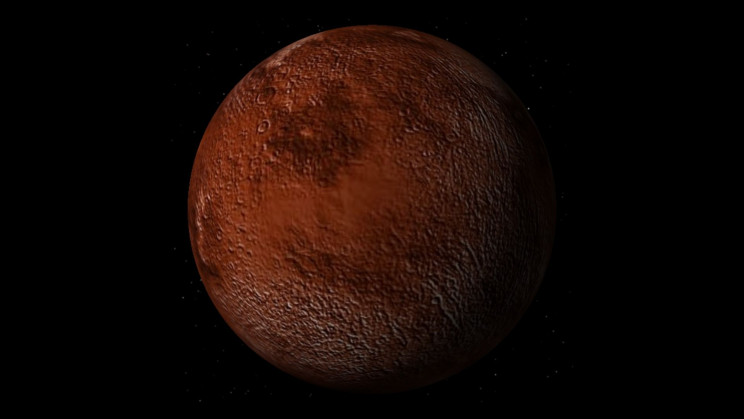 Volcano Photo: Wikimedia Commons
This new theory of Mercury's orbital wobblemarked the beginning of the period of "volcanomania" in the second half of the 19th century. Amateur astronomers and professional scientists have gone looking for the supposed planet, and some have even claimed to have seen it with their own eyes.
The first of these "observations" was madeFrench amateur astronomer Edmond Modest Lescarbault in 1859. Working in a makeshift observatory set up in a backyard shed, he pointed his telescope at the Sun and saw what appeared to be a tiny, round planet. Later, he shared his observations with Le Verrier, and his reputation played a role - everyone was convinced of the existence of Vulcan. In addition, given that era, scientists had little reason to doubt the discovery. The fact is that it fits perfectly into the prevailing idea of the Universe, based on Newton's laws of gravity.
What do we know about a non-existent planet?
It is believed that the mass of the volcano shouldcorrespond to the mass of Mercury in order to exert a gravitational effect on the "neighbor". However, Le Verrier believed that this was not enough, and was inclined to believe that a group of asteroids was indispensable.
However, Lescarbault's observations and recordswhich he kept about them, provided the mathematician with important data so that he could try to determine the orbit of Vulcan, the distance from the Sun, and other characteristics. From these data, Le Verrier calculated an approximately circular orbit of the planet. He estimated the distance of Vulcan from the star at about 21 million km. As you know, Mercury has the most eccentric orbit among all the planets of the solar system, but at its closest approach to the Sun at perihelion, it is about 45.8 million km.
Le Verrier calculated the period of revolution:the scientist took about 19 days and 18 hours with an orbital inclination of about 12 degrees and 10 minutes relative to the ecliptic. Before his death in 1877, the mathematician made several attempts to predict the transit of Vulcan through the Sun before his death, but this came to nothing.
Apart from Le Verrier's calculations, little else could beto say with certainty about a planet that, after all, did not really exist. If it existed, it would be many times hotter than Mercury, since it was more than twice as close to the Sun. This may be why some observers who claimed to have seen Vulcan claimed that it had a reddish hue.
Who buried the search for Vulcan?
Although Newton's laws were helpful in predictinggravitational effects, they are not the ultimate truth. So, when Albert Einstein began to develop his general theory of relativity, the elusive planet Vulcan was very important to him.
The fact is that Mercury was a "testing ground" fordevelopment of his general theory of relativity. If she could explain the wobble of Mercury's orbit without "relying" on the existence of Vulcan, she would not only solve a great mystery in astronomy and physics. General relativity completely replaced Newton and his laws of motion and gravity in the description of the Universe.
The key discovery of the general theory of relativityEinstein's idea of gravity was more than just a force between two bodies, as Newton believed. For Einstein, this was a consequence of the "immersion" of mass in the "fabric" of what he called space-time.
According to the foundations of the general theory of relativity,space and time are not static, but dynamic and subject to change. How this happens depends on the presence and movement of matter and energy. A huge mass like the Sun creates curves in space-time. It is normal that the star will affect the movement of objects. For example, in the orbit of Mercury.
Without curved space-timesome other mass, such as the planet Vulcan, that will cause it to wobble. But, according to general relativity, Mercury behaves exactly as Einstein predicted. As a result, more than 100 years after the publication of the general theory of relativity, the planet Vulcan remained hypothetical and no longer searched for it.
Read more
Is the standard model of physics no longer relevant? The main thing about the new work of scientists at the collider
Scientists 'resurrect' an ancient enzyme to feed 9 billion people by 2050
Found traces of the strongest earthquake in the history of mankind