Arizona Crater, also known as Devil's Canyon, is a large meteorite crater(Barringer) in the state
The crater appeared after the fall of a 50-meter meteorite.It weighed about 300,000 tons and flew at a speed of 45-60 thousand.The explosion was three times more powerful than that of the Tunguska meteorite, and the power was similar to the 8,000 atomic bombs dropped on Hiroshima.In previous studies, scientists have found fragments of meteoric nickel iron around the Arizona crater.
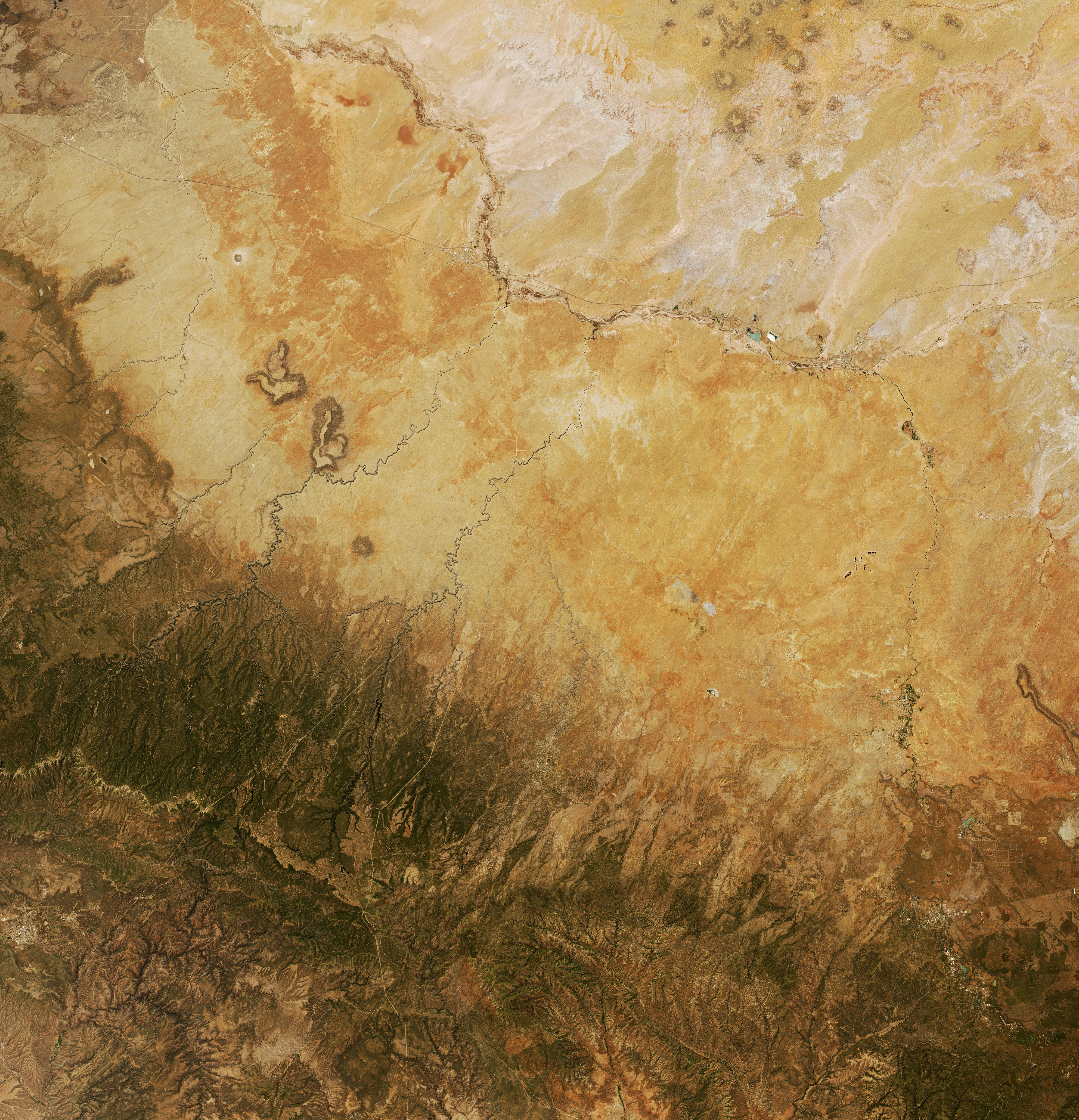 View of the region with the crater. Photo: NASA
The size of the asteroid that caused the impact is unknown - probably in the range of 30 to 50 meters across - but it must have been large enough to eject 175 million tons of rock.
It is noteworthy that it is the only one that has retained its almost original appearance.Although there are more extensive impact traces on the planet, the meteorite origin of Devil's Canyon was the first to be proven, and it is the best preserved of its pristine appearance.
How old is the crater?
Scientists aren't entirely sure when exactly the crater appeared, but the official version is that it's 50,000 years old.Three independent studies have shown this number.
In recent years, however, scientists have realized that calibrating two of them involves "more uncertainty than we thought," explainsDavid Kring, Principal Scientist, Moon and Planet Institute, Houston, CaliforniaThere is a possibility that it is several thousand years older.
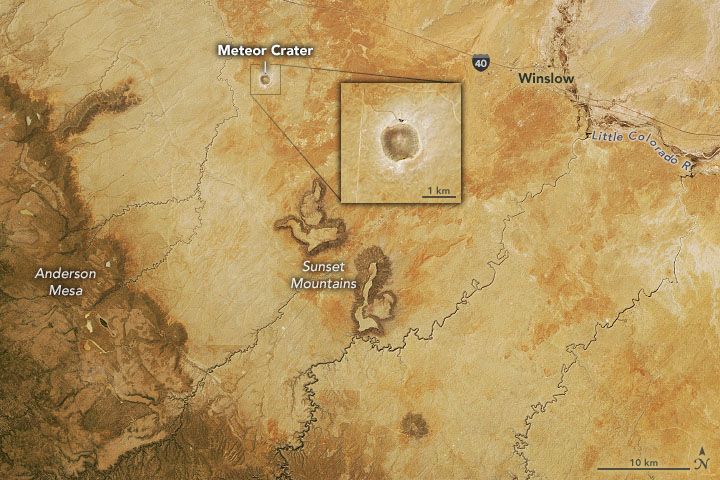 Arizona Crater. Photo: NASA
During the research, scientists extracted pollenfrom lacustrine sediments that filled the crater and reconstructed the vegetation that was in the region at the time of the meteorite fall. The results of the study are still ambiguous and the exact age of the crater still needs to be clarified.
Why is it such an unusual shape?
Photographs of the crater show that its edge andthe areas outside are much lighter. These are debris ejected from the crater and consist primarily of Kaibab limestone and Coconino sandstone. You can see that it is not completely round, but almost square.
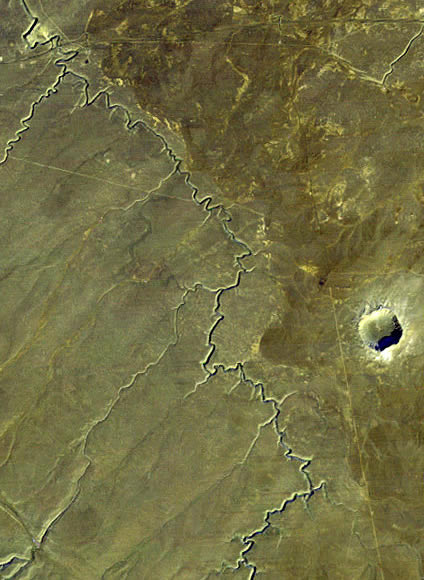 Photo: Public domain: Link
According to scientists, this is due to the fact that earlierexisting defects in the rock caused it to flake further in four directions on impact. These fissures, oriented northwest-southeast and northeast-southwest, formed when the Colorado Plateau rose from below sea level to its current height of 2,750 to 3,350 meters at various points.
In addition, when the asteroid fell, people did not yetreached North America. The terrain of the forested hills was probably inhabited by mammoths, mastodons and giant ground sloths. Now the crater stands in the middle of a desert overgrown with shrubs.
Why is he so important?
For many years in the craterArizona trains astronaut candidates. They conduct basic training there, and may soon begin an even more advanced program. This is especially important in the context of preparations for the return of people to the Moon as part of the Artemis mission.
Arizona Crater is chosen precisely because itvery well preserved and conveniently located. This is a safe way to acquaint astronauts with the type of terrain they will be working in and to do so in the safest possible way.
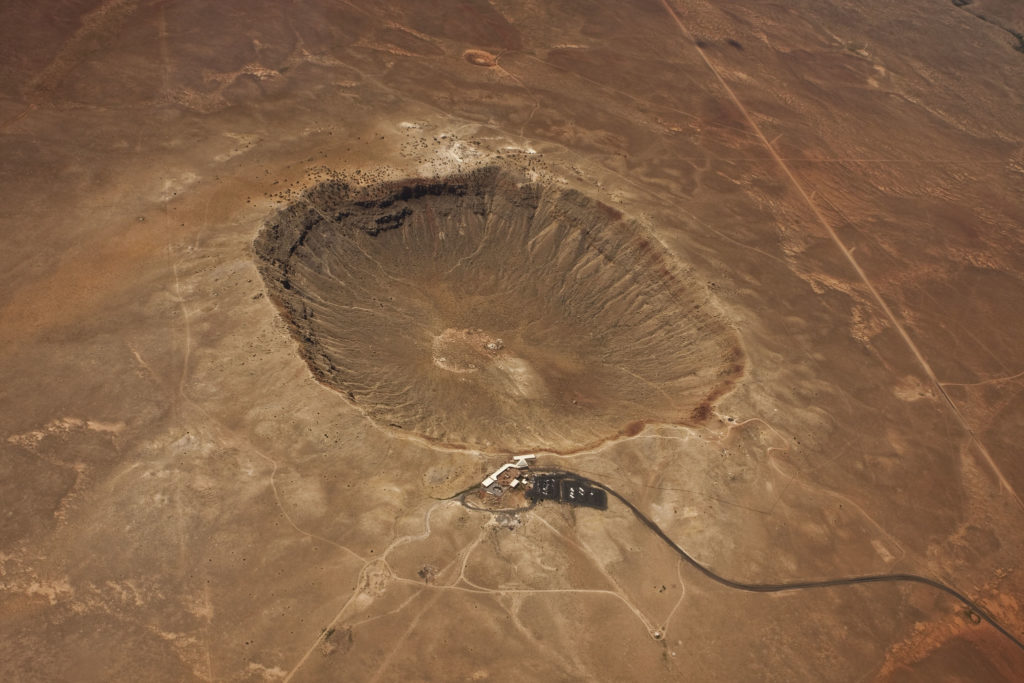 Photo: Mouser Williams
Understanding impact cratering,The processes that lead to their formation, the way they redistribute material across the lunar surface—all this is important for astronaut training, the scientists note. “The best spectrometers in the world come from the eyes of well-trained astronauts,” emphasizes David Kring.
Most asteroids that survivedcollision with the Earth's atmosphere, eventually fall into the water. Simply because the oceans cover 70% of the planet. But massive space rocks hit its surface from time to time. So it was 50,000 years ago when an iron asteroid crashed into North America and left a gaping hole in what is now northern Arizona. And now it helps people learn more about space and prepare for landing on the moon.
Read more:
The first images of the underground part of Mars surprised scientists
From the body to the mouth: scientists have understood where the teeth came from
Where on the planet will be the most dangerous by 2100: a new map has been published