Photosynthesis is one of the most important chemical reactions for life on Earth.Using it, plants produce
The basis of life
Most plants use chlorophyll as part of the process of photosynthesis.green light, absorbing red and blue, and this despite the fact that the most intense lightIt's all about a chemical known as retinal.It absorbs green colors and reflects If plants used retinal instead of chlorophyll, then most plants would be purple.
Some bacteria use it, but it turned outthat chlorophyll is more effective for sunlight. Perhaps early life used retinal, which is a simpler molecule, before "figuring out" how to use chlorophyll.
What is the problem?
Photosynthesis is perfect for a planet that orbits a bright yellow star, like our Sun, which radiates But such stars make up less than 8% of the main sequence stars in our galaxy.Red dwarfs, on the other hand, make up 75% of main-sequence stars.
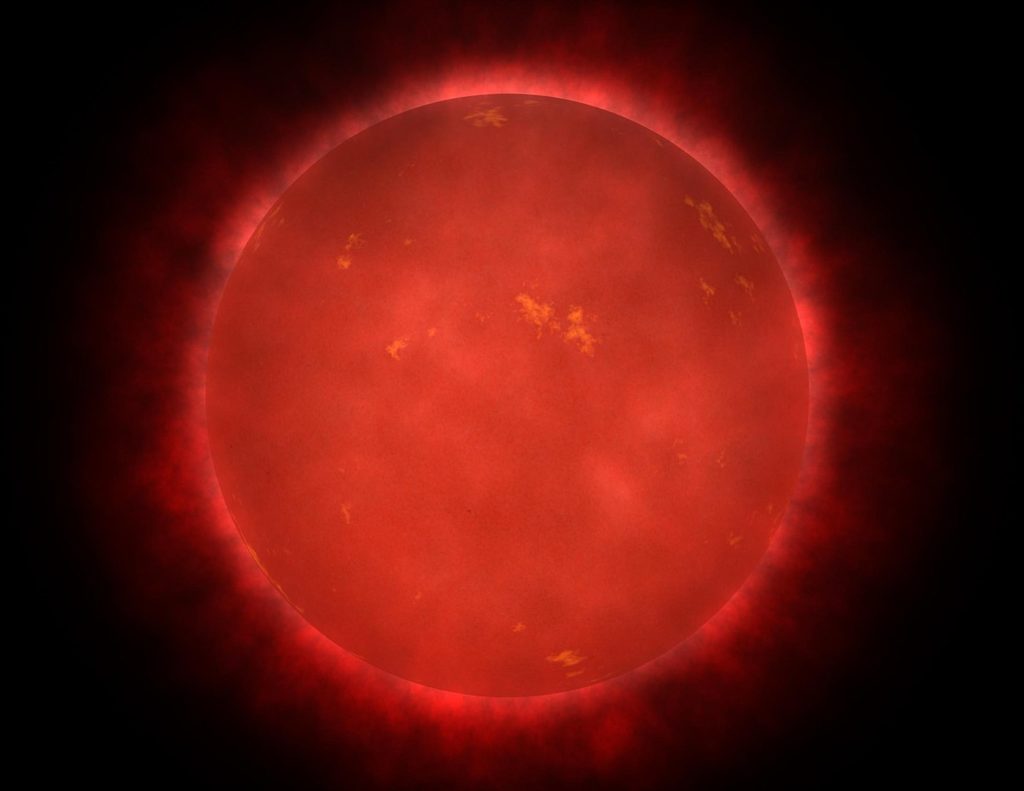 Red dwarf. Photo: NASA/Walt Feimer
The problem is that, statistically, the vast majority of potentially habitable planetsRed dwarfs are much smaller and cooler than our Sun. Most of the light they emit is in the infrared. It's nice and warm (like some heaters in our homes), but does it give the boost needed for photosynthesis?This is exactly what the scientists were trying to find out.
What have the scientists done?
To do this, Italian scientists created a starlight simulator (pictured below).It's an array of LEDs that mimic the spectrum of a red dwarf.In general, the device can show the spectra of different types of stars, but red dwarfs are so common that they were studied in the first place.
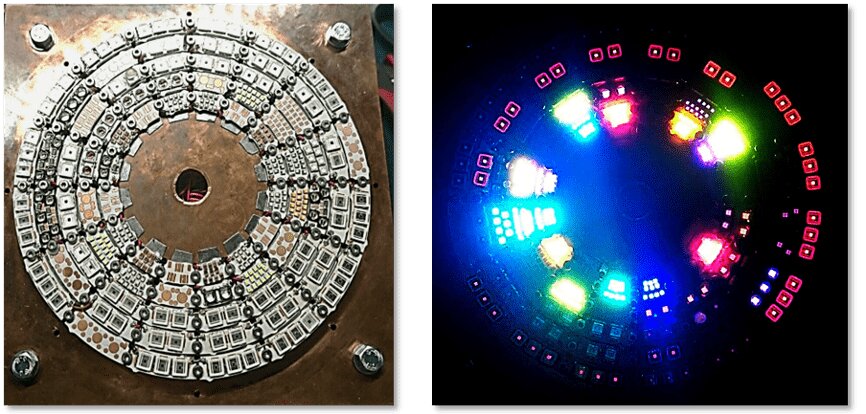 Simulator of starlight (left) and illumination (right). Credit: La Rocca et al.
Then, in laboratory conditions, scientists createdan atmosphere that might have been typical of an early habitable world was added with some bacteria and illuminated with simulated starlight.
How was the experiment?
For the experiment, scientists usedcyanobacteria. We chose sex on them because they are one of the first types of organisms on Earth to use photosynthesis to produce oxygen. They are also especially good for surviving in harsh conditions.
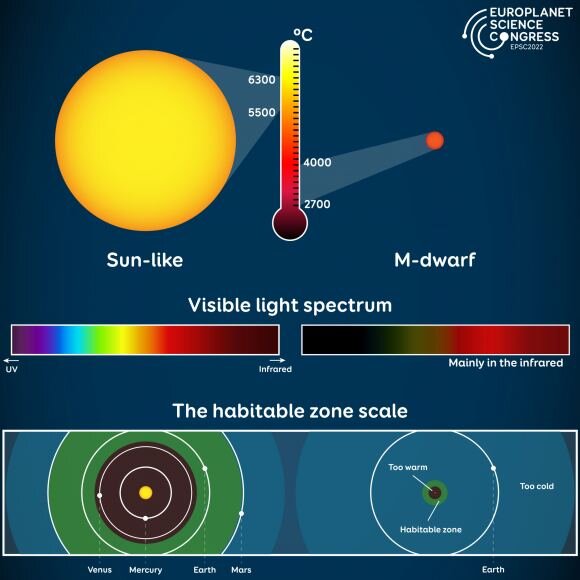 The spectrum of the Sun compared with the spectrum of an M-class red dwarf.
Credit: T. Roger/Europlanet 2024 RI
It turned out that cyanobacteria flourishedand grew under the infrared radiation of a red dwarf. Therefore, scientists “complicated” the problem and repeated the experiment with red and green algae. Both coped and prospered!
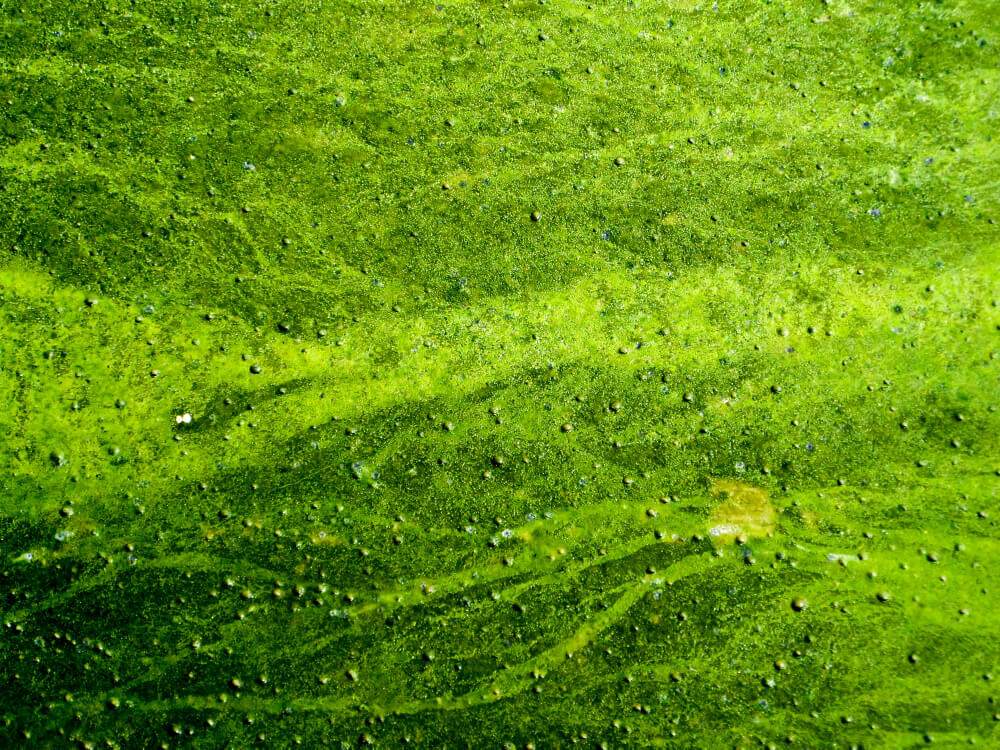 Cyanobacteria in a blooming pond. Photo: en.freepik.com
Thus, even though red dwarfs do not emit the type of light that drove the evolution of photosynthesis, terrestrial organisms could live under the light of a red dwarf.
What does all of this mean?
The study's findings are great news for scientists searching for extraterrestrial life. Perhaps red dwarfs are not so hopeless.
However, there are other problems with thesestars who “ruin everything.” Red dwarfs emit powerful flares that can strip nearby planets of their atmosphere. As a result, they may lose the basic resources necessary for complex organisms. And yet, the study's authors are full of optimism—their research sheds light on our understanding of life on other planets.
Read more:
Catapult sends NASA satellites into the sky
A giant magnetic storm is approaching Earth
Recreate the Sun on Earth: how physicists solved the main problem of thermonuclear fusion
On the cover:An artist's impression of the Gliese 887 system, with two newly discovered super-Earths orbiting a red dwarf star 11 light-years from the Sun. Image credit: Mark Garlick