A new study has found that NASA's rovers discovered manganese oxides on Mars in 2014.
How did it all start?
In 2014, researchers found highlevels of manganese oxides using a laser instrument on the Curiosity rover. As planetary scientists have noted, on Earth, manganese materials appear as a result of the interaction of atmospheric oxygen or bacteria. So scientists hypothesized that the answer was oxygen. Bacteria on Mars is an overly presumptuous assumption not only in 2014, even now it seems unlikely. In any case, until the emergence of real evidence of the existence of microbial life on the Red Planet in the past.
In the geological record of the Earth, the appearance of highconcentrations of manganese oxide minerals is an important marker of a major shift in the composition of the planet's atmosphere from relatively low oxygen to high levels, as it is now. Therefore, scientists have associated the presence of the same substances on Mars with atmospheric oxygen in the past.
What did the new study show?
The authors of the new study found thatIn conditions similar to those on Mars, manganese oxides can easily form without the presence of oxygen. Before reaching such conclusions, scientists conducted kinetic experiments with other chemical compounds under “Martian conditions,” which they recreated in the laboratory. They used halogens.
Halogens - chemical elements of the 17th groupperiodic table of chemical elements of Mendeleev. They react with almost all simple substances, except for some non-metals. The peculiarity of halogens is that they are all energetic oxidizing agents, therefore they are found in nature only in the form of compounds.
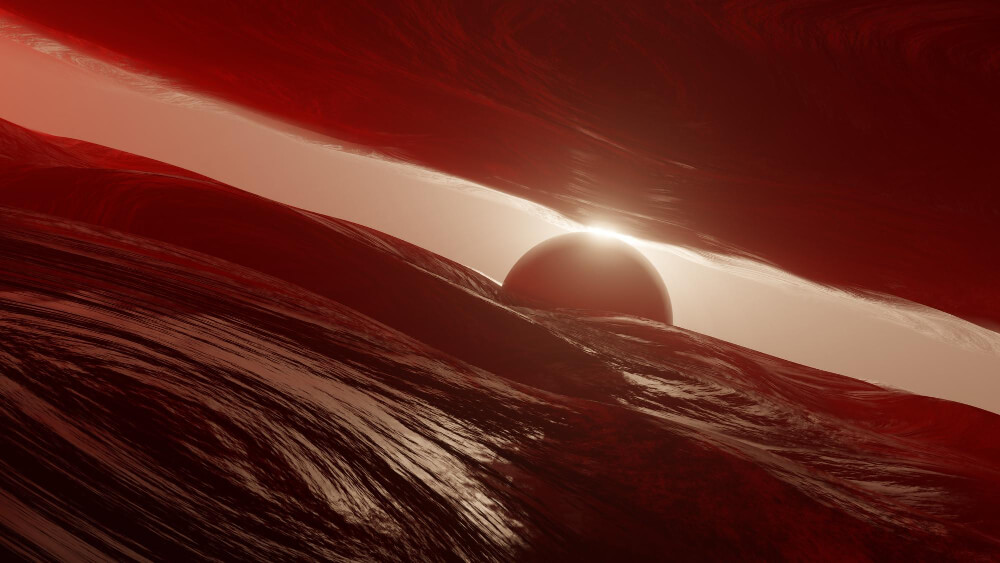 artist's representation of the surface of Mars. Photo: en.freepik.com
Halogens occur on Mars in formsdifferent from earthly ones, and in much larger quantities. Therefore, scientists decided to test what role they play “in the fate of manganese,” the scientists write. They conducted laboratory experiments using chlorate and bromate to oxidize manganese in water samples that simulated liquids present on the surface of Mars in the past.
As a result, they found that oxyhalogen compounds, which are widespread on the surface of Mars, oxidize manganese much faster than O₂.
“Oxidation does not necessarily require the participation of oxygen,” scientists emphasize
Does this mean there was no life on Mars?
No.Scientists especially emphasize that the fact that in the past there was no atmospheric oxygen on Mars does not mean that life did not exist on the Red Planet. After all, even on Earth there are several forms of life that do not require it to survive.
Perhaps oxygen-based life forms simply did not exist on Mars. In addition, many organisms survive in halogen-rich environments.
What's the bottom line?
Researchers say more is neededexperiments conducted in different geochemical conditions that are more relevant to specific planets such as Mars, Venus, and “oceanic worlds” such as Europa and Enceladus. “Each planet is unique in itself, and you cannot extrapolate observations made on one planet to understand what is happening on another,” the scientists explain.
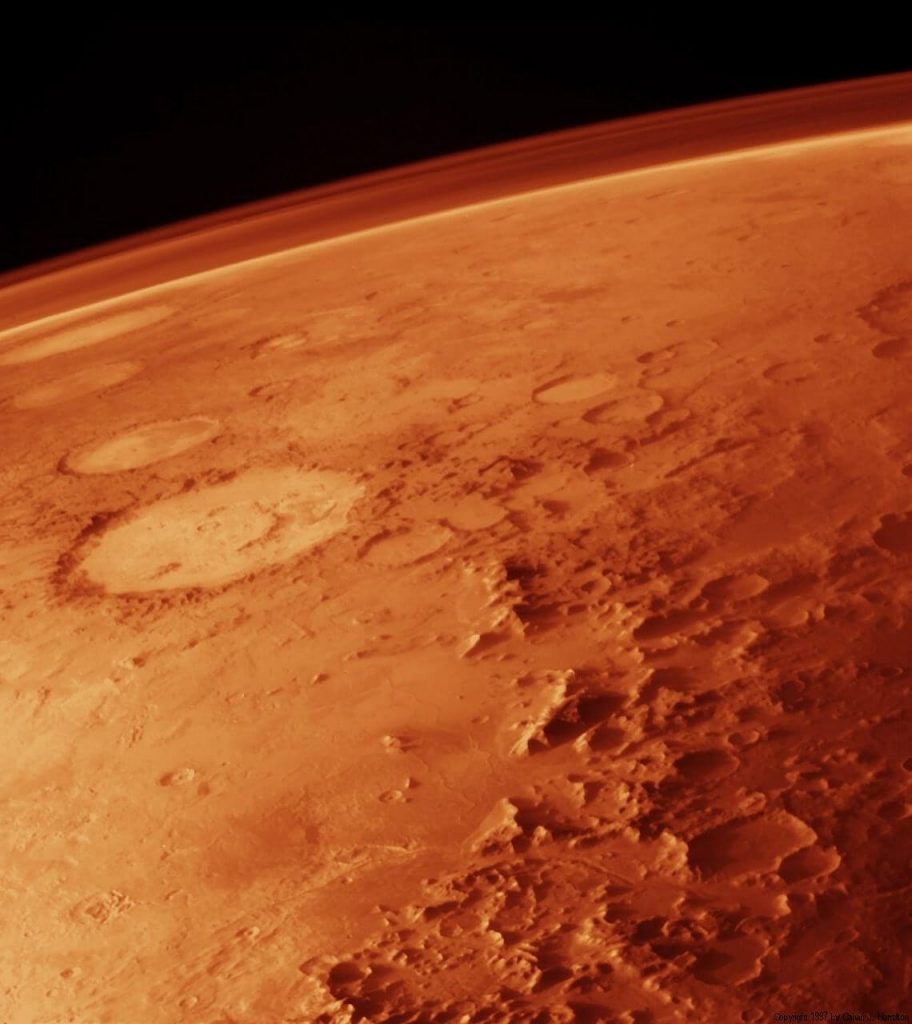 Artist's impression of the surface of Mars. Photo: Needpix.com
One more point deserves attention.The new study was inspired by reactions observed when drinking water is chlorinated. This means that the search for life on other worlds requires a large-scale collaboration of experts from different fields of science. “Understanding other planets requires us to apply knowledge gained from seemingly unrelated fields of science and technology,” the scientists conclude.
Read more:
It turned out how old the water we drink today
17-year-old engineer came up with a magnetless motor: it can be used in electric vehicles
Two planets have been found not far from Earth. Perhaps they are inhabited
On the cover: an artist's view of the surface of Mars, ru.freepik.com